


Introduction
Artificial Intelligence (AI) in government uses machine learning, automation, and data analytics to boost efficiency, improve public services, and aid decision-making, with applications from fraud detection and policy design to citizen chatbots and smart city solutions, though challenges like bias, ethics, and cyber security require careful management for effective and equitable implementation. Governments worldwide are developing strategies to leverage AI for better productivity, accountability, and responsiveness, enhancing everything from tax administration to public health.
The Features of Artificial Intelligence in Government:
Automation & Efficiency: Automates routine tasks (data entry, processing) to free up human staff for complex work, speeding up service delivery.
Data-Driven Decisions: Analyzes large datasets to find patterns, predict outcomes (economic trends, resource needs), and simulate policy impacts, leading to smarter governance.
Improved Service Delivery: Offers tailored services, chatbots for citizen engagement, and virtual assistants for easier interaction with government.
Fraud & Risk Management: Detects anomalies and fraudulent activities, enhances compliance, and models risks more effectively.
Resource Optimization: Helps allocate resources more efficiently in areas like transportation (traffic flow) and healthcare (diagnostics, research).
Predictive Analytics: Forecasts future needs, from infrastructure maintenance to public health crises, enabling proactive responses.
Policy Formulation: Supports evidence-based policymaking by assessing potential impacts before implementation.
AI as a Tool for Government Efficiency
One of the most widely promoted benefits of AI in government is increased efficiency. Public administrations often struggle with limited resources, bureaucratic delays, and complex service demands. AI systems can automate repetitive tasks such as processing applications, managing records, and responding to routine citizen inquiries through chatbots and virtual assistants. This automation reduces costs, speeds up service delivery, and allows human officials to focus on more complex and judgment-based work.
AI is also used in data-driven policymaking. Governments collect massive amounts of data related to healthcare, transportation, taxation, education, and social welfare. Machine learning algorithms can identify patterns and trends within this data, helping policymakers predict outcomes, allocate resources more effectively, and design targeted interventions. For example, AI can optimize traffic management systems, detect tax fraud, or anticipate public health risks, potentially saving lives and public funds.
Enhancing Public Services and Decision-Making
In areas such as healthcare and social services, AI can improve accuracy and consistency. Predictive models may help identify individuals at risk of homelessness, unemployment, or disease, enabling early intervention. In judicial and administrative systems, AI tools are sometimes used to assist with case management, risk assessment, or prioritization of workloads, reducing backlogs and improving institutional efficiency.
These applications also shift how decisions are made. When algorithms influence or inform government actions, questions arise about transparency and accountability. Citizens may not understand how decisions affecting their lives are reached, especially when AI systems rely on complex or proprietary models. Efficiency gains, while valuable, must be weighed against the need for explainable and fair decision-making.
AI and the Expansion of State Surveillance
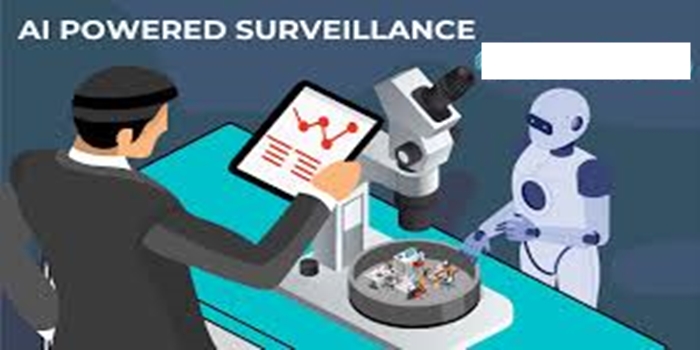
Alongside efficiency, AI significantly enhances the surveillance capabilities of governments. Advanced facial recognition, biometric identification, predictive policing, and mass data analytics enable states to monitor populations on an unprecedented scale. AI can process footage from thousands of cameras, track online behavior, analyze communications metadata, and link disparate data sources to create detailed profiles of individuals.
Supporters argue that such tools improve public safety, national security, and crime prevention. AI-driven surveillance can help locate missing persons, identify criminal suspects, and detect threats more quickly than traditional methods. In emergency situations, these technologies may prove invaluable.
Critics, however, warn that widespread AI surveillance risks normalizing constant monitoring, eroding privacy, and chilling free expression. When citizens know or suspect that their movements, communications, and behaviors are continuously analyzed, they may self-censor or alter lawful activities. This undermines fundamental democratic freedoms and reshapes the relationship between individuals and the state.
Accountability, Transparency, and Democratic Oversight
The use of AI in government complicates traditional notions of accountability. When a human official makes a decision, responsibility is relatively clear. When an algorithm is involved, responsibility becomes diffused among software developers, data providers, government agencies, and policymakers. This makes it difficult for citizens to seek redress or challenge harmful decisions.
Legal and Ethical Frameworks
Many governments and international bodies are developing legal and ethical frameworks for the use of AI in the public sector. These frameworks often emphasize principles such as human oversight, proportionality, data protection, fairness, and explain ability. The goal is to ensure that AI serves public interests without undermining fundamental rights.
Technology evolves faster than law, and governments may lack the expertise or political will to impose meaningful constraints on their own surveillance capabilities. In authoritarian contexts, AI is more likely to be used to consolidate power, suppress opposition, and control populations, demonstrating how political systems shape technological outcomes.
Striking a Balance: Efficiency Without Authoritarianism
The central question is not whether governments should use AI, but how. AI can make governments more efficient, responsive, and evidence-based, improving citizens’ everyday interactions with public institutions. At the same time, unchecked deployment risks transforming efficiency into control and governance into surveillance.
Striking the right balance requires clear limits on data collection, strong privacy protections, independent oversight, and meaningful public debate. Human judgment must remain central to decisions that affect rights and liberties, with AI serving as a support tool rather than an unquestioned authority.
Conclusion
Artificial intelligence in government embodies a fundamental tension between efficiency and surveillance. On one hand, AI offers powerful tools to improve public services, enhance policy-making, and address complex societal challenges. On the other, it carries the risk of expanding state surveillance, entrenching bias, and weakening democratic accountability.
READ: The Ethics of Artificial Intelligence