


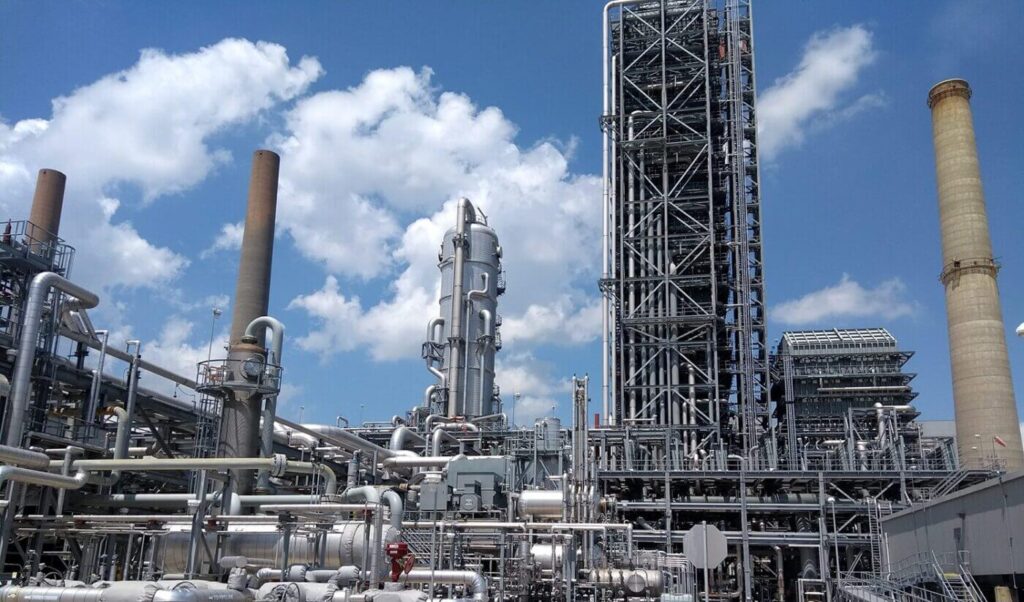
INTRODUCTION
Carbon capture and storage (CCS) is a critical climate change lessening the severity of technology designed to intercept carbon dioxide emissions from large industrial sources like power plants and factories before they reach the atmosphere, permanently sealing them deep underground.
Carbon Capture and Storage (CCS). It is known as an invisible vault, that is designed to intercept carbon dioxide from large industrial source and trapping carbon emissions at its source and locking them away permanently deep within the Earth.
HISTORY OF CARBON CAPTURE AND STORAGE
Carbon capture and storage (CCS) began as an industrial gas-separation technique in the
1920s, evolved through commercialized Enhanced Oil Recovery (EOR) in the 1970s, and later emerged as a formalized climate mitigation strategy in the 1990s.
Carbon capture and storage (CCS) began as an industrial gas-separation technique in the
1920s, evolved through commercialized Enhanced Oil Recovery (EOR) in the 1970s, and later emerged as a formalized climate mitigation strategy in the 1990s. Carbon capture and
storage or carbon capture, utilization, and storage (CCUS) is recognized internationally as an indispensable key technology for mitigating climate change and protecting the human living environment.
The CCS has rapidly grown into a vital engineering reality, the race to net-zero carbon emissions is no longer just about building wind turbines and driving electric vehicles. For the global heavy industry sectors like steel, cement, chemical manufacturing, and shipping—transitioning away from fossil fuels cannot happen overnight. These industries account for billions of tons of unavoidable greenhouse gases each year. Far from being a futuristic
theory, CCS has rapidly grown into a vital engineering reality.
WHY DO WE NEED CARBON CAPTURE AND STORAGE
- To reduce greenhouse gas emissions
- Clean up heavy industries
- Reach global net-zero climate goals
- It captures carbon dioxide from factory exhausts or the air and stores it safely deep underground
HOW TO OBTIAN CARBON CAPTURE AND STORAGE
Obtaining carbon capture and storage (CCS) requires a large industrial project utilizing capture, transport, and storage systems.
There are Three Main Steps
- Capture: Separation of carbon dioxide from factory or power plant exhaust using
special chemical filters. The process begins at industrial smokestacks or power plants. Emitters rely on three main methods to isolate carbon dioxide from other byproduct gases:
- Post-Combustion Capture: Flue gases pass through a chemical solvent bath that binds specifically with The liquid is then heated to release pure gas while recycling the chemical mix.
- Pre-Combustion Capture: The raw fuel is gasified and converted into a mixture of hydrogen and carbon before The carbon is removed cleanly, leaving hydrogen behind as a zero-emission fuel source.
- Oxy-Fuel Combustion: Emitters burn fuel in pure oxygen rather than ambient air, creating an exhaust stream composed almost entirely of water vapor and highly concentrated carbon, making separation simple.
- Transport: The trapped gas is squeezed until it turns liquid, then moved through pipes or ships to a safe This forces the gas into a supercritical state a dense, Moving the compressed liquid-like phase that flows seamlessly through massive pipelines or specialized ocean-going transport tankers.
- Storage (Sequestration): The journey ends far below the Supercritical carbon is pumped deep down it is usually more than 2,500 feet or 800 meters underground into stable geologic formations. These injection sites include deep saline aquifers, depleted oil and gas fields, and unmendable coal seams. Surrounded by solid, non-
porous cap rock, the carbon mineralizes over time, turning to stone and remaining trapped forever.
CHALLENGES FACED BY CARBON CAPTURE AND STORAGE
Carbon capture and storage face a lot of hurdles such as listed below.
Technological and Energy Challenges:
- Energy Penalty: Facilities must burn extra fuel or use a large share of their own generated power just to run the capture and compression equipment.
- Efficiency Limits: Capturing high percentages of carbon from complex, retrofitted industrial or power exhausts remains difficult.
- Scale Limitations: Expanding custom-built plants to match global emission levels requires vast new engineering networks.
Economic and Financial Hurdles:
- High Costs: Building and running capture units, compressors, and transport pipelines requires massive upfront capital.
- Weak Market Incentives: Carbon pricing or tax credits are often too low or missing, making projects hard to fund.
- Financial Risk: Long-term liability for stored carbon creates ongoing financial uncertainty for private investors.
Infrastructure and Storage Risks:
- Transport Needs: Moving compressed carbon dioxide over long distances requires building specialized, high-capacity pipeline networks.
- Geological Uncertainty: Finding safe, stable underground rock formations or depleted reservoirs takes extensive testing.
- Leakage Risks: Stored gases might escape back into the atmosphere or cause minor seismic activity underground.
Policy and Social Concerns
- Permitting Delays: Clear rules for long-term safety monitoring and land rights are often missing or slow to approve.
- Public Opposition: individuals often resist nearby storage sites due to safety fears.
- Moral Hazard: people allows heavy polluters to keep burning storage fuels instead of switching to clean renewable energy.
Conclusion
Carbon capture and storage (CCS) offers a vital bridge for neutralizing hard-to-abate industrial emissions, yet it remains a complex tool that must complement not replace aggressive transitions to renewable energy.