


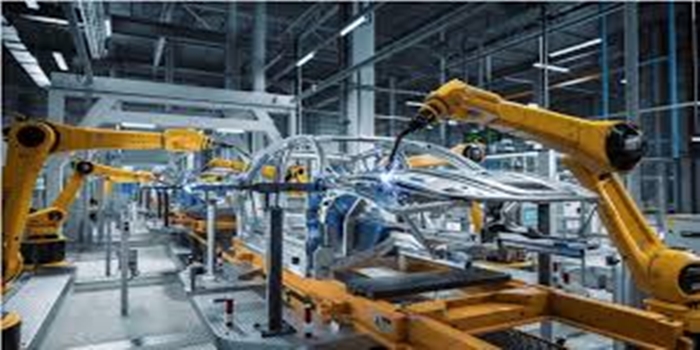
In this article, we explore how automation is transforming modern production lines, the technologies behind it, its benefits, challenges, and its role in the future of manufacturing.
Definition
Automation in production refers to the use of technology, machines, and control systems to perform tasks with minimal human intervention. It ranges from basic mechanization to advanced intelligent systems capable of decision-making.
Levels of Automation
Fixed Automation – Dedicated equipment for high-volume production
Programmable Automation – Machines reprogrammed for different tasks
Flexible Automation – Systems that adapt automatically to product variations
Intelligent Automation – AI-driven systems that learn and optimize processes
Modern production lines increasingly rely on flexible and intelligent automation.
Automation Technologies Transforming Production Lines:
Industrial Robotics
Robots are one of the most visible elements of automation.
Applications include:
Assembly
Welding
Painting
Packaging
Palletizing
Modern robots are faster, more precise, and safer, often working alongside humans as collaborative robots (cobots).
Artificial Intelligence and Machine Learning
AI enables production lines to move from rule-based automation to data-driven decision-making.
AI applications include:
Predictive quality control
Demand-driven production adjustments
Pattern recognition for defects
Process optimization
Machine learning systems continuously improve performance by learning from production data.
Internet of Things (IoT) and Smart Sensors
IoT connects machines, tools, and systems through sensors that collect real-time data.
Benefits include:
Real-time monitoring of equipment performance
Early detection of faults
Improved traceability
Enhanced process visibility
Smart sensors form the foundation of smart factories.
Manufacturing Execution Systems (MES)
MES bridges the gap between enterprise planning systems (ERP) and the production floor.
MES enables:
Real-time production tracking
Performance measurement
Resource optimization
Quality monitoring
This integration ensures better coordination and faster response to issues.
Automated Material Handling Systems
Automation has transformed how materials move within production lines.
Examples include:
Automated guided vehicles (AGVs)
Autonomous mobile robots (AMRs)
Conveyor systems
Automated storage and retrieval systems (AS/RS)
These systems reduce manual handling, improve safety, and speed up production flow.
How Automation Is Changing Production Line Operations
Increased Productivity and Throughput
Automated systems can operate continuously with minimal downtime, significantly increasing output.
Faster cycle times
Consistent production speed
Reduced human fatigue
This leads to higher production capacity without expanding physical facilities.
Improved Quality and Consistency
Automation ensures precise and repeatable processes.
Reduced human error
Automated inspection and vision systems
Consistent product quality
Quality defects are detected early, reducing scrap and rework costs.
Reduced Labor Costs and Skill Shifts
While automation reduces reliance on manual labor, it also shifts workforce needs.
Fewer repetitive manual tasks
Increased demand for skilled technicians, programmers, and analysts
Better utilization of human expertise
This transformation enhances productivity while creating higher-value roles.
Greater Flexibility and Customization
Modern automated production lines are designed for adaptability.
Quick changeovers
Modular production cells
Mass customization capabilities
Manufacturers can respond faster to market changes and customer preferences.
Enhanced Safety and Ergonomics
Automation removes workers from dangerous or physically demanding tasks.
Reduced workplace injuries
Improved ergonomics
Safer handling of hazardous materials
This results in safer and more sustainable working environments.
Cost Implications of Automation
Short-Term Investment vs Long-Term Savings
Although automation requires significant upfront investment, it delivers long-term cost benefits:
Lower labor costs
Reduced waste and rework
Improved energy efficiency
Lower maintenance costs through predictive maintenance
Over time, automation improves profitability and return on investment (ROI).
Automation and Lean Production: A Powerful Combination
Automation complements lean production by:
Eliminating waste
Improving flow
Supporting Just-in-Time production
Enhancing process stability
When aligned with lean principles, automation maximizes value rather than simply increasing speed.
Challenges in Automating Production Lines
Despite its benefits, automation presents challenges:
High initial capital investment
Integration with legacy systems
Cybersecurity risks
Workforce resistance and skill gaps
Maintenance and system complexity
Successful implementation requires strategic planning, training, and change management.
The Role of Automation in Industry.
Automation is a core pillar of Industry 4.0, where production systems are digitally connected and intelligent.
Key features include:
Smart factories
Real-time data-driven decisions
Digital twins
End-to-end integration
Automation enables manufacturers to operate with unprecedented efficiency and transparency.
Future Trends in Production Line Automation
Looking ahead, automation will continue to evolve through:
AI-driven autonomous decision-making
Increased use of cobots
Fully autonomous production cells
Greater human–machine collaboration
Sustainable and energy-efficient automation solutions
These trends will further redefine production efficiency and competitiveness.
Conclusion
Automation is fundamentally transforming modern production lines by enhancing productivity, quality, flexibility, and safety. It allows manufacturers to reduce costs, respond quickly to market demands, and maintain consistent quality standards in an increasingly complex environment. Rather than replacing humans, automation is reshaping roles, freeing workers from repetitive tasks and enabling them to focus on higher-value activities. Organizations that strategically adopt automation, aligned with lean principles and digital transformation, are better positioned to thrive in the future of manufacturing.