


Introduction
Social welfare programs are often misunderstood as purely redistributive policies that burden government budgets without contributing to economic development. In reality, decades of global research and real-world experience show the opposite: well-designed social welfare programs actively stimulate economic growth, increase productivity, and create more stable and prosperous societies.
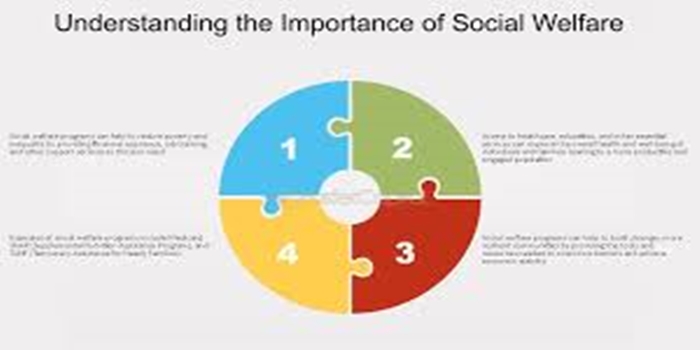
Social welfare programs are government-funded initiatives providing essential support like food, housing, healthcare, and income assistance to protect citizens from life’s economic risks, helping vulnerable groups (elderly, unemployed, disabled, low-income families) achieve well-being and stability, acting as a crucial safety net for societal health and opportunity. Common examples include SNAP (food stamps), Medicaid (health), Social Security, housing assistance, and unemployment benefits, aiming to reduce poverty and promote a productive population.
Here is an extensive breakdown of the pathways through which social welfare programs boost economic growth:
Social Welfare Enhances Human Capital Development:
Human capital, the skills, health, and education of a population,is the foundation of any productive economy. Welfare programs directly strengthen this foundation.
Improving health outcomes
Healthcare subsidies, nutritional programs, and disability support improve population health. Healthy citizens:
Miss fewer workdays
Are more productive
Live longer, contributing more to the economy
A healthier workforce means higher GDP growth and reduced long-term healthcare costs.
Boosting education and skills
Social welfare supports:
School feeding programs
Free or subsidized education
Scholarships and student grants
Skills training and vocational support
These measures increase literacy, improve workforce skills, and raise future earnings.
Supporting child development
Early childhood programs (nutrition, healthcare, parental support) improve cognitive ability and long-term productivity. The payoff lasts for decades.
Human capital investments have some of the highest rates of return in economics.
Social Welfare Stimulates Consumer Spending and Aggregate Demand:
Consumer spending drives most modern economies. Low-income households have a higher marginal propensity to consume (MPC), meaning they spend rather than save additional income.
Cash transfers fuel local economies
Unemployment benefits, pensions, and child grants inject money directly into communities. This spending:
Increases business revenues
Encourages hiring
Broadens tax bases
Money from welfare benefits cycles through the economy, multiplying economic activity.
Economic stimulation during downturns
During recessions, social welfare:
Stabilizes household income
Prevents sharp drops in consumption
Helps economies recover faster.
Social Protection Improves Labor Market Functioning:
Contrary to myths, welfare programs strengthen, not weaken, labor markets when designed effectively.
Unemployment benefits support productive job matching
Without income support, job seekers accept low-quality jobs quickly. With unemployment benefits, they can:
search longer
find better matches
secure higher productivity jobs
This improves overall economic efficiency.
Parental leave increases labor force participation
Paid leave and childcare subsidies enable more parents—especially women—to join or remain in the workforce, increasing overall labor supply.
Disability and sickness benefits retain skilled workers
Instead of losing experienced workers permanently, welfare systems support rehabilitation and reintegration, preserving valuable skills.
Welfare Reduces Poverty and Inequality, Boosting Economic Stability:
High inequality weakens economies. It reduces social mobility, limits talent development, and fuels instability. Social welfare programs help counter these trends.
Inequality slows long-term growth
Inequality:
Reduces demand
Lowers investment in human capital
Increases crime and political instability
Social welfare reduces these risks and strengthens economic foundations.
Redistribution increases economic opportunities
By helping the poorest households meet basic needs, welfare provides:
Stability for children’s education
Better nutrition
Access to healthcare
Chances to invest in small businesses
This expands economic participation and improves productivity.
Social cohesion promotes investment
Investors prefer stable societies. Welfare reduces unrest, inequality-driven tensions, and crime, creating a safer investment environment.
Social Welfare Encourages Entrepreneurship and Innovation:
Access to basic security allows individuals to take productive risks.
Income security encourages risk-taking
When people have:
Health insurance
Unemployment support
Income guarantees
they are more likely to pursue entrepreneurship or acquire new skills.
Welfare reduces fear-driven decisions
Without social safety nets, individuals may avoid business ventures because failure means destitution. With welfare, risk is less catastrophic.
Small business growth
Cash transfers and grants often help low-income households invest in:
Tools
livestock
Market stalls
Small enterprises
These micro-investments collectively boost local economies.
Social Welfare Strengthens Social Infrastructure
Strong societies require more than economic output—they need stable communities, capable families, and resilient systems.
Childcare and family programs support demographic stability
Countries facing aging populations (like Japan and many European nations) rely on welfare systems that:
Support families
Increase birth rates
Maintain a stable working-age population
Housing programs reduce homelessness
Stable housing increases:
Job stability
Health outcomes
Productivity
Elderly support prevents economic strain
If older citizens lack pensions or assistance, the burden falls on younger working families—limiting productivity and labor force participation.
Conclusion
Social welfare programs are increasingly viewed not as a cost, but as a crucial economic investment and a powerful stabilizer that drives long-term economic growth. They achieve this by working through three main pathways: stabilizing demand, investing in human capital, and enabling productive risk-taking.
READ: The Rise of Social Entrepreneurship Academies