


Introduction
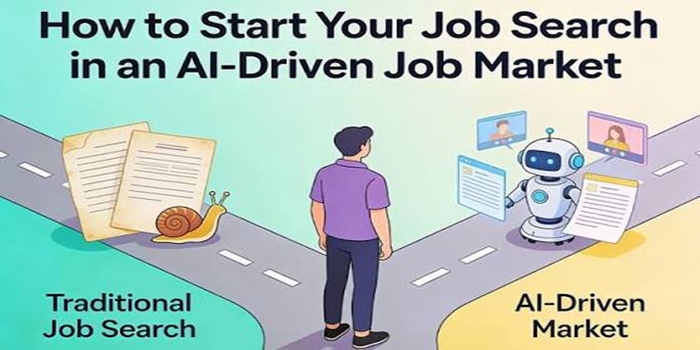
Artificial intelligence is rapidly changing the job market, transforming how work is done across industries. As automation and AI tools become more common, many roles are evolving while new ones are emerging. To stay competitive, professionals need to continuously update their skills, adapt to new technologies, and focus on abilities that complement AI rather than compete with it. Understanding how to remain relevant in this shifting landscape is essential for long-term career success.
Understanding the AI Revolution
Before discussing how to stay competitive, it is important to understand what AI is doing in the workplace.
AI excels at tasks involving:
Data processing
Pattern recognition
Repetitive workflows
Predictive analytics
Content generation
Customer support automation
Decision support systems
These capabilities allow organizations to increase efficiency, reduce costs, and improve accuracy. As a result, many routine and repetitive tasks are becoming automated.
However, AI still struggles with areas that require:
Emotional intelligence
Ethical judgment
Complex creativity
Strategic thinking
Relationship building
Leadership
Contextual decision-making
The most successful professionals will be those who combine technological literacy with distinctly human skills.
Develop AI Literacy
One of the most important steps professionals can take is developing a basic understanding of AI.
You do not need to become a machine learning engineer to benefit from AI knowledge. Instead, focus on understanding:
How AI systems work
Their capabilities and limitations
Common business applications
Ethical considerations
Industry-specific AI trends
AI literacy helps professionals communicate effectively with technical teams, identify opportunities for innovation, and make informed decisions.
Practical ways to build AI literacy include:
Taking online AI courses
Attending webinars and workshops
Following AI industry news
Experimenting with AI tools
Reading books and research reports
Employees who understand AI are often better positioned for leadership opportunities and strategic roles.
Embrace Lifelong Learning
The traditional model of earning a degree and relying on that knowledge for an entire career is becoming obsolete.
Technological advancements are accelerating so rapidly that skills can become outdated within a few years. Continuous learning has become a necessity rather than a choice.
Professionals should develop a mindset of lifelong learning by:
Setting Learning Goals
Identify emerging skills relevant to your industry and create a structured learning plan.
Pursuing Certifications
Industry-recognized certifications demonstrate expertise and commitment to professional development.
Taking Online Courses
Many platforms offer affordable courses on AI, data analysis, cloud computing, cybersecurity, project management, and other high-demand skills.
Learning Through Practice
Applying new knowledge to real-world projects helps reinforce learning and build confidence.
The most competitive professionals are often those who consistently update their knowledge and skills.
Focus on Human-Centered Skills
As AI becomes more capable of performing technical and routine tasks, human-centered skills become increasingly valuable.
Emotional Intelligence
Emotional intelligence involves understanding and managing emotions while effectively interacting with others.
Employers highly value professionals who can:
Build relationships
Resolve conflicts
Collaborate effectively
Demonstrate empathy
Lead teams
AI can process data, but it cannot genuinely understand human emotions in the way people do.
Critical Thinking
Critical thinking enables professionals to analyze information, question assumptions, and make sound judgments.
Organizations need employees who can:
Evaluate AI-generated outputs
Assess risks
Solve complex problems
Make strategic decisions
Creativity
AI can generate content and ideas, but true innovation often comes from human imagination and original thinking.
Creative professionals can:
Develop unique solutions
Create new business opportunities
Design innovative products
Enhance customer experiences
Creativity remains one of humanity’s strongest competitive advantages.
Learn to Work Alongside AI
Rather than competing against AI, successful professionals learn how to collaborate with it.
AI can enhance productivity by:
Automating repetitive tasks
Generating reports
Assisting with research
Supporting decision-making
Streamlining workflows
Professionals who use AI effectively can often accomplish more in less time.
Examples include:
Marketers using AI for content ideation
Lawyers leveraging AI for document review
Healthcare professionals utilizing AI-assisted diagnostics
Recruiters using AI-powered candidate screening
The key is viewing AI as an assistant rather than a replacement.
Build Digital and Data Skills
Data has become one of the world’s most valuable resources, and organizations increasingly rely on data-driven decision-making.
The future belongs to professionals who can connect ideas across different fields.
For example:
Healthcare professionals with data analytics skills
Marketers who understand AI tools
Financial analysts with programming knowledge
Educators who use learning technologies
Cross-disciplinary expertise increases versatility and creates unique value.
The Importance of Ethical Awareness
As AI adoption grows, ethical considerations become increasingly important.
Organizations need professionals who understand issues such as:
Data privacy
Algorithmic bias
Transparency
Accountability
Responsible AI use
Employees who can help organizations implement AI responsibly will become highly valuable.
Ethical awareness is likely to become a core professional competency across industries.
Conclusion
The rise of AI is transforming the global workforce, but it does not signal the end of human employment. Instead, it marks the beginning of a new era where technology and human capability work together. The professionals who thrive will not necessarily be those with the most technical expertise, but those who continuously learn, adapt, innovate, and leverage AI strategically.