


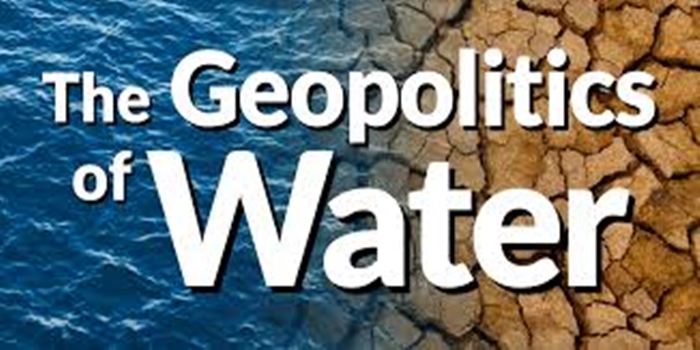
In this article, we discussed water scarcity, geopolitical tension, water as a tool of political leverage, technological and policy solutions, the future of water geopolitics.
Definition
Water scarcity is a critical, quickening global crisis where demand for safe, usable water exceeds supply, affecting over half the world’s population for at least one month per year. Driven by population growth, climate change, pollution, and unsustainable agricultural practices, this shortage affects both water quantity and quality. By 2025, two-thirds of the population could face water shortages.
Causes of Water Scarcity
Physical Scarcity: Lack of water due to natural, arid conditions and climate-driven, diminished resources (e.g., shrinking glaciers, reduced rainfall).
Economic Scarcity: Lack of investment in water infrastructure, poor management, or unequal distribution, meaning water exists but is inaccessible.
Overexploitation: Agriculture uses ~70% of freshwater, with excessive irrigation and extraction from aquifers.
Pollution: Contamination from industrial waste, agricultural runoff, and untreated sewage reduces available clean water.
Impacts and Consequences
Health Hazards: Limited access to safe water leads to water-borne diseases like cholera.
Social Inequity: Women and girls bear the brunt of water collection, losing time for education and work.
Economic Disruption: Shortages impact agriculture, energy production, and economic growth, increasing competition for resources.
Environmental Degradation: Ecosystems are destroyed as rivers run dry and aquifers are depleted faster than they can recharge.
Solutions and Management
Addressing water scarcity requires improved water management, infrastructure investment, and efficiency.
Sustainable Agriculture: Adopting efficient irrigation, such as drip irrigation, to reduce water waste.
Water Management & Protection: Protecting natural water sources, increasing wastewater recycling, and reducing pollution.
Policy Reforms: Developing policies for fair water allocation and implementing water-saving technologies.
Geopolitical tensions arise from competition for power, resources, and influence, causing, military, economic, and diplomatic friction between nations. Fueled by shifting global power, technological competition, and regional instabilities, these tensions threaten to fragment the global economy. Key hotspots include the South China Sea, the Middle East, and Eastern Europe, impacting international trade and increasing sovereign risk.
Water as a Tool of Political Leverage
In some cases, water infrastructure becomes a strategic asset.
- Hydropower Politics
Control over dams allows states to regulate water flow and generate electricity, enhancing economic and political influence.
- Conflict Weaponization
In war zones, control over water facilities can be used as leverage. Armed groups have at times seized dams or restricted water access to exert pressure.
Thus, water infrastructure is increasingly viewed as part of national security strategy.
- Internal Water Scarcity and Political Instability
Water scarcity can also fuel domestic unrest.
- Urban Water Shortages
Major cities facing water crises may experience:
Protests
Political accountability crises
Governance reforms
- Rural–Urban Tensions
Competition between agricultural and urban users may create political friction, particularly in rapidly urbanizing societies.
Water governance failures can undermine state legitimacy.
Technological and Policy Solutions
Technological innovations may reduce geopolitical pressures:
Desalination (especially in Gulf states)
Wastewater recycling
Efficient irrigation systems
Smart water monitoring
However, these solutions require financial resources and political will.
Investment in water infrastructure and governance reform can transform scarcity into an opportunity for cooperation.
The Future of Water Geopolitics
Several trends will shape future dynamics:
Accelerating climate change
Population growth in water-stressed regions
Infrastructure expansion
Technological innovation
Regional power rivalries
While some analysts warn of water wars, historical evidence suggests that cooperation is more common than armed conflict. However, water scarcity can exacerbate existing political tensions.
Conclusion
Water scarcity and geopolitical tension are increasingly interconnected as global freshwater resources are strained by climate change, population growth, and rising demand, with over two-thirds of the world’s population expected to face water stress by 2050. As water crosses political boundaries, with roughly 60% of the world’s freshwater flowing through shared basins, water scarcity acts as a “threat multiplier,” exacerbating existing political, social, and economic tensions.
READ: Predictive Scarcity