


Introduction
Education is often seen as the foundation for a successful future, with the belief that earning a degree will naturally lead to stable employment. However, in today’s world, many graduates are discovering that the transition from classroom to workplace is not as straightforward as expected. This mismatch has created a noticeable gap between what is taught in schools and what is required in the job market.
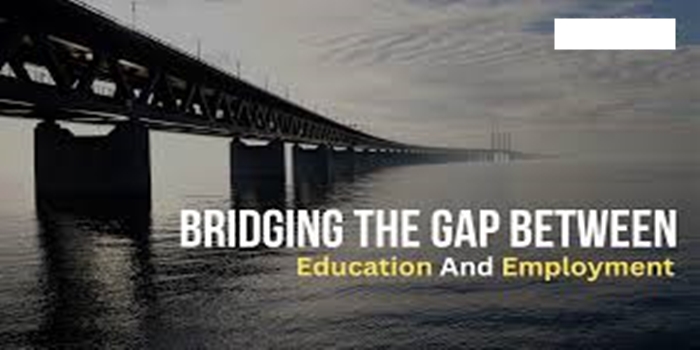
As economies evolve and industries become more competitive, this gap continues to raise important questions about the purpose of education and how well it prepares individuals for real-world challenges. This blog explores the reasons behind the gap between education and employment and what it means for today’s workforce.
This growing disconnects between education and employment is not just an individual frustration, it is a structural challenge affecting economies, industries, and entire generations.
The Promise vs. Reality
At its core, education is meant to prepare individuals for the workforce and for life. It should provide both knowledge and the practical skills needed to navigate real-world challenges. However, many graduates discover that what they learned in classrooms does not align with what employers actually need.
This mismatch creates a difficult reality:
Employers struggle to find job-ready candidates
Graduates struggle to find meaningful employment
Entry-level roles demand experience that education alone does not provide
The result is a paradox: high levels of education alongside high levels of underemployment.
Outdated Curricula in a Rapidly Changing World
One of the primary causes of this gap is the pace of change. Industries evolve quickly, driven by technology, globalization, and shifting market demands. Educational systems, on the other hand, often change slowly.
Curricula may remain unchanged for years, even as the skills required in the workplace transform dramatically. For example:
Digital literacy has become essential across nearly all fields
Automation is reshaping traditional roles
New industries are emerging faster than courses can be designed
When education lags behind industry, graduates enter the job market already out of sync.
The Overemphasis on Theory
Many education systems prioritize theoretical knowledge over practical application. While theory provides a necessary foundation, it is often not enough on its own.
Employers increasingly value:
Problem-solving ability
Communication skills
Adaptability and critical thinking
Hands-on experience
Yet students may spend years mastering concepts without opportunities to apply them in real-world contexts. Internships, apprenticeships, and project-based learning are still not as widespread or integrated as they need to be.
This creates graduates who are knowledgeable, but not always job-ready.
The Experience Paradox
One of the most frustrating aspects of the education-employment gap is the expectation of experience. Many entry-level jobs require prior work experience, creating a cycle that is difficult to break.
Graduates face questions like:
How do you gain experience without a job?
How do you get a job without experience?
Without structured pathways, such as internships or cooperative education programs—many young people are left navigating this paradox on their own.
The Role of Soft Skills
Technical knowledge alone is no longer sufficient in most workplaces. Soft skills, such as teamwork, communication, emotional intelligence, and time management, are increasingly important.
However, these skills are often underdeveloped in traditional education systems, which tend to focus more on exams and academic performance than interpersonal growth.
As a result, some graduates may excel academically but struggle in collaborative, fast-paced work environments.
Credential Inflation
Another factor widening the gap is credential inflation, the increasing requirement for higher levels of education for roles that previously required less.
Degrees that were once considered sufficient may no longer stand out. In some cases, even advanced degrees do not guarantee employment.
This leads to:
Increased competition for limited opportunities
Rising education costs without proportional returns
Growing frustration among graduates
Education becomes necessary, but not always sufficient.
The Disconnect Between Stakeholders
A key issue is the lack of alignment between the main stakeholders:
Educational institutions
Employers
Governments
Each operates with different priorities. Universities may focus on academic excellence and research, while employers prioritize productivity and immediate results. Governments aim to address broader economic and social goals.
Without strong collaboration, the system becomes fragmented, and students fall into the gap.
Regional and Economic Factors
The education-employment gap is also influenced by local economic conditions. In many regions, there are simply not enough jobs to absorb the number of graduates entering the workforce.
Additionally, certain sectors may be oversaturated, while others face skill shortages. For example:
High demand for technology and skilled trades
Oversupply in some academic disciplines
This imbalance further complicates the transition from education to employment.
Rethinking the Purpose of Education
Addressing the gap requires rethinking what education is meant to achieve. It is not only about imparting knowledge but also about preparing individuals to adapt, learn continuously, and contribute meaningfully to society.
This means shifting toward:
Lifelong learning rather than one-time education
Skill development alongside academic knowledge
Flexibility to adapt to changing career paths
Education should not be a one-time preparation for work, but an ongoing process that evolves with the individual and the economy.
Bridging the Gap: Practical Solutions
While the challenge is complex, there are several ways to narrow the gap between education and employment:
- Stronger Industry, Academia Collaboration
Educational institutions and employers need to work together to design relevant curricula and training programs.
- Emphasis on Practical Learning
Internships, apprenticeships, and real-world projects should be integrated into education systems.
- Development of Soft Skills
Communication, teamwork, and adaptability should be taught alongside technical subjects.
- Career Guidance and Mentorship
Students need better access to career counseling and mentorship to make informed decisions.
- Encouraging Alternative Pathways
Vocational training, certifications, and skill-based learning should be valued alongside traditional degrees.
The Human Impact
Beyond statistics and policy discussions, the education-employment gap has a profound human impact. It affects confidence, mental well-being, and life trajectories.
Graduates may feel:
Disillusioned with the system
Pressured by societal expectations
Uncertain about their future
These experiences highlight the urgency of addressing the issue, not just for economic growth, but for individual fulfillment and stability.
Conclusion
The gap between education and employment highlights a growing challenge in today’s society. While education provides essential knowledge and foundational skills, it does not always fully prepare individuals for the practical demands of the workplace. As industries continue to evolve, employers increasingly prioritize experience, adaptability, and problem-solving abilities alongside academic qualifications. Bridging this gap requires effort from both educational institutions and individuals. Schools and universities need to place more emphasis on practical learning, internships, and real-world exposure, while students must also take initiative to build skills beyond the classroom.