


Introduction
Humanoid robots, machines designed to resemble and mimic human form and behavior, are rapidly transitioning from research laboratories into real-world workplaces. Powered by advances in artificial intelligence, robotics engineering, sensor systems, and machine learning, these robots are beginning to perform tasks once thought to be exclusively human.
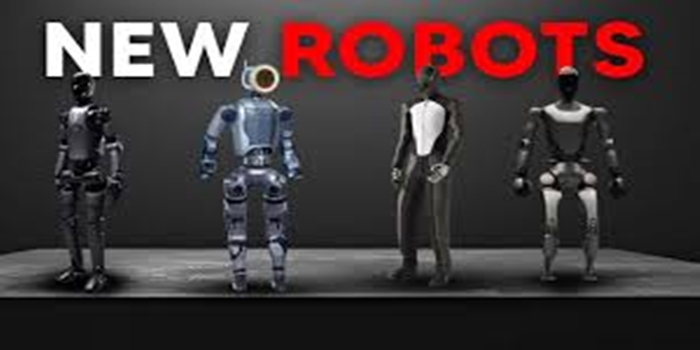
Humanoid Robots are robots designed to resemble and imitate the human body in structure, movement, and sometimes behavior. They typically have, head, torso, two arms, two legs, sensors that mimic human senses, artificial intelligence for decision making.
The Characteristic of Humanoid Robots include the Following:
Articulated joints (shoulder, elbows and knees)
Hands with fingers for gripping
Bipedal walking system
Sensors (artificial sense)
Cameras(vision)
Microphone(hearing)
Force sensors (touching)
Gyroscopes(balancing)
The AI enables humanoid robots to recognize faces, understand speech, make decisions, navigates obstacles and learn from data.
Examples of Humanoid Robots are:
ASIMO
Walk and run
Climb stairs
Recognize faces
Respond to voice command
SOPHIA
Social interaction
Public speaking
Facial expression
Conversational AI
ATLAS
Parkour
Backflips
Advanced mobility
Industrial testing environment
OPTIMUS
Performing repetitive industrial tasks
Assist in factories
Eventually serve in homes
Why Are Humanoid Robots Being Developed?
1, To work in Human Environments
Factories, hospitals offices and homes are designed for human bodies. A humanoid robot can use:
Tools
Stairs
Doors
Equipment’s
2, To Replace Dangerous or Repetitive Jobs
Humanoid robots may eventually:
Handle hazardous materials
Work in disaster zones
Perform heavy lifting
Operate in extreme environments
- 3. To Assist the Elderly
In aging societies, humanoid robots could:
Provide companionship
Monitor health
Assist with mobility
Support daily tasks.
Technologies Behind Humanoid Robots
Humanoid robotics combines several advanced fields:
Mechanical engineering (movement systems)
Artificial intelligence
Computer vision
Machine learning
Battery technology
Human-robot interaction research
It is one of the most complex engineering challenges in modern technology.
Challenges of Humanoid Robots
Despite progress, major challenges remain:
- Balance and Movement
Walking on two legs is extremely difficult for robots.
- Energy Consumption
Humanoid robots require powerful batteries that are:
Lightweight
Long-lasting
Safe
- Dexterity
Human hands are incredibly complex. Replicating fine motor skills is still difficult.
- Cost
Most advanced humanoid robots cost hundreds of thousands, sometimes millions, of dollars to develop.
Conclusion
A humanoid robot is: A robot designed to look and move like a human, using artificial intelligence and mechanical systems to perform tasks in human environments.
READ: Understanding Robotics in Maintenance