


Introduction
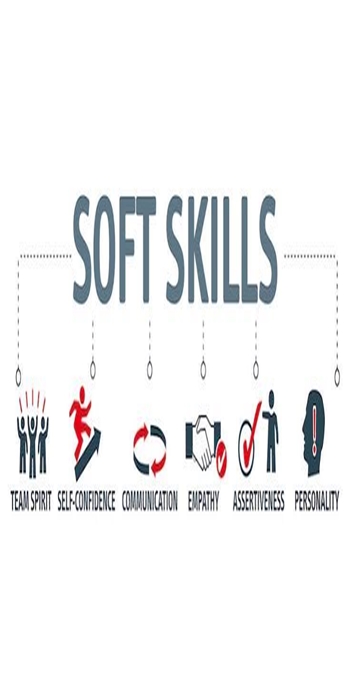
In today’s workplace, technical knowledge alone is not enough to guarantee success. Soft skills such as communication, teamwork, problem-solving, and adaptability play a crucial role in building strong professional relationships and achieving career growth. These skills help individuals work effectively with others, handle challenges confidently, and stand out in an increasingly competitive job market.
Understanding Soft Skills
Soft skills are non-technical abilities that influence how individuals interact with others and perform in various situations. Unlike hard skills, which are often learned through formal education and training, soft skills are developed through experience, self-awareness, and continuous practice.
Common soft skills include:
Communication
Teamwork
Leadership
Emotional intelligence
Adaptability
Problem-solving
Time management
Conflict resolution
Critical thinking
Creativity
Decision-making
Active listening
Work ethic
Professionalism
These skills affect nearly every aspect of professional and personal life.
Why Soft Skills Matter
Soft skills play a critical role in workplace success because most jobs involve interaction with people, whether customers, colleagues, supervisors, clients, or stakeholders.
Technical skills may help someone secure a job, but soft skills often determine long-term success and career progression.
Employers value soft skills because they contribute to:
Stronger workplace relationships
Increased productivity
Better collaboration
Effective leadership
Improved customer satisfaction
Higher employee engagement
Enhanced organizational performance
In many organizations, employees with strong soft skills are often viewed as more adaptable, dependable, and capable of handling complex workplace situations.
The Growing Importance of Soft Skills in the Modern Workplace
The workplace has undergone significant changes over the past decade. Remote work, digital communication, globalization, and technological advancements have transformed how people collaborate and perform their jobs.
As automation takes over repetitive and routine tasks, human-centered skills become increasingly valuable.
Machines can process data, automate workflows, and perform calculations, but they cannot fully replicate qualities such as:
Empathy
Emotional understanding
Creativity
Ethical judgment
Relationship building
Leadership
These uniquely human abilities are becoming major competitive advantages in the modern workforce.
Communication: The Foundation of Success
Effective communication is one of the most important soft skills in any profession.
Communication involves more than simply speaking or writing. It includes:
Listening actively
Expressing ideas clearly
Understanding others’ perspectives
Providing constructive feedback
Adapting messages to different audiences
Strong communication skills improve workplace efficiency and reduce misunderstandings.
Professionals with excellent communication abilities can:
Present ideas persuasively
Build stronger relationships
Resolve issues more effectively
Collaborate with diverse teams
Enhance customer interactions
Whether communicating in meetings, emails, presentations, or casual conversations, clear communication is essential for success.
Emotional Intelligence: Understanding People
Emotional intelligence refers to the ability to recognize, understand, manage, and influence emotions—both one’s own and those of others.
Emotional intelligence consists of several key components:
Self-Awareness
Understanding personal emotions, strengths, weaknesses, and behavioral patterns.
Self-Regulation
Managing emotions effectively, especially during stressful situations.
Empathy
Recognizing and understanding the feelings and perspectives of others.
Social Skills
Building relationships and navigating social interactions effectively.
Motivation
Maintaining focus, resilience, and commitment to goals.
Employees with high emotional intelligence often perform better in leadership, customer service, teamwork, and conflict-resolution roles.
Teamwork and Collaboration
Modern workplaces rely heavily on collaboration.
Projects often require contributions from individuals with different skills, backgrounds, and perspectives. The ability to work effectively within a team is therefore essential.
Strong teamwork skills include:
Respecting others’ opinions
Sharing responsibilities
Supporting colleagues
Contributing ideas
Resolving disagreements constructively
Collaborative employees help create positive work environments where innovation and productivity can thrive.
Organizations often achieve their goals more efficiently when employees work together effectively.
Adaptability in a Changing World
The ability to adapt has become one of the most valuable workplace skills.
Businesses continually face:
Technological disruptions
Market shifts
Organizational changes
New regulations
Economic uncertainties
Employees who embrace change rather than resist it are better equipped to succeed.
Adaptable individuals:
Learn new skills quickly
Remain open to new ideas
Adjust to changing priorities
Handle uncertainty effectively
Embrace innovation
Adaptability enables professionals to remain relevant in rapidly evolving industries.
Problem-Solving and Critical Thinking
Every organization encounters challenges that require thoughtful solutions.
Problem-solving and critical-thinking skills enable individuals to:
Analyze situations objectively
Identify root causes
Evaluate possible solutions
Make informed decisions
Anticipate potential risks
Rather than reacting impulsively, strong critical thinkers approach problems systematically and strategically.
These skills contribute significantly to innovation, efficiency, and organizational success.
The Role of Soft Skills in Remote Work
The rise of remote and hybrid work environments has increased the importance of soft skills.
Remote employees must communicate clearly, manage their time effectively, and collaborate across digital platforms.
Essential remote-work soft skills include:
Self-discipline
Accountability
Virtual communication
Adaptability
Emotional intelligence
Without strong interpersonal skills, remote collaboration can become challenging and less productive.
How to Develop Soft Skills
Unlike technical skills, soft skills often require ongoing practice and self-reflection.
Seek Feedback
Ask colleagues, mentors, and supervisors for constructive feedback.
Understanding how others perceive your communication and behavior can highlight areas for improvement.
Practice Active Listening
Focus on understanding others rather than simply waiting to respond.
Active listening strengthens relationships and improves communication.
Improve Self-Awareness
Regular self-reflection helps identify strengths, weaknesses, and behavioral patterns.
Take on New Challenges
Leadership opportunities, team projects, and public speaking engagements can strengthen soft skills.
Observe Effective Professionals
Learning from successful leaders and colleagues can provide valuable insights into effective interpersonal behavior.
Commit to Continuous Improvement
Soft skills develop over time through consistent effort and practice.
The willingness to learn and grow is essential for long-term development.
The Future of Soft Skills
As technology continues to advance, soft skills will become even more important.
Artificial intelligence and automation may replace certain technical tasks, but human qualities such as empathy, communication, creativity, and leadership remain difficult to replicate.
Future workplaces will increasingly value professionals who can:
Collaborate effectively
Lead diverse teams
Build meaningful relationships
Adapt to change
Think creatively
Navigate complex social dynamics
Organizations that invest in soft-skill development are likely to experience stronger performance, innovation, and employee engagement.
Conclusion
Soft skills are no longer optional; they are essential for success in today’s workplace and beyond. While technical expertise provides the foundation for professional competence, soft skills determine how effectively individuals apply that knowledge, interact with others, and contribute to organizational goals. Communication, emotional intelligence, teamwork, adaptability, problem-solving, leadership, and creativity are among the most valuable skills professionals can develop.