


Introduction
Infrastructure is essential to the development of every society, as it supports economic growth, social welfare, and national progress. The politics of infrastructure examines how political leaders and government institutions influence the planning, funding, distribution, and management of public facilities such as roads, hospitals, schools, and electricity. It also explores how political interests and government decisions affect access to development opportunities. Understanding this relationship is important for promoting good governance, accountability, and sustainable national development.
Understanding the Concept of Infrastructure Politics
Infrastructure politics refers to the relationship between political power and the development, distribution, and management of essential public facilities and services.
It examines how governments decide which projects should be prioritised, where resources should be allocated, and how infrastructure benefits different communities.
For example, a government may decide to construct a major road to improve transportation and trade. However, political considerations, such as electoral support and regional interests, may also influence the decision.
Infrastructure development is therefore not simply about constructing roads or buildings; it involves decisions about public resources, political priorities, and the distribution of development opportunities.
The Relationship Between Politics and Infrastructure Development
Politics plays an important role in infrastructure development because governments are responsible for making decisions about public resources and national priorities.
Political leaders determine which projects receive funding, where they are located, and how they are implemented.
Infrastructure projects can also become political tools during election campaigns. Candidates often promise to construct roads, improve electricity, build hospitals, and provide other essential services to attract public support.
When properly managed, these projects improve citizens’ living conditions and strengthen public confidence in government. However, when political interests take priority over public needs, projects may become inefficient, unequal, or abandoned.
Importance of Infrastructure in National Development
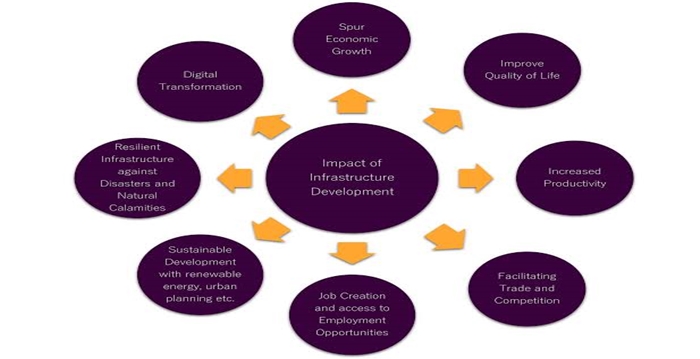
Infrastructure contributes significantly to the development of a country in several ways.
- Economic Growth: Good roads, electricity, and transportation systems support businesses, industries, agriculture, and trade.
- Improved Living Standards: Hospitals, schools, clean water, and sanitation facilities improve people’s health, education, and general welfare.
- Employment Opportunities: Infrastructure projects create jobs for engineers, construction workers, technicians, and other professionals.
- National Integration: Roads, bridges, railways, and communication networks connect communities and encourage social and economic interaction.
- Government Accountability: Citizens often assess government performance through the availability and quality of public infrastructure.
Major Political Factors Influencing Infrastructure Development
Several political factors influence how infrastructure projects are planned and implemented.
- Political Leadership
Political leaders influence development priorities through their policies, decisions, and allocation of resources. Responsible leadership ensures that infrastructure projects address the actual needs of citizens.
- Electoral Politics
Infrastructure projects are often used during election campaigns to attract voters. While political competition can encourage development, it becomes problematic when projects are selected mainly for political popularity rather than public benefit.
- Distribution of Resources
The distribution of infrastructure across different regions can become a political issue. When some communities receive more development opportunities than others, it may create feelings of marginalisation and inequality.
- Corruption and Mismanagement
Corruption can affect infrastructure development through inflated contracts, bribery, diversion of public funds, and poor-quality construction. These practices increase costs and sometimes result in abandoned projects.
- Political Stability
Infrastructure development requires long-term planning and consistent policies. Political instability and frequent changes in government priorities can delay projects and discourage investment.
The Politics of Infrastructure in Nigeria
Nigeria provides an important example of the relationship between infrastructure and politics.
Despite its economic potential, the country continues to experience infrastructure challenges involving electricity supply, road networks, transportation, healthcare, and access to clean water.
Infrastructure development is influenced by federal and state government policies, political leadership, budget allocation, and electoral competition.
Road construction, electricity, and public transportation are often major issues during political campaigns because citizens expect leaders to improve essential services.
However, some projects experience delays, inadequate funding, poor maintenance, or abandonment when governments change.
To address these challenges, Nigeria needs stronger institutions, transparent procurement processes, effective project monitoring, and consistent infrastructure policies.
The Role of Government in Infrastructure Development
Government has a major responsibility for providing and regulating essential infrastructure.
Its responsibilities include:
Developing long-term infrastructure policies.
Allocating public resources transparently.
Providing roads, hospitals, schools, and electricity.
Monitoring construction projects.
Encouraging private-sector investment.
Maintaining existing infrastructure.
Ensuring that rural and underserved communities receive adequate development.
Government decisions should be guided by public needs rather than personal or political interests.
The Impact of Infrastructure Politics on Society
The politics of infrastructure has significant effects on society.
Social inequality: Unequal distribution of infrastructure can disadvantage rural and economically weaker communities.
Economic development: Good infrastructure encourages investment, employment, and business growth.
Public trust: Properly completed projects can increase confidence in government, while abandoned projects create dissatisfaction.
Political competition: Infrastructure development influences how citizens evaluate political leaders and their performance.
Regional development: Fair distribution of public facilities helps reduce inequalities between communities.
Challenges Affecting Infrastructure Development
Despite its importance, infrastructure development faces several challenges:
Corruption: Misuse of public funds and inflated contracts.
Inadequate funding: Insufficient resources for project completion.
Poor planning: Lack of proper research and feasibility studies.
Political interference: Decisions influenced by personal and electoral interests.
Poor maintenance: Failure to maintain existing facilities.
Policy inconsistency: Changes in government priorities that disrupt ongoing projects.
Addressing these challenges requires effective leadership, institutional accountability, and responsible management of public resources.
Strategies for Improving Infrastructure Governance
To achieve sustainable infrastructure development, governments and other stakeholders should:
Promote transparency in public contracts and project funding.
Strengthen accountability among public officials and contractors.
Involve communities in identifying infrastructure needs.
Ensure fair distribution of infrastructure across different regions.
Encourage responsible public-private partnerships.
Priorities the maintenance of existing facilities.
Develop long-term infrastructure policies that continue across different administrations.
Citizens and civil society organisations should also monitor public projects and demand accountability from government institutions.
Conclusion
The politics of infrastructure plays an important role in shaping national development, economic growth, and the well-being of citizens. Effective infrastructure development requires responsible leadership, transparency, accountability, and fair distribution of resources. Governments must prioritise public needs rather than personal or political interests. Ultimately, sustainable infrastructure reflects good governance and a genuine commitment to improving people’s lives and building a better society.
READ: Political Defections in Nigeria: Are Politicians Following Ideology or Personal Interest?