


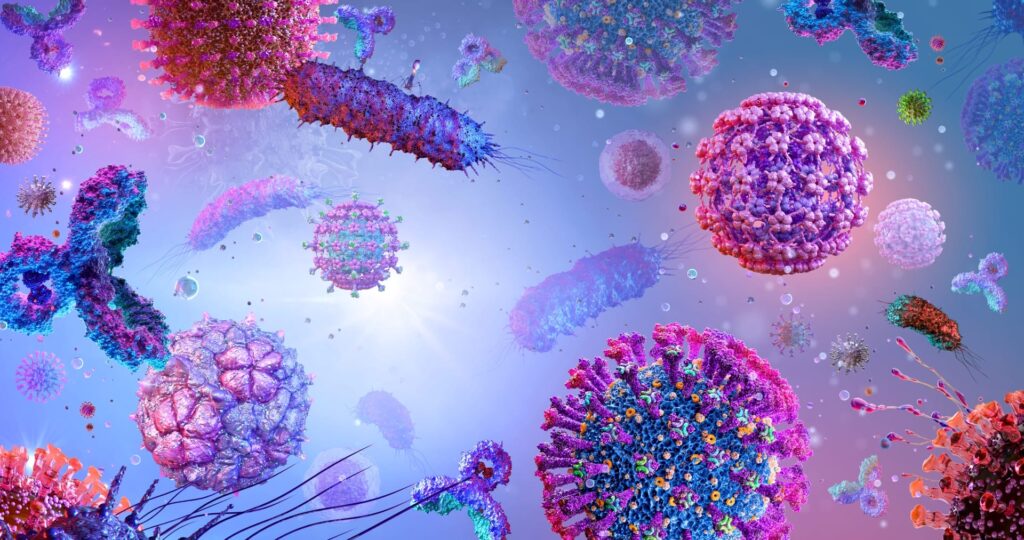
In the 21st century, viral diseases have emerged as one of the greatest challenges to human survival. From global pandemics such as COVID-19 to recurring outbreaks of Ebola, influenza, and dengue fever, viruses continue to threaten lives, economies, and societies worldwide. Their rapid spread, ability to mutate, and devastating impacts make them a major threat to global health.
Viral infections as one of the most pressing concerns in global health, affecting millions of people each year and causing significant morbidity and mortality. From the common cold and influenza to emerging diseases like COVID-19, viruses have proven to be both resilient and adaptable, constantly posing new challenges for healthcare systems around the world.
Explore how viral diseases pose a major threat to global health. Learn about the spread, transmission, major outbreaks, and the urgent need for prevention.
Examples of Viral Threats
- Influenza (Flu)
- HIV/AIDS
- COVID-19 (Coronavirus)
- Ebola Virus Disease
- Hepatitis B and C
- Dengue Fever
- Zika Virus
- Measles and Polio
These outbreaks highlight how unprepared the world can be when facing new or mutating viruses.
How Viral Diseases Spread
Viral infections can spread in multiple ways, depending on the type of virus and the environment. Common modes of transmission include:
- Airborne Transmission: Through droplets from coughing, sneezing, or talking (e.g., influenza, COVID-19).
- Direct Contact: Through touching infected individuals or surfaces (e.g., cold viruses, Ebola).
- Sexual Contact: Some viruses spread through sexual fluids (e.g., HIV, HPV).
- Insect Bites: Carried by vectors like mosquitoes (e.g., dengue, Zika).
- Blood or Organ Transfusion: From contaminated blood or medical instruments.
Because viruses spread so easily, even a single outbreak can quickly evolve into a global health crisis.
Why Viral Diseases Are a Global Threat
- Rapid Transmission Across Borders
Due to globalization and air travel, viruses can spread across continents in hours. What begins as a local outbreak can quickly escalate into a global emergency, as seen with COVID-19
- High Mutation Rates
Viruses are known for their ability to mutate and evolve. New strains can become resistant to existing treatments and vaccines, making disease control even harder.
- Zoonotic Origins
Many dangerous viruses, including HIV, Ebola, and coronaviruses, originated in animals before jumping to humans. Increasing deforestation, urbanization, and wildlife trade are making such spillovers more frequent.
- Weak Healthcare Systems
In many developing regions, healthcare systems lack the capacity to detect, contain, and treat viral outbreaks effectively. This allows diseases to spread unchecked.
- Global Economic and Social Impact
Viral diseases disrupt economies, close schools, halt businesses, and strain mental health. The ripple effects often last long after the outbreak has been controlled.
Major Viral Outbreaks in History
Throughout history, viral diseases have caused some of the most devastating pandemics:
-
The Spanish Flu (1918–1919): Killed over 50 million people worldwide.
-
HIV/AIDS Epidemic (1980s–Present): Claimed more than 40 million lives globally.
-
Ebola Outbreaks (2014–2016): Particularly deadly in West Africa.
-
COVID-19 Pandemic (2019–2023): Disrupted economies, claimed millions of lives, and reshaped global health systems.
These outbreaks highlight how unprepared the world can be when facing new or mutating viruses.
What Needs to Be Done
- Strengthening Healthcare Systems
Countries must invest in strong healthcare infrastructures, rapid diagnostic systems, and medical research to detect and respond to outbreaks quickly.
- Promoting Vaccination and Public Awareness
Vaccines are one of the most powerful tools against viral diseases. Public education can reduce misinformation and encourage preventive health practices.
- Global Collaboration
Since viruses know no borders, international cooperation is vital. Sharing data, vaccines, and medical expertise helps the world respond faster to emerging threats.
- Environmental Protection
Conserving forests, regulating wildlife trade, and reducing human encroachment on animal habitats can lower the risk of zoonotic spillovers.
- Preparedness for Future Pandemics
Governments should build emergency stockpiles, strengthen research, and train health workers for swift response when the next viral threat emerges.
Conclusion
Viral diseases are not just medical issues they are global threats that affect health, economies, and stability. With the recent surge in outbreaks, the world must recognize that prevention and preparedness are better than reaction. By strengthening healthcare systems, promoting vaccines, protecting the environment, and fostering global unity, humanity can reduce the risk of future viral catastrophes.
The fight against viral diseases is a fight for the future of global health.