


Introduction
Investing is a way to grow your money and achieve financial goals, but it also involves risks. For beginners, understanding investment risk is essential to making informed decisions and avoiding unnecessary losses. By learning how investments work, recognizing potential risks, and choosing suitable opportunities, you can build a stronger foundation for your financial future.
- Understand What Investment Risk Means
Investment risk refers to the possibility that an investment may lose value or fail to produce the expected returns. For example, if you invest in company shares, their prices may increase as the business grows or decrease because of poor performance or changes in market conditions.
Different investments carry different levels of risk. Some may offer more predictable returns, while others have greater potential for growth but experience significant price fluctuations.
Understanding that investment returns are uncertain helps you avoid unrealistic expectations and make better financial decisions.
- Learn the Different Types of Investment Risk
Beginners should understand several common types of investment risk.
Market risk: The possibility of losing money because investment prices decline due to economic changes, market conditions, or investor behavior.
Inflation risk: The risk that rising prices will reduce the purchasing power of your money over time.
Liquidity risk: The possibility that you may be unable to sell an investment quickly without accepting a lower price.
Credit risk: The possibility that a borrower or bond issuer will fail to make promised payments.
Currency risk: The risk that exchange-rate changes will reduce the value of investments held in foreign currencies.
Understanding these risks can help you compare investment opportunities and determine which options are appropriate for your financial goals.
- Understand the Relationship Between Risk and Return
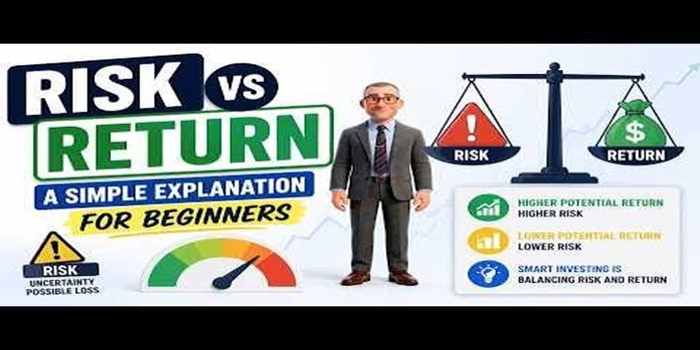
Investments with higher potential returns often involve higher levels of risk. For example, stocks may offer opportunities for long-term growth, but their prices can rise and fall significantly.
However, taking greater risks does not guarantee greater profits. Some risky investments may result in substantial losses.
Beginners should avoid choosing investments simply because they promise high returns. Instead, consider the potential rewards, possible losses, costs, and reliability of the investment provider before making a decision.
- Know Your Risk Tolerance
Risk tolerance refers to your willingness and ability to withstand investment losses. It depends on your financial situation, income stability, responsibilities, investment goals, and the time you have available.
For example, someone investing for retirement several decades away may have more time to withstand market fluctuations than someone saving for an expense due in six months.
Before investing, ask yourself how much loss you could reasonably afford and how you might react if your investment declined in value.
Choosing investments that match your financial circumstances can help you avoid unnecessary stress and make more consistent decisions.
- Diversify Your Investments
Diversification means spreading your money across different investments instead of placing everything in one asset or company.
For example, a portfolio might include shares, bonds, and suitable cash investments, depending on the investor’s goals and circumstances.
Diversification can reduce the impact of poor performance in one investment. However, it does not eliminate risk or guarantee profits because different investments may decline at the same time.
The goal is to avoid depending too heavily on a single investment for your financial success.
- Research Before Investing
Before investing your money, take time to understand how the opportunity works, how it generates returns, and what could cause you to lose money.
Research the investment provider, review applicable fees, and check relevant regulatory requirements. Avoid making decisions based only on social media recommendations, celebrity endorsements, or promises of quick profits.
Be particularly cautious of schemes that guarantee unusually high returns with little or no risk. Legitimate investments involve uncertainty, and pressure to invest immediately can be a warning sign.
If you do not understand an investment, seek reliable information or qualified financial advice before committing your money.
- Avoid Investing Money You Need for Essential Expenses
It is important to protect money needed for daily living expenses, emergencies, and urgent financial responsibilities.
Before investing, consider building an emergency fund and reviewing any high-interest debts you may have. Avoid using rent money, school fees, or borrowed money for highly volatile investments.
Investing should support your financial goals rather than put your basic needs at risk.
You should also consider when you will need the money. Funds required in the near future generally should not be exposed to unnecessary market fluctuations.
- Avoid Emotional Investment Decisions
Fear and excitement can influence investment decisions. Some beginners buy investments because prices are rising and they are afraid of missing out. Others panic and sell when prices fall.
Both reactions can lead to poor outcomes.
To avoid emotional decisions, establish clear financial goals and develop an investment plan before committing your money. Review your investments periodically rather than reacting to every market movement.
Remember that a falling investment is not automatically a bargain, and a rising investment is not necessarily a good opportunity. Research and careful evaluation should guide your decisions.
- Monitor Your Investments Regularly
After investing, review your portfolio periodically to ensure it remains suitable for your financial goals and circumstances.
Consider changes in investment performance, fees, market conditions, and your personal financial needs. If your circumstances change, you may need to adjust your strategy.
However, avoid unnecessary buying and selling based on short-term market fluctuations. A thoughtful review process can help you remain focused on your long-term objectives.
Conclusion
Understanding investment risk is essential for making smart financial decisions. By researching investment opportunities, diversifying your portfolio, and choosing investments that match your financial goals, you can manage risks more effectively. Remember that investing does not guarantee profits, so avoid unrealistic promises and invest carefully. With proper knowledge, patience, and planning, beginners can make informed decisions and work toward long-term financial success.