


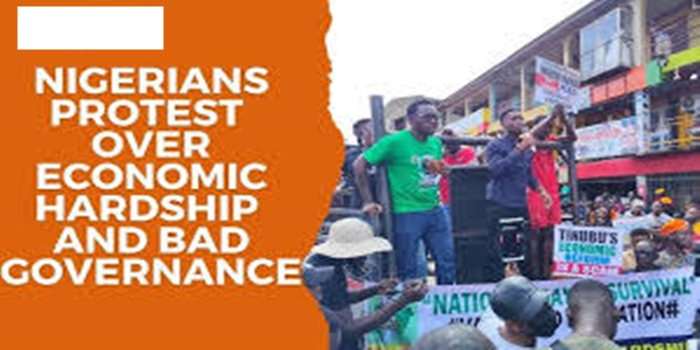
In this article, we discussed economic hardship, the features, declining public trust in political elites, currency instability and public perception, labor unions and civil society influence, redefining political legitimacy and the risk and opportunity.
Definition
Economic hardship refers to the inability or struggle to meet basic needs such as food, shelter, and healthcare, due to limited income, unemployment, debt, or unforeseen expenses. It is a significant social determinant of health that causes severe stress, mental health issues, and reduced quality of life. It can affect anyone but disproportionately impacts vulnerable populations.
Features of Economic Hardship include:
Financial Instability and Reduced Purchasing Power: High inflation, particularly a rapid rise in food and fuel prices, reduces income value and restricts the ability to afford necessities.
Material Deprivation: This includes a lack of basic necessities such as adequate food, clothing, and safe, warm housing.
Employment Instability: Job loss, reduced working hours, or the prevalence of low-wage jobs with poor benefits creates chronic economic insecurity.
High Debt Levels: Heavy reliance on credit to manage daily expenses, leading to unsustainable debt loads.
Increased Mental and Emotional Stress: Chronic financial pressure often leads to increased parental stress, depression, anxiety, and feelings of hopelessness.
Social and Behavioral Impacts: It is linked to increased family conflict, reduced social participation, and in severe cases, higher rates of crime, school dropouts, and child abuse.
Inequality in Resource Access: Inadequate access to quality healthcare, education, and transportation, often disproportionately affecting minority groups or lower-income households.
Declining Public Trust in Political Elites
Economic hardship exposes perceived inequality between political elites and ordinary citizens.
Many Nigerians observe:
Political office holders earning high salaries and allowances
Expensive government convoys and lifestyles
Continued corruption scandals
Weak social safety nets
As economic conditions worsen, tolerance for elite privilege decreases. Citizens become more critical of:
Government spending priorities
Policy inconsistency
Lack of accountability
Public trust in institutions declines when hardship appears disconnected from elite sacrifice.
Currency Instability and Public Perception
The depreciation of the naira has increased the cost of imported goods and raw materials.
For ordinary citizens, currency instability translates into:
Rapid price changes
Business uncertainty
Loss of savings value
Increased cost of foreign education or travel
Exchange rate policy, once seen as technical and elite-driven, is now widely discussed in markets, transport hubs, and social media spaces.
Economic literacy among citizens is increasing because hardship makes macroeconomic issues personal.
Rising Cost of Governance Debate
Economic hardship has intensified public scrutiny of government expenditure.
Questions increasingly raised include:
Why maintain large political appointments?
Why expensive legislative allowances?
Why maintain a costly governance structure?
Calls for reducing the cost of governance are gaining political traction.
This debate includes:
Reducing political office benefits
Cutting unnecessary agencies
Streamlining government bureaucracy
Economic strain is therefore reshaping conversations about public sector reform.
Federalism and Revenue Tensions
Nigeria’s federal system depends heavily on oil revenue shared among federal, state, and local governments.
When economic hardship deepens:
States struggle to pay salaries
Infrastructure projects stall
Public service delivery weakens
This has revived debates around:
Fiscal federalism
Resource control
State economic autonomy
Diversification beyond oil
Economic crisis is strengthening calls for restructuring governance arrangements.
Redefining Political Legitimacy
Perhaps the most important transformation is in the definition of political legitimacy.
In earlier periods, legitimacy may have been tied to:
Electoral victory
Elite alliances
Regional balancing
Today, legitimacy increasingly depends on:
Economic relief
Policy transparency
Measurable improvement in living conditions
Citizens judge leadership by economic outcomes more than political rhetoric.
The Risk and Opportunity
Economic hardship presents both danger and opportunity.
Risks:
Social unrest
Democratic fatigue
Radical political movements
Increased emigration
Opportunities:
Structural economic reform
Greater demand for accountability
Citizen engagement
Policy-driven politics
Hardship can either destabilize democracy or deepen it, depending on governance response.
Conclusion
Economic hardship is redefining Nigeria’s politics by shifting the focus from identity-based competition to survival-based governance. Inflation, unemployment, subsidy reforms, and currency instability have transformed political conversations at every level.