


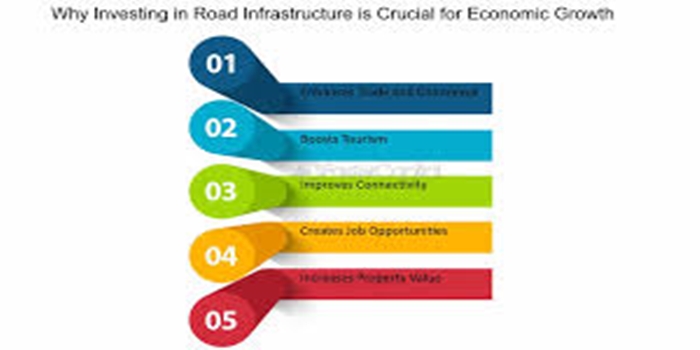
In this article, we discussed infrastructure policy, why infrastructure policy drives national growth, covering economic, social, and political dimensions, with examples from modern economies.
Definition
Infrastructure policy involves government strategies and planning for the design, funding, and management of public works like roads, bridges, and utilities, which are crucial for economic development and the well-being of citizens. Effective policies aim to align infrastructure projects with national development goals, ensure efficient use of resources, and use evidence-based analysis for project selection. Policies also address challenges like ensuring affordability, managing traffic congestion, and integrating new technologies.
Why Infrastructure Policy Drives National Growth:
Infrastructure as a Foundation for Economic Activity
Infrastructure provides the basic physical and organizational framework required for economic activity. Roads, ports, airports, electricity grids, broadband networks, and water systems form the backbone of commerce, production, and services.
mechanisms:
Reducing transaction costs: Efficient transport and logistics reduce the time and money spent moving goods and services. For example, modern highways and rail networks lower distribution costs, enabling firms to reach wider markets.
Enhancing productivity: Reliable power supply, water, and communication networks increase the efficiency of factories, offices, and farms, reducing downtime and wastage.
Facilitating trade and market access: Ports, airports, and cross-border roads enable exports and imports, integrating domestic economies with global markets.
Infrastructure Investment as an Economic Multiplier
Investment in infrastructure has direct and indirect multiplier effects on economic growth:
Direct effects: Construction, engineering, and procurement generate employment and income in the short term.
Indirect effects: Better infrastructure attracts private investment, encourages industrial clustering, and stimulates sectors such as tourism, real estate, and services.
Long-term effects: Improved infrastructure increases productivity, competitiveness, and innovation, contributing to sustained growth.
Infrastructure Supports Human Capital Development
National growth is not purely economic; it depends on human capital, which is shaped by infrastructure in education, health, and social services:
Education infrastructure: Schools, universities, and digital learning networks enhance literacy, skill acquisition, and innovation capacity.
Healthcare infrastructure: Hospitals, clinics, and clean water systems improve population health, increasing workforce productivity and reducing healthcare costs.
Social inclusion: Affordable housing, transportation, and communication systems ensure equitable access to opportunities, promoting social cohesion and labor mobility.
Infrastructure Enables Industrialization and Sectoral Growth
Industrialization relies on reliable energy, transportation, and communication networks. Infrastructure policy drives sectoral specialization and diversification:
Energy infrastructure: Power grids and renewable energy projects provide the electricity needed for factories, IT parks, and industrial zones.
Transport infrastructure: Efficient ports, railways, and highways reduce supply chain bottlenecks, enabling large-scale production and distribution.
Digital infrastructure: Broadband networks, data centers, and telecom systems facilitate e-commerce, fintech, and knowledge-based industries.
Regional Development and Economic Integration
Infrastructure policy can reduce regional disparities by connecting underdeveloped areas to economic centers:
Roads and railways link rural regions to urban markets, allowing farmers and small enterprises to participate in national and global value chains.
Energy and water projects bring industrial and residential development to previously neglected areas.
Communication and transport networks foster internal cohesion and integration of fragmented markets.
Infrastructure and Foreign Direct Investment (FDI)
Robust infrastructure is a key determinant for foreign investors seeking stable, productive environments. Countries with:
Reliable power supply, transport logistics, and telecommunications,
Efficient ports and airports, and
Well-maintained industrial zones
…attract higher levels of FDI, which brings capital, technology, and managerial expertise.
Infrastructure as a Catalyst for Innovation and Technology
Modern infrastructure policy extends beyond roads and bridges to digital and technological infrastructure, which is increasingly essential for growth:
Smart grids, 5G networks, and high-speed internet foster e-commerce, fintech, and digital entrepreneurship.
Innovation hubs, research labs, and incubators, supported by infrastructure investments, accelerate knowledge-intensive industries.
Integrated transportation and energy systems enable sustainable urbanization and efficient industrial ecosystems.
Infrastructure, Stability, and Investment Confidence
Infrastructure policy also contributes indirectly to national growth by enhancing political and economic stability:
Predictable infrastructure reduces business uncertainty.
Well-maintained roads, energy, and transport systems demonstrate government competence.
Investments in disaster-resilient infrastructure reduce vulnerability to natural shocks, protecting economic productivity.
Challenges and Strategic Considerations
While infrastructure is critical, poor planning or mismanagement can negate its benefits:
Over-investment or debt-driven projects can strain public finances without generating returns.
Unequal access can exacerbate regional inequality.
Environmental and social impacts may offset growth gains if sustainability is ignored.
Conclusion
Infrastructure policy drives national growth by providing the fundamental physical and institutional systems that boost productivity, attract investment, reduce operational costs, and enhance overall quality of life. These policies create an environment conducive to sustained economic development and social progress.
READ: Understanding Politics of Infrastructure