


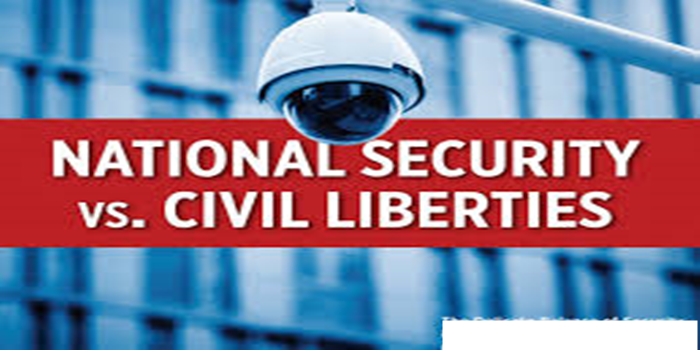
In this article, we discussed national security, civil liberties, importance of national security, challenges in balancing national security and civil liberties. role of law and institutions.
Definition
National security refers to the protection of a nation’s dominion, regional integrity, institutions, and citizens from threats that may undermine its stability and survival. Traditionally, national security was associated mainly with military defense against external enemies. However, in contemporary society, the concept has expanded to include protection against various threats such as terrorism, cybercrime, spying, organized crime, economic instability, and environmental disasters. National security involves the coordinated efforts of government institutions such as the military, police, intelligence agencies, and other security organizations.
Civil liberties refer to the important rights and freedoms guaranteed to individuals by the constitution or legal system of a country. These rights protect citizens from excessive interference by the government and ensure that individuals can live freely and express themselves without fear of oppression. Civil liberties commonly include freedom of speech, freedom of religion, freedom of assembly, freedom of the press, the right to privacy, and the right to a fair trial. These freedoms are essential for the functioning of democratic societies because they allow citizens to participate in governance, criticize government policies, and express diverse opinions.
Importance of National Security
National security is essential for the survival and development of any country. A secure environment allows governments to maintain order, protect citizens, and ensure the effective functioning of institutions. Without national security, societies may experience chaos, violence, and instability.
Security also promotes economic development by creating an environment that attracts investment and supports business activities. When citizens feel safe, they can pursue education, employment, and social activities without fear of violence or disruption.
Importance of Civil Liberties
Civil liberties are crucial for protecting human dignity and ensuring that individuals have the freedom to live according to their beliefs and values. These freedoms allow citizens to express opinions, participate in political processes, and hold government officials accountable.
Challenges in Balancing National Security and Civil Liberties
One major challenge in balancing national security and civil liberties is the expansion of surveillance technologies. Governments often use advanced technologies to monitor communications and track potential security threats. While these tools can be effective in preventing crimes or terrorist attacks, they may also violate the privacy of citizens if not properly regulated.
Another challenge is the use of emergency powers during crises such as terrorism or civil unrest. Governments may impose curfews, restrict movement, or detain individuals suspected of posing security threats. Although these measures may be necessary in certain situations, they can lead to abuse of power if not subject to oversight and legal safeguards.
Additionally, misinformation and political manipulation can influence security policies. In some cases, governments may justify restrictive measures by exaggerating security threats, which can lead to unnecessary limitations on civil liberties.
Role of Law and Institutions
Legal frameworks and independent institutions play a critical role in maintaining the balance between national security and civil liberties. Constitutions and laws define the rights of citizens and establish limits on government authority. Courts and judicial systems ensure that government actions comply with the law and protect individuals from abuse of power.
Legislative bodies also play an important role by reviewing and approving security policies. Through democratic processes, elected representatives can ensure that security measures are necessary, proportionate, and consistent with human rights principles.
Civil society organizations, the media, and human rights groups also contribute by monitoring government actions and advocating for the protection of civil liberties.
Strategies for Achieving Balance
Achieving a balance between national security and civil liberties requires several strategies. First, governments should adopt transparent policies that clearly explain the purpose and scope of security measures. Transparency helps build public trust and ensures accountability.
Conclusion
National security and civil liberties are important components of a stable and democratic society. While national security protects the country and its citizens from threats, civil liberties ensure that individuals enjoy fundamental rights and freedoms. The challenge for governments is to balance these two priorities in a way that preserves both security and freedom.
READ: The Concept of Election Security Challenges in Nigeria