

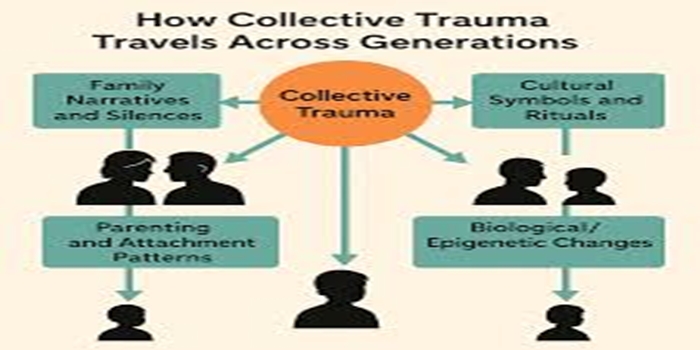
In this article, we discussed collective trauma, the examples, why collective trauma impacts generations not just individuals, types of collective crises, how collective trauma shapes a generation’s behavior.
Definition
Collective trauma is the psychological and emotional impact of a traumatic event that affects an entire group, community, or society, not just an individual. This can include shared experiences like natural disasters, war, or systemic oppression, which can shatter a group’s sense of safety and alter its collective identity and worldview. The effects can be long-lasting, extending across generations as intergenerational trauma.
The Examples of Collective Trauma:
The Great Depression
World Wars
Apartheid
Slavery and colonialism
9/11
The COVID-19 pandemic
Collective trauma reshapes how a generation views:
Safety
Stability
Relationships
Work
Government
The future
It changes the way society functions on a deep, often unconscious level.
Why Collective Trauma Impacts Generations Not Just Individuals:
When a crisis happens at a large scale, people don’t suffer alone—they suffer together.
This shared emotional experience creates:
Common fears
Common coping mechanisms
Common worldviews
Common patterns of behavior
These are then passed on culturally, sometimes even when later generations did not experience the trauma themselves.
For example:
Children of Holocaust survivors often carry inherited anxiety
Many Millennials still feel financial insecurity because of 2008’s crash
Gen Z grew up in a world shaped by terrorism, social media pressure, and climate fear
Children born after COVID-19 live with heightened caution around physical interaction
Trauma becomes cultural memory.
Types of Collective Crises That Shape Generations
Health Crises (Pandemics)
Pandemics create:
Fear of physical closeness
Heightened awareness of mortality
Distrust in public systems
Social isolation habits
Example:
COVID-19 reshaped education, work, social norms, and mental health globally.
Economic Crises
Recessions and depressions lead to:
Financial anxiety
Risk-avoidant behavior
Savings and frugality mindset
Fear of instability
Example:
Generations who lived through the Great Depression developed lifelong frugality and avoidance of debt.
Political and Social Upheavals
Wars, civil unrest, discrimination, and oppressive regimes create:
Fear of authority
Distrust in institutions
Resilience and activism
Migration patterns
Climate and Environmental Crises
Wildfires, floods, and climate change generate:
Eco-anxiety
Survival-oriented lifestyles
Activism and global consciousness
Fear for future generations
Technological Crises
Cyber threats, social media toxicity, and information overload create:
Anxiety
Overstimulation
Identity confusion
Societal polarization
Each type of crisis leaves a different psychological imprint on those who live through it.
How Collective Trauma Shapes a Generation’s Behavior:
Crises do not just create pain—they create patterns. These can be seen in how a generation thinks, works, connects, and even loves.
A Heightened Sense of Caution
Generations that experience trauma tend to be:
More risk-averse
More protective
More skeptical
For example, many young adults today prefer stability over adventure because the world feels unpredictable.
Changes in Trust
During crises, trust in institutions can collapse:
Governments
Media
Healthcare systems
Corporations
This leads to:
Conspiracy theories
Civil movements
Disengagement from politics
Social fragmentation
New Work Philosophies
Economic and social trauma shapes attitudes toward work:
Gen Z and Millennials prioritize mental health
Many rejects toxic productivity
There’s a rise in freelancing and remote work
Stability and flexibility are valued more than loyalty
Crisis redefines what “success” means.
Social Anxiety and Overthinking
Shared crises heighten:
Social fear
Worry about the future
Emotional sensitivity
Need for control
A generation raised during constant global uncertainty often internalizes stress.
Stronger Community Bonds
Paradoxically, trauma can also unite people:
Solidarity
Communal empathy
Shared resilience
Activism
Many movements, civil rights, climate activism, mental health advocacy—grew from collective suffering.
Conclusion
Collective trauma is a powerful force. It can wound societies, but it can also push them toward transformation, By recognizing the impact of shared trauma, we can understand ourselves better and build a future rooted not in fear, but in healing and resilience.
READ:The Concept of Resilience and Goal Failure