

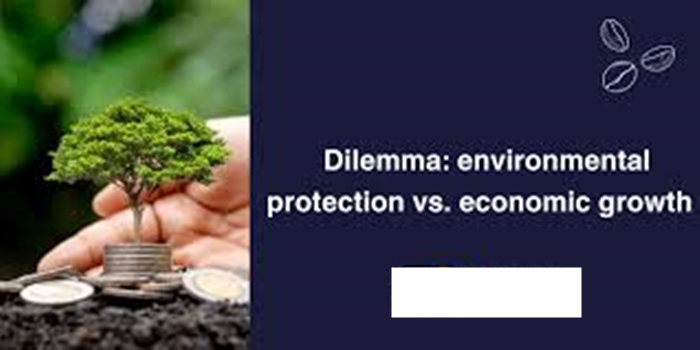
In this article, we discussed economic growth, environmental protection, the features, the core tension: growth vs protection, the benefits, and the challenges.
Definition
Economic growth refers to the increase in a country’s ability to produce goods and services over time, usually measured by the rise in Gross Domestic Product (GDP).
Features of Economic Growth
Increase in GDP: A sustained rise in real Gross Domestic Product over time.
Higher per capita income: Average income of people increases, improving living standards.
Expansion of productive capacity: Growth in capital, technology, and skills.
Employment creation: More job opportunities and lower unemployment.
Structural transformation: Shift from agriculture to industry and services.
Technological progress: Greater use of innovation and improved productivity.
Higher investment levels: Increased domestic and foreign investment.
Improved infrastructure: better transport, energy, communication, and public services.
Environmental Protection
Environmental Protection refers to efforts and policies aimed at preserving natural resources, preventing pollution, and ensuring a healthy environment for present and future generations.
Features of Environmental Protection
Conservation of natural resources: Protecting forests, water, wildlife, and biodiversity.
Pollution control: Reducing air, water, and soil pollution through regulations and clean technologies.
Sustainable development: Balancing economic growth with environmental sustainability.
Climate change mitigation: Reducing greenhouse gas emissions and promoting renewable energy.
Environmental laws and policies: Enforcing regulations to protect ecosystems and public health.
Public awareness: Educating citizens on environmental responsibility and conservation practices.
Waste management: Recycling, reusing, and proper disposal of waste materials.
Benefits of Economic Growth and Environmental Protection:
Benefits of Economic Growth
Higher living standards: Increases income, consumption, and quality of life.
Employment creation: Generates jobs and reduces unemployment.
Increased government revenue: Enables better funding for education, healthcare, and infrastructure.
Poverty reduction: Expands economic opportunities and improves livelihoods.
Technological advancement: Encourages innovation and productivity.
Benefits of Environmental Protection
Better public health: Reduces pollution-related diseases.
Sustainable use of resources: Preserves natural resources for future generations.
Climate change control: Limits global warming and environmental disasters.
Protection of biodiversity: Maintains ecosystems and food security.
Improved quality of life: clean air, water, and safer living environments.
Combined Benefits
Sustainable development: Economic progress without environmental degradation.
Green jobs: Creates employment in renewable energy and environmental industries.
Long-term economic stability: Prevents costly environmental damage and resource depletion.
The Core Tension: Growth vs Protection:
The core tension between economic growth and environmental protection lies in the trade-off between expanding production and preserving natural resources.
Economic growth often depends on industrialization, infrastructure development, and increased resource use, which can lead to pollution, deforestation, and climate change.
Environmental protection requires regulations, conservation, and limits on resource exploitation, which may increase costs for businesses and slow short-term growth.
Characteristics of the Tension
Jobs vs. regulation: Growth creates employment, while strict environmental rules may raise production costs or limit certain industries.
Short-term gains vs. long-term sustainability: Rapid growth can boost incomes quickly, but environmental damage can undermine future economic prospects.
Developing vs. developed countries: Developing nations prioritize growth to reduce poverty, while developed countries often emphasize environmental protection.
Political debate: Governments must balance voter demands for jobs and income with demands for clean air, water, and climate action.
Balancing the Tension
Sustainable development: Promotes growth that meets present needs without harming future generations.
Green growth: Uses clean technology and renewable energy to decouple growth from environmental damage.
Smart regulation: Environmental policies that encourage innovation rather than simply restricting activity.
Challenges of Economic Growth and Environmental Protection:
Challenges of Economic Growth
Income inequality: Growth may benefit some groups more than others, widening the gap between rich and poor.
Environmental degradation: Industrial expansion can cause pollution, deforestation, and resource depletion.
Urbanization pressures: Rapid growth can strain housing, transport, and public services.
Inflation and instability: Fast growth may lead to rising prices and economic overheating.
Resource exhaustion: Overreliance on finite natural resources threatens long-term sustainability.
Challenges of Environmental Protection
High costs: Implementing environmental regulations and clean technologies can be expensive.
Slower short-term growth: Strict environmental rules may limit industrial output and investment.
Enforcement difficulties: Weak institutions and corruption reduce policy effectiveness.
Conflict with development goals: Poorer countries may struggle to prioritize the environment over poverty reduction.
Public resistance: Environmental policies may face opposition if they raise prices or reduce jobs.
Shared Challenges
Balancing priorities: Governments must reconcile economic development with environmental sustainability.
Political pressure: Interest groups, businesses, and voters often have competing demands.
Global coordination: Environmental problems like climate change require international cooperation.
Conclusion
Economic growth provides the resources necessary for prosperity, while governmental protection ensures stability, fairness, and sustainability. When either is pursued in isolation, economic and political problems arise.