

In this article, we discussed economic crises, the characteristics, common causes of economic crises, how economic crises shape political decisions.
Definition
An Economic Crisis is a period of severe and widespread disturbance in an economy that leads to significant declines in economic activity and living standards. It is characterized by instability in financial systems, reduced production, rising unemployment, falling incomes, and loss of public confidence in economic institutions.
The Characteristics of Economic Crises:
Economic Contraction: Sharp decline in GDP, industrial production, and real income.
Labor Market Collapse: Soaring unemployment, wage stagnation, and increased part-time/gig work.
Financial Instability: Reduced credit availability, “flight to quality” in markets, banking system stress, and capital flight.
Consumer & Business Behavior: Plummeting consumer confidence, reduced spending/investment, and delayed expansion plans.
Market Volatility: Large swings in exchange rates, falling asset prices (stocks, housing), and volatile commodity prices.
Trade & Investment Decline: Shrinking world trade, reduced foreign investment, and lower tourism revenue.
Government Strain: Falling tax revenues, widening budget deficits, and diminished ability to fund social safety nets.
Common Triggers & Forms:
Financial Crises: Often spark broader economic downturns (e.g., 2008 crisis from subprime mortgages).
Recession/Depression: A severe, prolonged downturn with significant output losses.
Stagflation: High inflation combined with stagnant economic growth and high unemployment.
Increased poverty, hunger, and inequality.
Greater demand for social assistance (food aid, unemployment benefits).
Potential rise in mortality rates (infant/maternal) due to reduced health/education spending.
Common Causes of Economic Crises:
Poor Economic Policies and Mismanagement
Unsustainable fiscal policies, excessive government spending, high budget deficits, and weak monetary control can destabilize an economy and trigger crises.
Excessive Debt and Credit Bubbles
When governments, businesses, or households accumulate excessive debt, economies become vulnerable. Bursting credit or housing bubbles often lead to financial collapse.
Financial Sector Failures
Weak regulation, risky lending practices, bank failures, and stock market crashes can rapidly spread instability throughout the economy.
Inflation and Hyperinflation
Rapid price increases reduce purchasing power, erode savings, and undermine confidence in the currency, leading to economic breakdown.
External Shocks
Events such as global recessions, wars, pandemics, natural disasters, or sudden changes in commodity prices can severely disrupt national economies.
Trade Imbalances and Currency Crises
Persistent trade deficits and loss of foreign reserves may cause sharp currency devaluations, increasing inflation and debt burdens.
Political Instability and Corruption
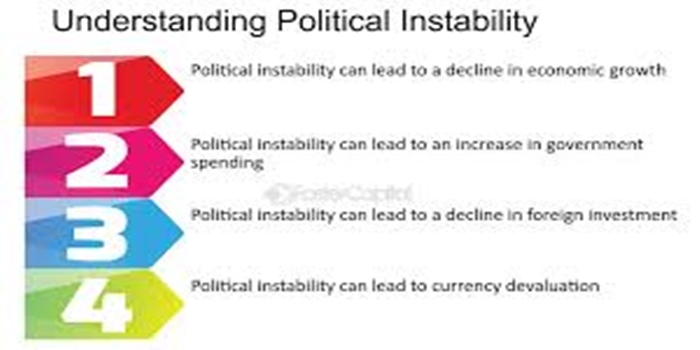
Weak governance, corruption, and political uncertainty discourage investment and weaken economic institutions.
Structural Weaknesses
Overdependence on a single industry, lack of diversification, low productivity, and inadequate infrastructure increase vulnerability to shocks.
Speculation and Market Panics
Investor speculation, loss of confidence, and sudden capital flight can rapidly destabilize financial markets.
How Economic Crises Shape Political Decisions:
1, Economic crises change policy priorities. Governments shift focus toward economic recovery through emergency measures such as incentive spending, severity policies, tax reforms, welfare expansion, or market regulation. Ideological preferences are often set aside in favor of practical solutions aimed at stabilizing the economy.
2, Crises influence political leadership and elections. Economic hardship weakens public trust in ruling governments, leading to electoral losses, cabinet reshuffles, or regime change. Voters often support leaders or parties that promise economic reform, protection of jobs, and relief for exposed groups.
3, State intervention increases during crises. Governments may expand their role in the economy through bailouts, subsidies, price controls, or nationalization of key industries. These decisions reshape debates about the role of the state versus the market.
4, Economic crises affect democratic institutions and civil liberties. To manage emergencies, governments may centralize power, pass emergency laws, or limit certain freedoms. While sometimes necessary, these measures can weaken democratic checks and balances if prolonged.
5, Public pressure and social unrest shape decisions. Rising unemployment and inequality often lead to protests and demands for reform, pushing leaders to adopt redistributive policies or structural changes.
Conclusion
Economic crises force governments to make urgent and often far-reaching political decisions. As economic hardship affects jobs, incomes, and public welfare, leaders shift policy priorities toward stabilization through measures such as economic reforms, increased state intervention, or austerity programs.
READ: The Exportation of Cash Crops As Driver of Economic Growth