

Introduction
Nigeria practices separation of powers through its constitutional framework, particularly as established by the Constitution of the Federal Republic of Nigeria (1999). The constitution divides governmental authority into three main branches.
Meaning of Separation of Powers:
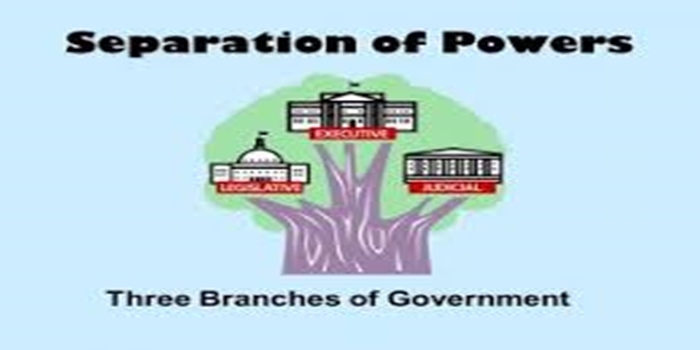
Separation of powers is a constitutional policy dividing government responsibilities into three distinct, independent branches, legislative (lawmaking), executive (law enforcement), and judiciary (law interpretation), to prevent the concentration of power, avoid despotism, and protect civil liberties through checks and balances.
The Three Branches of Government in Nigeria
- The Executive Branch
The executive branch is responsible for implementing and enforcing laws.
At the federal level, the head of the executive branch is the President of Nigeria, currently represented by Bola Ahmed Tinubu.
Structure of the Executive
The executive includes:
the President
the Vice President
the Federal Executive Council
Ministers and government agencies.
At the state level, the executive branch is led by state governors and their executive councils.
Functions of the Executive
The executive performs several key functions:
implementing laws passed by the legislature
formulating government policies
managing national security and defense
conducting foreign relations
supervising government ministries and agencies.
The executive branch is responsible for day-to-day administration of the country.
- 2. The Legislative Branch
The legislative branch is responsible for making laws for the country.
Nigeria’s national legislature is the National Assembly of Nigeria, which is located in Abuja.
Structure of the Legislature
The National Assembly is bicameral, meaning it has two chambers:
Senate of Nigeria
House of Representatives of Nigeria
The Senate consists of representatives from each state, while the House of Representatives represents federal constituencies across the country.
At the state level, each state has a House of Assembly responsible for making state laws.
Functions of the Legislature
The legislative branch performs several important roles:
making laws for the country
approving government budgets
representing citizens’ interests
overseeing the activities of the executive branch
approving appointments made by the president.
Through these functions, the legislature ensures that government actions remain accountable to the people.
- 3. The Judiciary
The judiciary interprets the law and ensures that justice is upheld.
The highest court in Nigeria is the Supreme Court of Nigeria.
Structure of the Judiciary
Nigeria’s judicial system includes several levels of courts:
the Supreme Court
the Court of Appeal
the Federal High Court
State High Courts
Customary and Sharia courts in some regions.
Functions of the Judiciary
The judiciary performs critical responsibilities such as:
interpreting the constitution
resolving disputes between individuals or institutions
reviewing the legality of government actions
protecting citizens’ fundamental rights.
Through these functions, the judiciary acts as a guardian of the constitution and the rule of law.
Checks and Balances in Nigeria
Separation of powers works effectively when each branch can limit the excesses of the others through a system known as checks and balances.
Legislative Checks on the Executive
The legislature can check the executive in several ways:
approving or rejecting presidential appointments
investigating government agencies
approving national budgets
initiating impeachment proceedings against the president.
This oversight ensures that executive power is not abused.
Executive Checks on the Legislature
The executive also has powers that influence the legislature.
For example:
the president can veto bills passed by the legislature
the executive can propose legislation or national policies
the president can summon special legislative sessions.
These powers allow the executive to participate in the law-making process.
Judicial Checks on the Other Branches
The judiciary ensures that both the executive and legislature act within constitutional limits.
Courts can:
declare laws unconstitutional
overturn unlawful government actions
resolve conflicts between federal and state governments.
Judicial review strengthens the rule of law and protects democratic principles.
Separation of Powers at the State Level
Nigeria’s federal structure means that separation of powers operates at multiple levels.
Each state government has:
a governor (executive)
a state House of Assembly (legislative)
state courts (judicial).
This arrangement ensures that governance is decentralized and that power is distributed across different levels of government.
Challenges to Separation of Powers in Nigeria
Despite its constitutional foundation, the practice of separation of powers in Nigeria faces several challenges.
Executive Dominance
In many cases, the executive branch exercises considerable influence over other branches.
For example, political pressure and control of resources can affect the independence of the legislature and judiciary.
Weak Legislative Oversight
Although the legislature has oversight responsibilities, political alliances sometimes limit its willingness to challenge the executive.
Conclusion
Separation of powers is a core principle guiding Nigeria’s democratic governance. By dividing authority among the executive, legislature, and judiciary, the Nigerian political system seeks to prevent the abuse of power and promote accountability.