

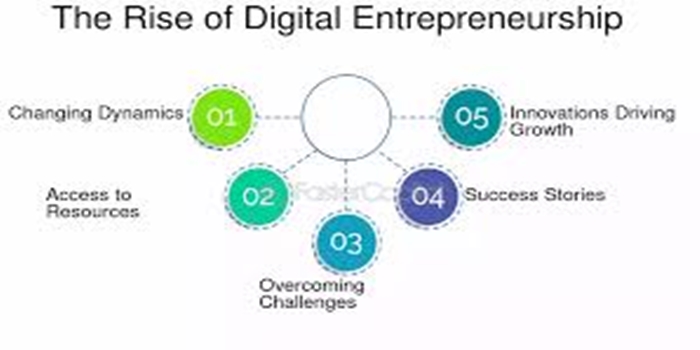
In this article, we explained digital entrepreneurship, the factors that is driving the rise, the characteristics, the types, the impacts, the challenges and the future.
Definition
Digital entrepreneurship involves launching businesses that operate primarily online, utilizing technologies like AI, blockchain, and e-commerce to create, deliver, and capture value. It offers global reach, low overhead costs, and high scalability, transforming industries like fintech, edtech, and digital marketing. Key characteristics include agility, rapid innovation, and the ability to pivot quickly, with examples ranging from SaaS platforms to content creation.
Characteristics of Digital Entrepreneurship:
Low Overhead and High Scalability: Digital businesses often operate entirely online, reducing costs for physical infrastructure and allowing for rapid scaling of products and services.
Global Reach and Accessibility: Entrepreneurs can reach a worldwide audience instantly, removing traditional geographical, space, and time limitations.
Data-Driven Decision Making: Leveraging analytics and customer feedback via digital tools allows for rapid iteration and improved business strategies.
Innovation and Disruption: Digital entrepreneurs often change market dynamics by creating new business models, such as subscription services, platforms, or digital products, rather than just selling products.
Agility and Adaptability: Due to the fast-paced nature of technology, these entrepreneurs are highly adaptable to changing consumer behaviors and market trends.
Use of Digital Infrastructure: Business operations rely heavily on internet platforms, social media, and digital tools for marketing and operational activities.
Factors Driving the Rise of Digital Entrepreneurship:
Advancements in Technology
Rapid improvements in internet infrastructure, cloud computing, and mobile technology have made it easier to start and run businesses online. Tools like e-commerce platforms, website builders, and digital payment systems allow entrepreneurs to operate with minimal physical infrastructure.
Widespread Internet Access
The global expansion of internet connectivity has opened access to large online markets. In regions like Nigeria and across Africa, increasing smartphone penetration has enabled more people to participate in the digital economy.
Low Startup Costs
Digital businesses often require less capital compared to traditional brick-and-mortar ventures. Entrepreneurs can launch online stores, offer services, or create digital products with relatively low initial investment.
Types of Digital Entrepreneurship
Digital entrepreneurship takes many forms, including:
- E-commerce
Selling products online through websites or marketplaces.
- Freelancing
Providing services like writing, design, programming, and consulting.
- Content Creation
Earning through videos, blogs, podcasts, and social media.
- Online Education
Creating and selling courses or coaching services.
- Tech Startups
Developing apps, software, and digital platforms.
Impact of Digital Entrepreneurship
- Economic Growth
Digital entrepreneurship contributes significantly to economic development.
Creates jobs and income opportunities.
Encourages innovation and competition.
- Financial Inclusion
People who previously lacked access to traditional business opportunities can now participate in the economy.
- Empowerment of Youth and Women
Digital platforms have made entrepreneurship more inclusive.
Young people and women can start businesses with fewer barriers.
Flexible work enables better participation in economic activities.
Challenges of Digital Entrepreneurship
Despite its growth, digital entrepreneurship faces several challenges:
* High Competition
Online markets are crowded, making it hard to stand out.
* Cybersecurity Risks
Businesses face threats like hacking and data breaches.
* Lack of Digital Skills
Not everyone has the knowledge needed to succeed online.
* Trust Issues
Customers may hesitate to trust new online businesses.
Future of Digital Entrepreneurship
The future of digital entrepreneurship looks very promising:
Artificial intelligence will further simplify business operations.
More people will adopt online business models.
Emerging markets (like Africa and Asia) will see rapid growth.
New opportunities will arise in areas like fintech, health tech, and e-learning.
Conclusion
The rise of digital entrepreneurship represents a major shift in the global business landscape. Driven by technology, accessibility, and changing lifestyles, it has opened doors for millions of people worldwide. It is no longer necessary to have large capital or physical infrastructure to start a business. With just a smartphone or laptop, individuals can create, innovate, and succeed in the digital economy.
READ: Entrepreneurship in the Age of Social Platforms