

Introduction
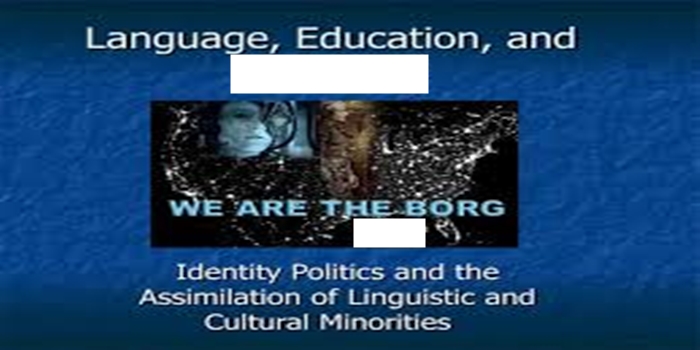
The Politics of Language and Education discovers how language choices in schools (which language to teach, how to teach it, and the role of home languages) become political, reflecting power, identity, and social access, often deciding who succeeds by privileging dominant languages (like English) while potentially marginalizing others, impacting national unity, economic opportunity, and cultural preservation. language policies in education can either promote unity and opportunity or deepen inequality and conflict.
Language as a Political Tool:
Language and Power
Language is a key instrument of power:
It determines access to education, employment, and political participation.
It shapes whose knowledge is legitimized and whose is marginalized.
It reinforces social hierarchies when dominant languages are privileged.
Control over language policy allows states and elites to shape national identity and social order.
Language and National Identity
Education systems often serve as tools of nation-building:
A common language is promoted to foster unity and shared identity.
History, literature, and civic education are taught in the dominant language.
Linguistic uniformity is often associated with political stability.
However, this can marginalize minority languages and cultures, leading to resistance and political tension.
Language Policy in Education:
Official Language Policies
Governments must decide:
Which language(s) will be the medium of instruction
Whether minority languages will be recognized or excluded
How language proficiency will be assessed
These choices are inherently political, reflecting decisions about inclusion, equality, and cultural recognition.
Monolingual vs Multilingual Education
Monolingual education:
Promotes national cohesion and administrative efficiency
Often favors dominant ethnic or cultural groups
May disadvantage linguistic minorities
Multilingual education:
Supports cultural diversity and inclusion
Enhances learning outcomes for minority students
Requires greater resources and political commitment
The choice between these models reflects competing visions of the nation.
Colonial Legacies and Language Politics:
Colonial Languages in Education
In many postcolonial societies:
Colonial languages remain the primary medium of instruction.
These languages are associated with modernity, power, and global access.
However:
They may alienate students from local cultures.
They often disadvantage rural and marginalized populations.
The continued dominance of colonial languages reflects enduring power structures.
Decolonization and Linguistic Revival
Efforts to promote indigenous or national languages aim to:
Reclaim cultural identity
Democratize access to education
Challenge elite dominance
Yet these efforts may face resistance due to concerns about global competitiveness and economic opportunity.
Language, Inequality, and Access to Education:
Educational Achievement and Language Barriers
Language policies can reproduce inequality:
Students taught in unfamiliar languages struggle academically.
Linguistic minorities face higher dropout rates.
Language proficiency becomes a gatekeeper to higher education and employment.
Thus, language in education is a mechanism of social stratification.
Elite Bilingualism vs Mass Education
In many societies:
Elites benefit from bilingual or international education.
Public education remains under-resourced and monolingual.
Language becomes a marker of class distinction.
This creates linguistic hierarchies that reinforce political and economic inequality.
Language, Education, and Political Inclusion
Citizenship and Participation
Education shapes political participation:
Language skills determine access to political information.
Civic education in a dominant language may exclude minorities.
Linguistic exclusion weakens democratic engagement.
Inclusive language education strengthens citizenship and democratic legitimacy.
Minority Rights and Recognition
Language education is central to minority rights:
Recognition of minority languages affirms cultural dignity.
Education in mother tongues supports identity and self-worth.
Denial of language rights can fuel political mobilization and conflict.
Language policy thus becomes a focal point of identity politics.
Education Curriculum and Linguistic Politics:
Whose Knowledge Counts?
Language determines whose history and worldview are taught:
Dominant languages often carry dominant narratives.
Minority perspectives may be excluded or distorted.
Curriculum design becomes a site of political struggle over representation and memory.
Standardization vs Cultural Diversity
Standardized curricula promote uniformity and control:
Easier to administer and assess
Reinforces dominant linguistic norms
However, it may suppress local knowledge and cultural diversity, generating resistance from communities.
Globalization and Language in Education
Global Languages and Economic Power
Globalization increases demand for international languages:
English and other global languages dominate higher education and science.
Governments promote these languages to enhance competitiveness.
This creates tension between global integration and local cultural preservation.
Cultural Homogenization and Resistance
The spread of global languages raises concerns about:
Loss of linguistic diversity
Cultural homogenization
Erosion of local identities
Educational policies often become battlegrounds between global pressures and local values.
Language Politics in Divided Societies
Language and Conflict
In divided societies, language can be a source of conflict:
Education systems may be segregated by language.
Language becomes a symbol of political allegiance.
Policies may entrench divisions rather than resolve them.
Careful language planning is essential for peacebuilding.
Language as Reconciliation Tool
Conversely, inclusive language education can:
Promote mutual understanding
Foster shared civic identity
Support conflict resolution and social integration
Language policy can either inflame or heal political divisions.
Challenges in Implementing Inclusive Language Education:
Resource Constraints
Multilingual education requires:
Trained teachers
Appropriate materials
Long-term investment
Governments may lack capacity or political will.
Political Resistance
Language reforms often face opposition:
From elites who benefit from existing systems
From nationalist groups fearing cultural dilution
From economic actors prioritizing global languages
These conflicts highlight the deeply political nature of language education.
Conclusion
The politics of language and education reveals how deeply power, identity, and inequality are rooted in seemingly technical policy decisions. Language choices in education shape who succeeds, who belongs, and whose voice matters. Far from being neutral, education systems are arenas where national identity is constructed, social orders are reproduced or challenged, and democratic inclusion is negotiated.
READ; Understanding Environmental Politics