

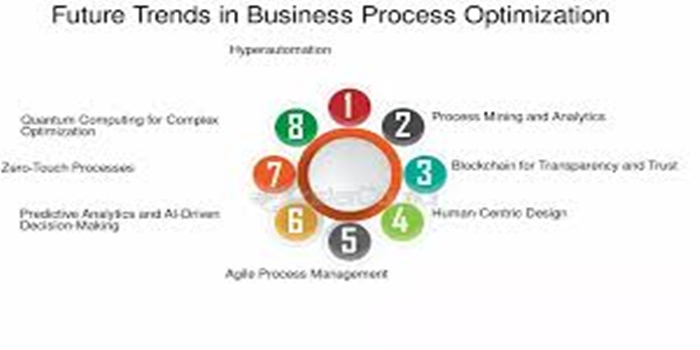
In this article, we explained business process optimization, the objectives, the components, the techniques, the role, the benefits, and the challenges.
Definition
Business Process Optimization (BPO) is the strategic practice of analyzing and improving existing workflows to boost efficiency, reduce costs, minimize errors, and enhance overall performance by removing waste, streamlining steps, and sometimes leveraging technology like automation. It’s about making processes more effective and aligned with business goals, focusing on incremental improvements rather than radical redesign, to achieve better quality, speed, and customer satisfaction.
Objectives of Business Process Optimization:
Efficiency Improvement
Streamlining workflows to reduce redundant tasks and unnecessary steps
Cost Reduction
Eliminating waste, rework, and excessive resource usage.
Quality Enhancement
Improving accuracy, reliability, and consistency of outputs.
Customer Satisfaction
Delivering faster, better, and more reliable products or services.
Operational Transparency
Providing clear visibility into how work is done and where improvements are needed.
Scalability and Flexibility
Ensuring processes can adapt to growth, market changes, or regulatory requirements.
Compliance and Risk Management
Ensuring processes align with industry standards, legal frameworks, and internal controls.
Components of Business Process Optimization:
Process Identification
This involves identifying critical processes that directly impact business performance. These may include:
Core operational processes
Support processes
Management and governance processes
Process Mapping and Documentation
Processes are visually represented using tools such as:
Flowcharts
Swimlane diagrams
Value stream maps
Understand current workflows (as-is state)
Identify handoffs, delays, and redundancies
Process Analysis
Here, the organization evaluates:
Bottlenecks
Non-value-adding activities
Root causes of inefficiencies
Performance gaps
Process Redesign (To-Be State)
Processes are redesigned to
Remove unnecessary steps
Automate repetitive tasks
Simplify approvals and decision points
Improve coordination across departments
Implementation
Optimized processes are implemented through:
Change management initiatives
Staff training
Technology deployment
Policy and procedure updates
Monitoring and Continuous Improvement
Performance metrics are tracked to ensure sustained optimization. Continuous improvement ensures processes evolve with business needs.
Techniques and Methodologies Used in Business Process Optimization:
Process Mapping/Workflow Analysis: Visually charting current processes to find inefficiencies, bottlenecks, and redundancies.
Process Mining: Using data to automatically discover, monitor, and improve real processes.
Root Cause Analysis (RCA): Deep-diving to find the underlying causes of problems (e.g., using the 5 Whys).
Value Stream Mapping (VSM): Graphically showing material and information flow to spot waste.
Using KPIs (Key Performance Indicators) to measure performance and inform decisions.
Lean Management: Focuses on removing waste (time, resources, effort) to improve flow and value.
A data-driven approach to minimize defects and variation, often using the DMAIC (Define, Measure, Analyze, Improve, Control) cycle.
Emphasizes iterative development, flexibility, and fast response to change.
A philosophy of continuous, incremental improvement involving everyone.
Business Process Reengineering (BPR): A radical redesign of processes for dramatic improvements.
Total Quality Management (TQM): Focuses on long-term success through customer satisfaction and employee involvement.
Supporting Tools & Approaches
Process Automation (RPA): Using software bots to handle repetitive manual tasks.
PDCA Cycle (Plan-Do-Check-Act): A simple, iterative model for testing and implementing changes.
BPM Software (Business Process Management): Tools to model, automate, and monitor processes.
Role of Technology in Business Process Optimization:
Technology plays a critical role in modern process optimization by:
Automating manual and repetitive tasks
Enabling real-time data collection and analytics
Improving collaboration and communication
Reducing human error
Enhancing decision-making
Common tools include:
Process modeling software
Data analytics platforms
Document management systems
Customer Relationship Management (CRM) tools.
Benefits of Business Process Optimization:
Operational Benefits
Faster turnaround times
Improved productivity
Reduced operational costs
Strategic Benefits
Better alignment with business strategy
Enhanced competitiveness
Improved innovation capability
Financial Benefits
Increased profitability
Improved cash flow management
Better resource utilization
Human Resource Benefits
Reduced employee frustration
Clearer roles and responsibilities
Higher employee engagement and morale.
Challenges in Business Process Optimization:
Despite its benefits, organizations may face challenges such as:
Resistance to Change
Employees may resist new processes due to fear of job loss or unfamiliarity.
Poor Process Visibility
Lack of documentation makes it difficult to analyze current processes.
Inadequate Data
Limited or inaccurate data can hinder effective decision-making.
Technology Constraints
Legacy systems may not support optimized workflows.
Lack of Management Commitment
Successful optimization requires strong leadership and sponsorship.
Best Practices for Successful Business Process Optimization
Secure executive leadership support
Involve stakeholders across departments
Focus on customer value
Use data-driven analysis
Implement changes incrementally when possible
Continuously monitor and refine processes
Align optimization initiatives with organizational goals
Business Process Optimization and Organizational Performance
Optimized processes directly impact organizational performance by:
Enhancing service delivery
Improving compliance and governance
Increasing agility in responding to market changes
Supporting sustainable growth.
Conclusion
Business Process Optimization is a continuous strategic discipline, not a single event focused on the systematic analysis and refinement of workflows. By constantly improving how work gets done, organizations can achieve a competitive edge and ensure long-term viability. It increases efficiency while significantly reducing costs. It enhances the output quality and improves the overall customer experience. It acts as a vital engine for digital transformation and sustainability in a competitive market.
READ: How AI Is Transforming Business Across Industries