

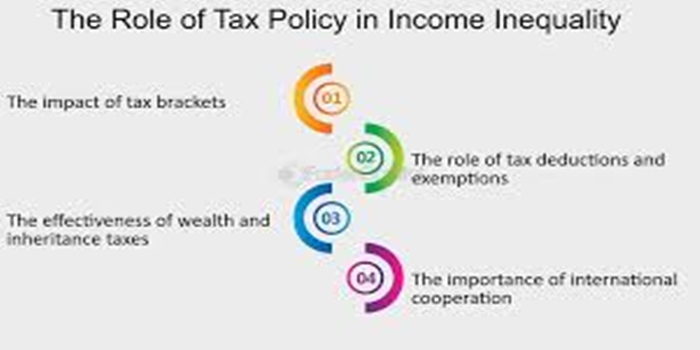
In this article, we discussed economic inequality, tax policy, types and features, causes of economic, tax policy as a tool for addressing inequality, the impact of tax policy on inequality, challenges in using Tax policy to reduce inequality, the future of tax policy in addressing inequality.
Definition
Economic inequality is the unequal distribution of income, wealth, and assets among individuals or groups within a society, resulting in a gap between the rich and poor. It encompasses disparities in wages, accumulated savings, and property ownership, often leading to reduced social mobility, political instability, and lower social cohesion. Key drivers include technological change, globalization, and policy shifts.
The Types and Feature of Economic Inequality:
Types of Economic Inequality
Income Inequality: Refers to how the total sum of money received by people (wages, salaries, bonuses, dividends, etc.) is distributed. It is often measured on a household or individual basis.
Wealth Inequality (Asset Inequality): Refers to the unequal distribution of accumulated assets, such as savings, property, stocks, and pensions. Wealth is typically far more concentrated and unequally distributed than income.
Consumption Inequality: Measures how the total money spent by people is distributed. It provides a direct measure of the standard of living, as the utility of wealth is often realized through consumption.
Inequality of Opportunity: Occurs when individuals have different life chances based on circumstances beyond their control, such as family background, gender, race, or place of birth.
Feature of Economic Inequality:
Labor Market Dynamics: Differences in skills, demand for labor, and technological change (automation) have driven income gaps. A significant aspect is the stagnation of wages at the lower end compared to high-skill, high-wage jobs.
Wealth Accumulation (Capital): Newly created wealth tends to concentrate in the hands of those already wealthy. Inheritance is a key driver in reinforcing intergenerational inequality.
Gender Pay Gap: Women, on average, earn less than men due to occupational segregation, discrimination, and disproportionate responsibility for unpaid care work.
Racial and Ethnic Disparities: Systemic barriers, such as redlining and discrimination, have created persistent intergenerational wealth gaps between different racial groups.
Political Factors: Tax policies (e.g., lower taxes on capital gains), deregulation, and the decline of unions have increased income disparities.
Globalization: While reducing inequality between some nations, globalization has increased inequality within many nations by shifting low-skilled jobs to lower-wage countries.
Educational Access: Unequal access to quality education limits upward mobility for low-income individuals.
Causes of Economic Inequality
Several structural factors contribute to economic inequality:
Globalization: Increases wealth in high-skill sectors while suppressing wages in low-skill sectors.
Technological Change: Automation and AI favor capital owners and skilled workers.
Labor Market Dynamics: Declining unionization and wage stagnation exacerbate disparities.
Capital Accumulation: Wealth tends to concentrate over generations.
Policy Choices: Taxation, social welfare, and labor policies can either mitigate or amplify inequality.
Tax Policy as a Tool for Addressing Inequality
Tax policy shapes how resources are redistributed and how economic incentives are structured. Its main objectives include:
Raising revenue for public services
Reducing wealth and income disparities
Encouraging investment, work, and entrepreneurship
Addressing market failures
- Progressive Income Tax
Higher tax rates on higher-income brackets
Designed to reduce income inequality directly
Examples: Scandinavian countries use highly progressive tax systems to maintain low inequality
- Wealth Taxes
Taxes on accumulated wealth, including property, financial assets, and inheritance
Aim to prevent concentration of wealth across generations
Controversial due to enforcement difficulties and capital flight risks
- Corporate Taxes
Taxes on business profits can fund social programs
Debate exists about whether high corporate taxes discourage investment or reduce inequality
- Consumption Taxes
Value-added taxes (VAT) or sales taxes are often regressive, disproportionately affecting lower-income households
Can be offset by exemptions, rebates, or targeted social spending.
The Impact of Tax Policy on Inequality
Studies show that well-designed tax policies can significantly reduce inequality:
Nordic Model: High income and wealth taxes combined with extensive social services lead to low inequality.
United States: Less progressive taxation and limited wealth taxation contribute to higher wealth concentration.
Developing Countries: Poorly enforced taxes often fail to redistribute wealth effectively, exacerbating inequality.
However, excessive taxation without efficient governance can discourage investment and economic growth, highlighting the trade-off between fairness and efficiency.
Challenges in Using Tax Policy to Reduce Inequality
Evasion and Avoidance: Global wealth mobility makes enforcement challenging.
Economic Distortions: High marginal tax rates may reduce incentives to work, invest, or innovate.
Administrative Capacity: Developing countries may lack effective tax collection systems.
Political Feasibility: Tax reforms often face resistance from powerful interest groups.
The Future of Tax Policy in Addressing Inequality
Trends shaping future tax policy include:
Global Coordination: Tackling tax avoidance by multinational corporations and high-net-worth individuals.
Digital Economy Adaptation: Tax systems must evolve with new business models.
Integration with Climate Policy: Carbon taxes and environmental levies can fund social redistribution.
Transparency and Compliance: Public trust and anti-corruption measures are key to effectiveness.
Policymakers face the challenge of creating systems that are fair, efficient, and adaptable to rapidly changing economies.
Conclusion
Economic inequality poses risks to social cohesion, political stability, and long-term growth. Tax policy is one of the most powerful tools available to governments to address these disparities. When carefully designed, taxes can: redistribute wealth effectively, fund social services that enhance opportunity, reduce intergenerational inequality.
READ: The Concept of Climate Change Policy vs Economic Growth