

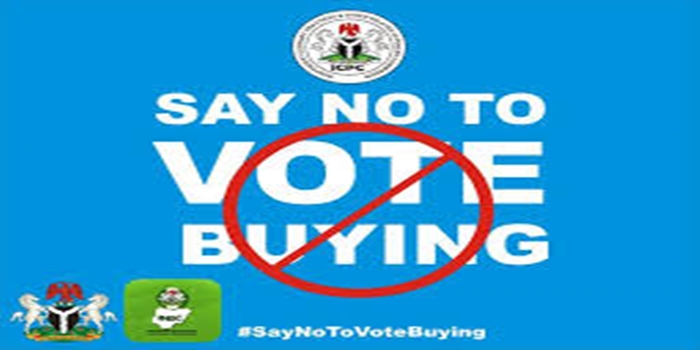
In this article, we discussed vote buying, electoral integrity, causes of vote buying in Nigeria, impact of vote buying on electoral integrity, efforts to combat vote buying, the role of citizens in protecting electoral integrity.
Definition
Vote buying refers to the practice where political candidates, parties, or their agents offer money, gifts, or material benefits to voters in exchange for their votes. The exchange can occur in several forms, including: direct cash payments to voters, distribution of food items such as rice or cooking oil, promises of employment or contracts, payment after voters show proof of voting for a particular candidate.
Electoral Integrity
Electoral integrity refers to the degree to which elections are conducted in a free, fair, transparent, and credible manner, in accordance with established laws and democratic standards. It means that every stage of the electoral process, from voter registration to the announcement of result, Is carried out honestly, without manipulation, intimidation, or fraud, ensuring that the will of the people is accurately reflected.
Major Causes of Vote Buying:
Poverty and Economic Hardship
One of the most important causes of vote buying is widespread poverty. Many voters struggle to meet basic needs such as food, shelter, and healthcare. When politicians offer money or material items during elections, some voters accept them as immediate relief from economic hardship.
Low Political Awareness and Education
Lack of political education among voters contributes significantly to vote buying. When voters do not fully understand their rights and the importance of their votes, they may treat voting as a transaction rather than a civic responsibility.
Weak Electoral Laws and Enforcement
Another cause of vote buying is the failure to enforce electoral laws effectively. Although vote buying is illegal in many countries, weak enforcement mechanisms allow politicians to engage in the practice without fear of punishment.
Corruption in the Political System
Vote buying is closely linked to corruption. Politicians who spend large amounts of money to secure votes often view political office as an opportunity to recover their financial investment through corrupt practices once elected.
High Cost of Political Campaigns
Political campaigns can be extremely expensive. Candidates sometimes resort to vote buying as a strategy to secure quick electoral support rather than relying solely on policy ideas or performance.
Lack of Trust in Government
In some societies, voters believe that politicians rarely fulfill their promises after elections. As a result, voters may prefer to accept money or material benefits during elections because they feel it is the only tangible benefit, they will receive from politicians.
Weak Political Party Ideology
When political parties lack clear ideologies or policy differences, elections may focus more on financial incentives rather than political programs. Voters then make decisions based on what they receive materially rather than on policies or leadership quality.
Poor Monitoring of Elections
Inadequate monitoring by election observers, civil society organizations, and electoral bodies can create opportunities for vote buying. When election activities are not properly supervised, politicians may distribute money or gifts secretly to influence voters.
Impact of Vote Buying on Electoral Integrity
Vote buying has several negative consequences for Nigeria’s democratic system.
Undermining Free and Fair Elections
Vote buying interferes with the principle that elections should reflect the genuine preferences of voters.
When financial incentives determine voting behavior, the true will of the electorate may not be accurately represented.
This weakens the legitimacy of election outcomes.
Encouraging Corruption in Government
Politicians who spend large amounts of money to win elections may attempt to recover those expenses after assuming office.
This can lead to:
corruption
misuse of public funds
favoritism in awarding government contracts.
The cycle of vote buying therefore contributes to broader governance problems.
Weakening Public Trust in Elections
When citizens believe that elections are influenced by money rather than merit, trust in the electoral process declines.
Low confidence in elections can reduce voter turnout and weaken democratic participation.
Efforts to Combat Vote Buying
Various measures have been introduced to address vote buying and improve electoral integrity in Nigeria.
Electoral Reforms
Recent electoral reforms have introduced technologies aimed at improving transparency.
For example, biometric voter verification systems have been used to prevent multiple voting and strengthen election credibility.
These reforms also make it more difficult for individuals to manipulate voting processes.
The Role of Citizens in Protecting Electoral Integrity
Citizens play a crucial role in maintaining the integrity of elections.
Voters can contribute by:
refusing to accept money for votes
reporting electoral malpractice
participating actively in elections
supporting credible candidates.
When citizens prioritize long-term national development over short-term financial gain, democratic institutions become stronger.
Conclusion
Vote buying is a thoughtful challenge to democratic elections. It is driven by factors such as poverty, low political awareness, weak law enforcement, corruption, expensive political campaigns, and lack of trust in government. Addressing these causes requires stronger electoral institutions, better voter education, economic development, and strict enforcement of electoral laws.