

introduction
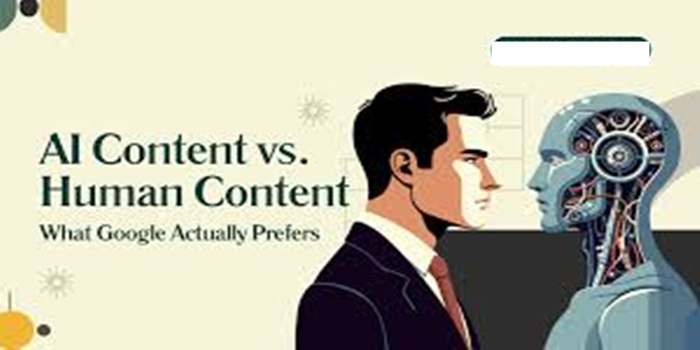
Artificial Intelligence is transforming content creation by helping people write articles, design graphics, and create videos faster than ever before. AI tools improve productivity and save time, but many people still believe human creativity and emotions make content more unique and meaningful. As AI continues to grow, the debate over whether it can create better content than humans remain ongoing.
AI is transforming content creation forever, but whether it can truly outperform humans depends on how we define better content.
The Rise of AI Content Creation
The rise of generative AI has completely changed the digital content landscape.
Modern AI systems can now:
Write articles
Generate social media posts
Create email campaigns
Produce video scripts
Generate images
Summarize research
Rewrite existing content
Translate languages
Optimize SEO content
Mimic different writing styles
Businesses, bloggers, marketers, and media companies are increasingly using AI tools to save time and reduce costs.
The growth of AI-generated content has been fueled by advancements in natural language processing (NLP), machine learning, and massive language models trained on billions of words from the internet.
What once required an entire team of writers can now be accomplished with a few prompts.
This has fundamentally changed how content is produced online.
Why AI Content Is Becoming So Popular
There are several reasons why AI-generated content is growing rapidly across industries.
- Speed and Efficiency
One of AI’s greatest advantages is speed.
A human writer may spend several hours researching, drafting, editing, and formatting a long-form article. AI can generate a complete draft in seconds.
This speed allows companies to:
Publish more frequently
Scale content production
Respond quickly to trends
Maintain active social media channels
Produce high-volume marketing campaigns
For businesses competing in fast-moving digital markets, speed matters.
- Lower Costs
Hiring skilled writers, editors, researchers, and marketers can be expensive. AI tools dramatically reduce production costs.
Small businesses and startups that cannot afford large content teams now use AI to compete with larger organizations.
This democratization of content creation is one of AI’s biggest disruptions.
- SEO Optimization
AI tools are particularly useful for search engine optimization (SEO).
They can:
Analyze keywords
Structure articles for readability
Generate meta descriptions
Improve headings
Suggest content improvements
Optimize keyword placement
Because search engines reward consistent and optimized publishing, AI gives websites an advantage in scaling SEO strategies.
- Endless Content Generation
Humans experience fatigue, writer’s block, and burnout. AI does not.
AI systems can generate:
Hundreds of product descriptions
Thousands of ad variations
Large batches of blog topics
Multiple content formats simultaneously
This makes AI highly valuable for high-volume publishing environments.
Where AI Excels in Content Creation
AI performs exceptionally well in certain types of content.
Data-Driven Content
AI is highly effective at analyzing large amounts of information and summarizing it clearly.
Market reports
Financial summaries
Sports recaps
News aggregation
Technical documentation
Product specifications
Because AI can process information quickly, it is often faster and more accurate than humans in highly structured content tasks.
Repetitive Writing Tasks
Many forms of content follow predictable patterns.
Examples include:
Product descriptions
Email templates
FAQs
Basic news reports
Metadata
Social media captions
AI can automate these repetitive tasks efficiently while maintaining consistency.
Personalization at Scale
AI can create personalized content for different audiences simultaneously.
For example, marketing AI systems can generate:
Customized emails
Personalized recommendations
Audience-specific advertisements
Dynamic landing pages
This level of personalization would be difficult and time-consuming for human teams alone.
Multilingual Content
AI translation and multilingual generation tools allow brands to reach global audiences quickly.
A single article can now be translated and adapted into multiple languages almost instantly.
This dramatically increases global content accessibility.
The Human Advantage in Content Creation
Despite AI’s impressive capabilities, humans still dominate in several critical areas.
Emotional Depth
Humans write from lived experience.
Great content often connects emotionally because it reflects:
Pain
Joy
Fear
Hope
Struggle
Love
Personal insight
AI can imitate emotional language, but it does not actually experience emotions.
Readers often recognize the difference between authentic storytelling and mechanically generated text.
Human writers bring emotional nuance that AI struggles to replicate genuinely.
Creativity and Original Thought
AI generates content by analyzing patterns in existing data. It predicts what words should come next based on training material.
Humans, however, create from imagination, intuition, and unique perspective.
Groundbreaking ideas, revolutionary storytelling, and truly original concepts often emerge from human creativity rather than pattern prediction.
AI can remix ideas effectively, but humans still lead in genuine innovation.
Cultural Awareness and Context
Human writers understand subtle cultural dynamics, humor, sarcasm, and social context more naturally.
AI sometimes:
Misinterprets tone
Produces culturally insensitive content
Generates inaccurate statements
Lacks contextual awareness
Human oversight remains crucial, especially for sensitive topics.
Ethical Judgment
Humans can apply moral reasoning and ethical judgment in ways AI cannot fully replicate.
Content involving:
Politics
Mental health
Social issues
Religion
Trauma
Ethics
often requires human sensitivity and responsibility.
AI lacks true understanding of consequences and human values.
The Problem of AI Hallucinations
One major weakness of AI-generated content is hallucination.
AI systems sometimes:
Invent facts
Misquote sources
Create fake statistics
Generate inaccurate references
Present false information confidently
This creates serious concerns for journalism, academic writing, and factual publishing.
The role of writers is evolving rather than disappearing.
Future writers may become:
AI-assisted editors
Content strategists
Creative directors
Prompt engineers
Brand storytellers
Instead of competing against AI, successful creators will learn how to work with it effectively.
The Impact on Blogging and Digital Marketing
AI is already reshaping blogging and digital marketing industries.
Content marketers now use AI for:
Topic generation
Keyword research
Draft writing
Content optimization
Headline testing
Social media scheduling
This allows companies to produce significantly more content with smaller teams.
However, search engines are increasingly prioritizing:
Expertise
Originality
Trustworthiness
User value
Authentic insights
This means low-quality AI spam is unlikely to succeed long term.
The future belongs to creators who combine AI efficiency with human authenticity.
AI can generate information quickly, but humans create meaning through lived experience and emotional understanding.
Readers often remember stories, emotions, and ideas more than perfectly optimized sentences.
This is why human-centered content still matters deeply.
Conclusion
AI has become a powerful tool for creating content quickly and efficiently. However, human creativity, emotions, and original thinking still give human-made content a unique advantage. Rather than fully replacing humans, AI is likely to work alongside creators to improve and support content creation in the future.