

Introduction
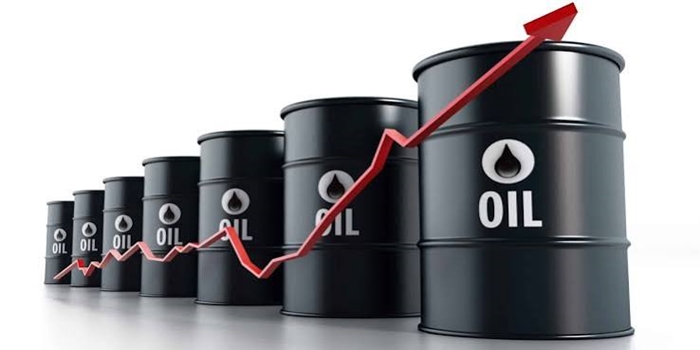
Oil price volatility is one of the major challenges facing the oil and gas industry. Crude oil prices can rise or fall rapidly due to changes in global demand, supply disruptions, geopolitical events, economic conditions, and production decisions. These changes directly affect the revenue, profitability, investment, and operations of oil and gas businesses.
Understanding how oil price volatility affects the industry is essential for companies to manage costs, plan investments, protect cash flow, and remain competitive during changing market conditions.
What Is Oil Price Volatility?
Oil price volatility refers to the degree and speed at which crude oil prices change over a particular period.
Oil prices can move because of many factors, including:
Changes in global oil demand.
Changes in crude oil production.
Geopolitical conflicts.
Supply disruptions.
Economic recessions or periods of strong economic growth.
Decisions by major oil-producing countries and producer groups.
Changes in inventories.
Natural disasters and extreme weather.
Currency movements.
Changes in government policies and regulations.
Expectations about future energy demand.
Because these factors can change rapidly, oil and gas companies operate in an environment where future revenues and costs can be difficult to predict.
- Impact on Company Revenue
The most direct effect of oil price volatility is on revenue.
For an upstream oil producer, the selling price of crude oil is closely connected to the company’s revenue per barrel. When the market price increases, the company may generate more revenue from the same volume of production.
For example, if a company produces 50,000 barrels per day, a significant increase in the price received per barrel can substantially increase its gross revenue.
However, when oil prices fall, revenue can decline even if the company continues producing the same volume.
- Effect on Profitability
Oil price movements can have a significant effect on profitability because production costs do not always fall as quickly as oil prices.
A company may have fixed or semi-fixed costs associated with:
Personnel.
Equipment.
Facilities.
Insurance.
Maintenance.
Transportation.
Lease obligations.
Financing.
Regulatory compliance.
If oil prices fall substantially while many of these costs remain unchanged, profit margins can become much smaller.
- Impact on Exploration and Production Investment
Oil price volatility can influence how much companies are willing to invest in new exploration and production projects.
When prices are strong and companies expect favorable market conditions, they may increase investment in:
Exploration drilling.
Field development.
Production facilities.
Pipelines.
Processing plants.
Offshore projects.
Enhanced oil recovery.
New technologies.
- Effect on Exploration Activities
Exploration is inherently uncertain and capital-intensive.
When oil prices are high, companies may be more willing to accept exploration risk because potential discoveries can generate significant future value.
During periods of low prices, however, exploration budgets may be reduced as companies focus on preserving cash and maximizing returns from existing assets.
This can affect the number of wells drilled and the development of new reserves.
- Impact on Employment
Oil price volatility can also affect employment throughout the industry.
During periods of strong commodity prices, companies may expand operations and require additional personnel. Increased activity can create opportunities for:
Engineers.
Geoscientists.
Technicians.
Operators.
Maintenance personnel.
Construction workers.
Logistics providers.
Professional and technical service companies.
6.Effect on Maintenance and Asset Management
During periods of high oil prices, companies may have greater financial flexibility to invest in asset maintenance, upgrades and reliability programs.
During periods of low prices, companies may come under pressure to reduce operating expenditure.
This creates an important management challenge: reducing costs without compromising equipment integrity and safety.
Poorly managed cost reductions can result in deferred maintenance, which may increase the likelihood of equipment failures and higher future repair costs.
Effective companies therefore aim to optimize maintenance rather than simply eliminate it.
7.Effect on Mergers and Acquisitions
Oil price volatility can influence mergers, acquisitions and asset sales.
During periods of financial pressure, companies may sell non-core assets to strengthen their balance sheets.
Other companies may use periods of lower prices as opportunities to acquire assets at potentially more favorable valuations.
This can lead to changes in ownership across oil fields, infrastructure and service companies.
8.The Role of Hedging
Some oil and gas companies use financial instruments to manage exposure to oil price movements.
Hedging can provide greater certainty about future selling prices or costs.
For example, a producer may enter into an arrangement designed to protect against a significant fall in the price of crude oil.
Hedging does not eliminate all financial risks and may also limit some benefits when prices rise. Its effectiveness depends on the company’s strategy, financial structure and market conditions.
9.Opportunities During Oil Price Changes
Oil price volatility does not always represent only a threat.
When prices are high, companies can use stronger cash flows to invest in new projects, improve infrastructure and strengthen their balance sheets.
When prices are low, companies may focus on improving efficiency, reducing unnecessary costs, renegotiating contracts and adopting technologies that reduce operating expenses.
Periods of lower prices can also encourage companies to examine their portfolios and concentrate resources on assets with stronger economic performance.
- Why Long-Term Planning Matters
Oil and gas projects can operate for decades, while oil prices can change significantly within months.
This difference creates a major planning challenge.
Companies therefore need to avoid making long-term decisions based entirely on short-term oil-price movements.
Instead, investment decisions should consider multiple scenarios and factors such as asset quality, production costs, reserves, infrastructure, fiscal terms, environmental requirements and long-term market conditions.
A disciplined approach can help companies remain prepared for different market environments.
The Future of Oil and Gas Businesses in a Volatile Market
The oil and gas industry is also changing as energy markets evolve.
Companies increasingly need to consider:
Energy-transition policies.
Emissions regulations.
Renewable energy.
Carbon management.
Operational efficiency.
Digitalization.
Changing consumer demand.
Energy security.
These factors add another layer of complexity to oil price volatility.
Conclusion
Oil price volatility has a wide-ranging impact on oil and gas businesses, affecting revenue, profitability, investment, employment, maintenance, project development and cash flow. Because oil prices are influenced by many global factors, companies cannot control the market but can control how they respond to it. Effective cost management, financial planning, operational efficiency, technology adoption, portfolio management and appropriate risk-management strategies can help businesses remain resilient during periods of price uncertainty.
READ: Renewable Energy vs Oil and Gas: Competition or Collaboration?