

Introduction
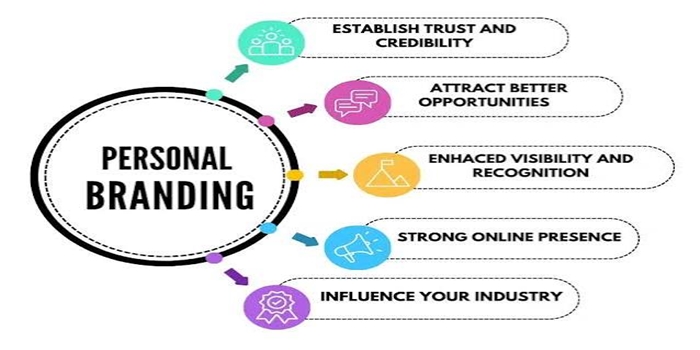
competitive world, having skills and qualifications is important, but being recognized for those skills can create even more opportunities. Personal branding helps you communicate who you are, what you can do, and what makes you different. By building a strong and authentic personal brand, you can increase your visibility, establish credibility, attract employers or clients, and create valuable professional connections that can lead to better opportunities.
What Is Personal Branding?
Personal branding is the reputation you build around yourself and your professional abilities. It involves how people see you, what they associate you with, and what they expect from you.
For example, a person who consistently shares useful information about digital marketing may become known as a digital marketing expert. A graphic designer who regularly displays creative projects can become recognized for their design skills.
Personal branding is therefore not simply about having a good social media profile. It is about consistently showing people what you know and what you can do.
How Personal Branding Creates Opportunities
One of the biggest benefits of personal branding is visibility. When people know who you are and understand your skills, they are more likely to think of you when an opportunity becomes available.
A strong personal brand can help you attract:
Job opportunities
Freelance clients
Business partnerships
Speaking opportunities
Professional connections
Mentorship
Collaborations
Instead of always searching for opportunities, you can create a reputation that makes opportunities more likely to come to you.
It Helps You Stand Out
Many people have similar qualifications and skills. Personal branding gives you an opportunity to show what makes you unique.
For example, instead of simply describing yourself as a writer, you could develop a reputation for business writing, technology content, storytelling, or social media writing.
Being specific makes it easier for people to remember you and understand the value you provide.
Personal Branding Builds Credibility
Trust is important when people are deciding whether to work with you.
Sharing useful information, demonstrating your skills, showing previous work, and discussing your experiences can help establish credibility.
Rather than simply saying, I am good at what I do, your work provides evidence.
Over time, consistent content and professional behavior can make people see you as knowledgeable and reliable.
Personal Branding Can Help You Get a Job
A strong personal brand can support your job search by giving employers a clearer picture of your abilities.
For example, someone applying for a marketing position can share marketing ideas, industry insights, campaign examples, or previous projects online. This allows employers to see the person’s knowledge and communication skills beyond a traditional résumé.
Personal branding does not guarantee employment, but it can help a candidate become more visible and memorable.
It Can Attract Clients
Freelancers and entrepreneurs can benefit greatly from personal branding.
A potential client may discover your work online before contacting you. If your profile, content, portfolio, and communication demonstrate expertise, the client may already have confidence in your abilities before the first conversation.
For this reason, personal branding can act as a form of continuous marketing.
Social Media and Personal Branding
Social media provides an easy way to build a personal brand. Platforms such as LinkedIn, Instagram, YouTube, and other online communities allow people to share their knowledge and work with a wider audience.
However, you do not need to be active on every platform. It is often better to focus on the platforms where your target audience spends time.
The most important thing is to remain professional, consistent, and authentic.
Content Builds Your Reputation
Content is one of the most effective ways to demonstrate your expertise.
You can share:
Helpful tips
Educational posts
Videos
Articles
Project examples
Industry opinions
Personal experiences
Lessons you have learned
The goal should not be to constantly promote yourself. Instead, focus on providing value to your audience.
When people repeatedly find your content useful, they are more likely to remember and trust you.
Authenticity Matters
A strong personal brand should be genuine.
Trying to copy another person’s personality or online style can make your communication feel unnatural. Instead, identify your own strengths, values, interests, and experiences.
Being authentic does not mean sharing every detail of your personal life. It means presenting yourself honestly and consistently.
Your online reputation should also match your real-world behavior.
How to Build Your Personal Brand
Building a personal brand requires patience and consistency. You can start by:
Identifying your strengths: Know what you are good at and what you enjoy doing.
Choosing an area of focus: Decide what you want to be known for.
Understanding your audience: Know who you want to attract.
Creating a professional online presence: Make your profiles clear and informative.
Sharing valuable content: Teach, inform, or inspire your audience.
Showing your work: Use projects and achievements as evidence of your skills.
Networking: Build genuine relationships with people in your field.
Being consistent: Continue communicating and improving over time.
Avoiding Common Mistakes
Personal branding can be damaged by inconsistency, excessive self-promotion, dishonesty, and unprofessional online behavior.
Avoid trying to appear perfect. Instead, focus on demonstrating genuine knowledge and growth.
It is also important to remember that personal branding is not simply about gaining followers. A smaller audience that trusts your expertise can be more valuable than a large audience that has little connection with your work.
Conclusion
Personal branding is a powerful way to create better career and business opportunities. By clearly communicating your skills, knowledge, values, and experience, you can build credibility and stand out from others in your field. A strong personal brand takes time and consistency, but it can attract employers, clients, partnerships, and professional connections. Ultimately, building a genuine and positive personal brand can help you turn your skills and reputation into meaningful opportunities.