

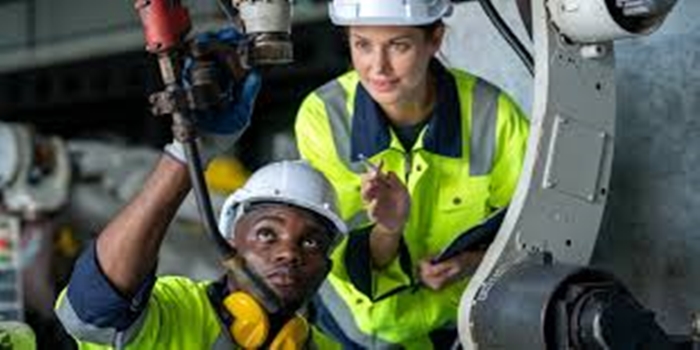
In this article, we discussed skilled trades in industrial services, role and importance of skilled trades in industrial services, skilled trades involved in industrial services, impact of skilled trades on industrial reliability & performance, and the challenges.
Definition
Skilled Trades in Industrial Services refers to occupations that require specialized, hands-on expertise and technical knowledge to install, maintain, repair, and operate complex equipment and infrastructure within industrial settings like manufacturing plants, refineries, power generation facilities, and large commercial buildings.
The Characteristics of Skilled Trades in Industrial Services:
Specialized Training and Knowledge: Workers possess targeted, in-depth knowledge and technical competencies acquired through vocational education, apprenticeships, or on-the-job training, rather than a traditional college degree.
Hands-On Application: The work is primarily physical and practical, involving the use of precise tools and techniques to complete clearly defined tasks with tangible outcomes (e.g., repairing an electrical system, operating a CNC machine).
Problem-Solving Skills: Industrial environments often present unique and complex challenges. Skilled tradespeople require strong critical thinking and troubleshooting abilities to diagnose and resolve issues efficiently.
Precision and Attention to Detail: The nature of industrial work, especially in manufacturing or maintenance, demands high precision to ensure quality, efficiency, and proper function of systems and machinery.
Safety Consciousness: Given the potentially hazardous nature of industrial sites, a deep understanding of and strict adherence to safety regulations and protocols is paramount to prevent accidents and injuries.
Adaptability to Technology: While traditionally hands-on, the field increasingly incorporates high-tech strategies, advanced software, automation, and robotics, requiring workers to continuously update their skills to remain competitive.
Essential for Infrastructure: These roles are indispensable for daily operations across various sectors, including manufacturing, energy, and construction, as they build and maintain the physical assets that drive industry.
Clear Communication: Effective communication skills are vital for coordinating with fellow workers, engineers, vendors, and management to ensure project success and a safe working environment.
Role and Importance of Skilled Trades in Industrial Services:
Roles of Skilled Trades in Industrial Services
Construction and Installation: Tradespeople, such as structural iron and steel workers and electricians, are essential for building new industrial facilities, installing complex machinery, and setting up critical infrastructure.
Maintenance and Repair: Industrial operations rely heavily on technicians and mechanics to perform routine maintenance, troubleshoot faults, and repair machinery, minimizing costly downtime and extending the lifespan of equipment.
Specialized Operations: Specific trades, like welding/flame cutting and pipefitting, are involved in highly technical operations necessary for industrial processes, such as fabricating and joining materials under precise specifications.
Quality Control and Safety: Skilled workers are trained in industry standards and safety protocols, ensuring that all work meets regulatory requirements and that the industrial environment remains safe for all workers.
Importance of Skilled Trades
Economic Backbone: Industries like construction and manufacturing are primary drivers of economic growth and rely entirely on a competent trades workforce to meet demand and expand operations.
Bridging the Labor Gap: There is a significant and growing demand for skilled tradespeople, with current job postings often outpacing the supply of qualified workers. This highlights the critical need for new entrants to the field to sustain industries.
Innovation and Adaptation: Tradespeople play a vital role in implementing new technologies, such as wind energy and solar installation, and adapting existing infrastructure to meet evolving needs, including the green and digital transitions.
Tangible Results and Job Security: Unlike some other professions, the results of skilled trade work are often immediately visible and tangible (e.g., a functioning electrical system, a new building), which provides a high degree of personal satisfaction and stable, in-demand employment.
Skilled Trades Involved in Industrial Services:
Boilermakers: Assemble, install, and repair boilers, closed vats, and other large vessels.
Carpenters: Construct, install, and repair structures and fixtures, working in commercial and industrial settings.
CNC Machinists: Operate Computer Numerical Control machines that cut, shape, and finish precision metal and plastic parts, crucial for manufacturing.
Electricians: Install, maintain, and repair electrical power, lighting, and control systems within industrial settings to ensure safe and smooth operations.
Heavy Equipment Operators: Use specialized machinery such as excavators, bulldozers, and cranes for industrial and construction projects.
HVAC Technicians: Install, repair, and maintain industrial heating, ventilation, and air conditioning systems.
Industrial Mechanics / Millwrights: Install, service, and maintain a wide variety of large, complex industrial machinery and equipment, requiring high precision and technical know-how.
Ironworkers / Steelworkers: Erect steel frameworks for buildings and other structures, often working with structural steel and reinforced concrete.
Maintenance Technicians: General specialists who keep plants running smoothly by troubleshooting and repairing equipment issues spanning mechanical, hydraulic, and electrical systems.
Pipefitters / Steamfitters: Install, assemble, fabricate, maintain, and repair mechanical piping systems that carry liquids, gases, and chemicals in industrial environments.
Plumbers: While often associated with residential work, industrial plumbers install and maintain the complex potable and wastewater systems within industrial buildings.
Welders: Join metals together using various techniques, a critical skill used across the entire industrial spectrum, from manufacturing to construction and repair.
Impact of Skilled Trades on Industrial Reliability & Performance:
Reduced Downtime and Rework: Skilled tradespeople perform tasks correctly the first time, minimizing errors and defects that would otherwise lead to time-consuming and expensive rework. Their expertise in installation, maintenance, and repair ensures equipment operates efficiently and safely, leading to increased asset uptime.
Effective Troubleshooting and Maintenance: Experienced craft workers can quickly diagnose and address complex issues, preventing minor problems from escalating into major operational failures. This proactive and efficient troubleshooting is vital for maintaining continuous production and reliability in heavy industries.
Quality Control and Adherence to Standards: Quality management relies on the expertise of skilled workers to meet precise specifications and industry standards. Their technical knowledge ensures that all work is performed to the required quality, which is critical for the integrity and safety of industrial infrastructure (e.g., in nuclear or offshore wind facilities).
Increased Productivity: Skilled labor contributes to efficient project execution and enhanced labor productivity. Multiskilling, in particular, allows workers to perform a wider range of tasks, increasing flexibility and responsiveness to changing demands, which in turn boosts overall performance and limits production bottlenecks.
Cost Control and Efficiency: By reducing project delays, minimizing material waste, and avoiding the extra costs associated with rework and accidents, a skilled workforce helps maintain project budgets and schedules. Shortages of skilled labor, conversely, often result in significant cost overruns and increased labor expenses.
Safety and Risk Mitigation: Skilled tradespeople are more likely to adhere to safety protocols and best practices, leading to safer working environments and fewer on-site accidents. A lack of proper skills and supervision increases the risk of injuries and safety incidents.
Organizational Competitiveness and Innovation: A strong human capital base, rich in specialized skills and experience, provides a sustainable competitive advantage for organizations. Skilled workers are better equipped to implement new technologies and adapt to evolving industry demands, fostering innovation and long-term business success.
The Challenges of Skilled Trades in Industrial Services:
Skilled Labor Shortage: This is the most significant challenge. Industries like construction and manufacturing consistently report difficulties in recruiting sufficient skilled workers to meet growing demand. This leads to project delays, cost overruns, and a reduction in productivity and competitiveness.
Aging Workforce and Talent Pipeline: A large portion of the current skilled trades workforce is nearing retirement age (e.g., average age between 45-50 for craftsmen/artisans in some regions), with an insufficient number of younger workers entering the field to fill the gap. A key issue is the 49% drop in application rates from young people for technical jobs between 2020 and 2022.
Negative Perception and Lack of Appeal: Skilled trades often suffer from a poor reputation, being incorrectly perceived as “less intelligent” work with low wages and limited advancement opportunities. This discourages young individuals from considering it a viable career path, often pushing them toward four-year college degrees instead.
Physically Demanding Work and Safety: Many trade careers are physically demanding, involving heavy lifting, working in cramped spaces, and exposure to loud noises, which can take a long-term toll on the body and potentially lead to injuries or chronic health issues.
Recruitment and Retention Issues: Companies struggle to attract talent due to slow, complex hiring processes and a lack of flexibility in job roles and scheduling. Inadequate remuneration and an inability to easily form unions for wage negotiation can also lead to workers seeking better-compensated careers or migrating to other areas.
Technological Adoption and Training Gaps: While technology is increasingly important, many skilled trades sectors are slow adopters. There can be a learning curve with new technologies and materials, and a lack of commitment from some firms towards continuous skills training for their workforce.
Lack of Diversity and Support Systems: The workforce is often not diverse (e.g., dominated by white men), and barriers such as a lack of reliable transportation or childcare can make it difficult for women and minorities to enter and stay in the field.
The Future of Skilled Trades in Industrial Services:
Persistent Labor Shortage: A “silver tsunami” of retiring professionals is leaving a significant gap in the workforce, creating a high and sustained demand for skilled labor across all industrial sectors. The U.S. Bureau of Labor Statistics projects substantial annual job openings in construction and extraction occupations alone.
Technological Integration: Technology is not replacing human workers but enhancing their capabilities. Skilled tradespeople increasingly use:
Augmented Reality (AR) and AI: For diagnostics and complex assembly tasks.
Robotics and 3D Printing: In manufacturing and construction.
Digital Tools: Thermal imaging cameras, video inspection tools, and Building Information Modeling (BIM) software for enhanced efficiency and precision.
Workers who adapt to these innovations will be at the forefront of industrial innovation.
Sustainability and Green Energy: The global pivot toward renewable energy has created new specializations and high demand for skills in:
Solar panel installation
Wind turbine maintenance
Energy-efficient HVAC systems
Green building practices
Shifting Perceptions and Career Appeal: Skilled trades are increasingly viewed as a viable and attractive alternative to traditional four-year degrees, offering lower education costs, faster entry into the job market, and high earning potential with job security.
Need for Soft Skills and Lifelong Learning: While technical skills remain crucial, problem-solving, communication, and adaptability are becoming more valuable as tradespeople collaborate across functions and interact with clients. Continuous learning and upskilling are essential to stay current with the rapid pace of change.
Entrepreneurial Opportunities: The gig economy and digital platforms are making it easier for skilled tradespeople to start their own specialized businesses, offering flexibility and direct access to clients.
Conclusion
Skilled trades in industrial services are hands-on professions in the manufacturing and production sectors that require specialized training and technical knowledge. These roles are crucial for building, maintaining, and repairing the complex machinery and infrastructure that keep industries running smoothly.