

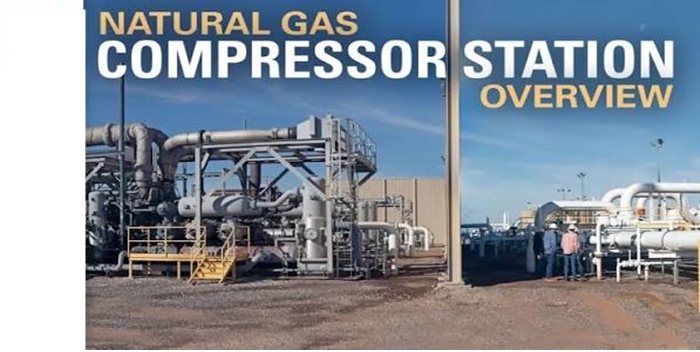
In this article, we discussed compressor, how it works, the major components, the role of compressor stations in power generation, challenges facing compressor stations and The Future of Compressor Stations.
Definition
A compressor station is a facility installed along a natural gas pipeline to increase or maintain the pressure of gas as it travels from one location to another.
Natural gas is transported through pipelines under pressure. As the gas moves through a pipeline, friction between the gas and the inner surface of the pipe causes pressure to decrease. Changes in elevation, bends, valves, fittings, and other pipeline characteristics can also contribute to pressure losses.
Why Is Compression Necessary?
Natural gas can travel through pipelines because of a pressure difference between the supply point and the destination. However, pressure naturally decreases as gas moves through a long pipeline.
If the pressure falls too much, the flow rate can decline and the pipeline may no longer deliver the required volume of gas to downstream customers.
Compressor stations solve this problem by periodically increasing the gas pressure.
The distance between compressor stations depends on several factors, including:
Pipeline diameter
Gas composition
Gas flow rate
Operating pressure
Pipeline terrain
Elevation changes
Pipeline design
Required delivery pressure
Long-distance pipelines may therefore contain multiple compressor stations positioned at carefully determined intervals.
Major Components of a Compressor Station
A compressor station consists of several systems that work together to safely and efficiently move natural gas.
Compressor Units
The compressor is the central piece of equipment.
Compressors increase the pressure of the gas so that it can continue travelling through the pipeline.
Common compressor technologies include:
Centrifugal compressors
Reciprocating compressors
The choice depends on the pipeline’s operating requirements, gas flow rate, pressure ratio, and other technical considerations.
Gas Turbines and Engines
Compressors require a source of mechanical power.
Large compressor stations may use gas turbines, electric motors, or reciprocating engines to drive compressor units.
Gas turbines are commonly used in large pipeline applications because they can provide significant amounts of power.
Electric motor-driven compressors can also be advantageous where reliable electricity is available and operators want to reduce direct combustion emissions at the station.
Gas Cooling Systems
Compression increases the temperature of natural gas.
If the gas becomes too hot, it can affect pipeline integrity, equipment performance, and operating efficiency.
After compression, the gas may therefore pass through air coolers or other heat-exchange systems to reduce its temperature before it continues through the pipeline.
Filtration and Separation Equipment
Natural gas may contain small quantities of liquids, particles, or other contaminants.
Filtration and separation equipment helps protect compressors and other components from damage.
Removing unwanted materials can improve equipment reliability and reduce maintenance requirements.
Valves
Valves control the flow of gas through the compressor station.
They may be used to isolate equipment, control flow, facilitate maintenance, and support emergency shutdown procedures.
Proper valve operation is essential to both safety and system reliability.
Control Systems
Modern compressor stations use sophisticated control systems to monitor and manage operations.
These systems can track variables such as:
Gas pressure
Temperature
Flow rate
Compressor speed
Vibration
Fuel consumption
Equipment status
Operators can use this information to adjust compressor performance and respond to abnormal conditions.
Compressor Stations and Pipeline Pressure
Pipeline pressure is one of the most important factors in natural gas transportation.
As gas travels through a pipeline, pressure gradually decreases because of friction and other resistance.
A compressor station restores the pressure to an appropriate level.
This does not mean that compressor stations simply operate at maximum pressure all the time. Operators must maintain pressure within the pipeline’s design and operating limits.
Too little pressure may reduce gas delivery capacity, while excessive pressure can create safety and equipment concerns.
Effective compressor operation therefore involves maintaining the appropriate pressure profile throughout the pipeline system.
The Role of Compressor Stations in Power Generation
Natural gas is widely used to generate electricity.
Gas-fired power plants often depend on transmission pipelines for their fuel supply.
Compressor stations help ensure that gas reaches these facilities at the required pressure and flow rate.
In regions where electricity generation depends heavily on natural gas, the reliability of compressor stations can therefore have an indirect effect on electricity supply.
A compressor station failure can potentially create downstream supply constraints, particularly where alternative gas transportation routes are limited.
Safety at Compressor Stations
Safety is a major consideration because natural gas is highly flammable and compressor stations operate under high pressure.
Facilities typically incorporate multiple safety systems designed to identify and respond to abnormal conditions.
These may include:
Gas detection systems
Fire detection systems
Emergency shutdown systems
Pressure relief devices
Automatic isolation valves
Alarm systems
Ventilation systems
Emergency response procedures
Regular inspection, testing, and maintenance are essential to ensure these systems remain functional.
Challenges Facing Compressor Stations
Despite their importance, compressor stations face several challenges.
High Capital Costs
Building a compressor station requires significant investment in land, compressors, pipelines, control systems, safety infrastructure, and supporting facilities.
Fuel and Energy Consumption
Compressors require substantial energy, particularly on large transmission systems.
Equipment Failure
Mechanical failures can reduce pipeline capacity and disrupt gas deliveries.
Environmental Emissions
Combustion and methane releases can contribute to environmental impacts.
Security Risks
Pipeline infrastructure can be vulnerable to vandalism, theft, sabotage, or other security threats in some regions.
Harsh Operating Environments
Stations may operate in remote areas, extreme climates, or locations where access for maintenance is difficult.
The Future of Compressor Stations
The future of compressor station technology is likely to be shaped by increasing automation, digitalization, energy efficiency, and emissions reduction.
Advanced sensors and artificial intelligence could improve the ability of operators to predict equipment failures and optimize compressor performance.
Electric compression may also become more attractive in locations with reliable low-carbon electricity.
Digital twins could allow engineers to simulate compressor and pipeline behavior, identify inefficiencies, and evaluate different operating conditions.
Conclusion
Compressor stations are essential to the efficient and reliable transportation of natural gas over long distances. By maintaining pipeline pressure, supporting continuous gas flow, and improving system reliability, they play a vital role in delivering gas to power plants, industries, and consumers. As gas infrastructure develops, efficient, safe, and well-maintained compressor stations will remain crucial to the energy sector.
READ:Compressed Natural Gas (CNG) vs Petroleum