

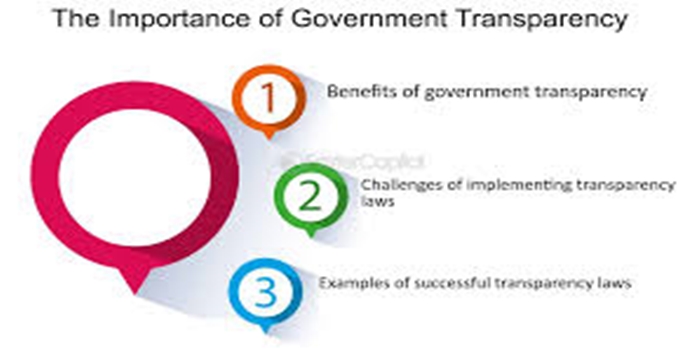
In this article, we explained government transparency, why it matters in modern democracies, pillars of digital transparency, citizen and civil society roles, the examples, major challenges and risk.
Definition
Government transparency is the obligation of public officials to operate openly, providing citizens with accessible information on decisions, actions, and budget expenditures to ensure accountability, reduce corruption, and foster trust. It involves proactively sharing data, such as budgets and policy decisions, to enable public inspection and democratic participation.
Why Transparency Matters in Modern Democracies
- Accountability and Integrity
Transparency allows citizens, media, civil society, and watchdog organizations to:
Monitor public officials
Detect corruption or abuse of power
Evaluate policy effectiveness
Without visibility into how decisions are made or funds are spent, accountability weakens, and trust erodes.
- Trust and Legitimacy
When citizens see that governments are open and communicative, they tend to have greater trust in institutions. Trust, in turn, strengthens:
Compliance with laws and regulations
Citizen engagement
Democratic legitimacy.
Pillars of Digital Transparency
To understand digital transparency fully, consider the following components:
- Accessibility
Transparency is not just about publishing information—it’s about making it usable. That means:
Clear language
Searchable platforms
Mobile-friendly access
Support for people with disabilities
- Timeliness
Information should be released in a timely manner, not delayed until after decisions are already made.
Delays can make data worthless—citizens need information before policies are finalized.
- Interoperability
Datasets should be structured so that they can be combined and analyzed across departments and platforms. This allows:
Comprehensive oversight
Cross-government analysis
Third-party innovations
- Citizen Engagement Tools
Transparency thrives with two-way communication. Digital tools like online forums, participatory budgeting platforms, and e-consultations enhance dialogue between citizens and government.
Citizen and Civil Society Roles
Digital transparency opens opportunities for:
Journalists to report on public spending or policy outcomes
Developers to create tools that visualize and interpret government data
Researchers to analyze trends and hold institutions accountable
Civil society organizations to advocate for reform and monitor compliance
Open data hackathons, civic tech communities, and watchdog groups often leverage government data to develop insights and hold governments accountable.
Major Challenges and Risks
Even with digital tools, transparency isn’t guaranteed. Common obstacles include:
- Data Quality and Usability Gaps
Many public datasets are:
Incomplete or outdated
Offered in formats that are hard to use
Missing metadata or context
Poor quality limits real transparency.
- Digital Divides
Not all citizens have equal access to technology or digital literacy. Transparency on the internet doesn’t mean transparency for everyone.
- Security and Privacy Tensions
Releasing data must be balanced with protecting:
Personal privacy
National security
Sensitive commercial information
Mismanaging this balance can harm individuals or state interests.
- Algorithmic Governance
As governments adopt AI and automated decision systems, transparency becomes more complex. It’s often difficult to explain how algorithms reach decisions, raising questions about:
Accountability
Bias
Contestability
This leads to debates about algorithmic transparency and whether citizens should have the right to understand automated decisions that affect them.
Examples of Digital Transparency in Practice
Digital transparency can take many forms:
Budget dashboards that show government spending line by line
Parliamentary records online with searchable voting histories
Contract registries for public procurement
Environmental data feeds for pollution and climate metrics
Interactive policy portals for citizen feedback
These all make government actions more observable and analyzable.
The Future of Transparency
- AI for Transparency
Artificial Intelligence can help analyze huge public datasets, highlight anomalies, and generate summaries in accessible language. However, AI governance and transparency in AI itself will be crucial.
- Blockchain and Trust
Distributed ledger technologies are being explored for immutable records of transactions or public procurements to prevent tampering.
- Global Collaboration
Transparency norms are spreading through international frameworks like the Open Government Partnership (OGP), encouraging governments to commit to measurable reforms.
- Civic Tech Expansion
Grassroots developers and civic hackers continue to build tools that empower citizens, from accountability apps to crowd-sourced data platforms.
Conclusion
Government transparency in the digital era refers to the use of information and communication technology (ICT), such as e-government platforms, open data portals, and social media, to make government operations, financial data, and decision-making processes more accessible to the public. This transformation aims to increase accountability, reduce corruption, and boost public trust by allowing citizens to monitor government activities in real time.