

Introduction
Africa is becoming an increasingly important player in the global liquefied natural gas (LNG) market. With large natural gas reserves in countries such as Nigeria, Algeria, Egypt, Mozambique, Angola, Senegal, and Mauritania, the continent has significant potential to contribute to global energy supply and security.
As demand for LNG continues to evolve, African gas presents opportunities for export earnings, foreign investment, industrial development, and job creation. At the same time, African countries face the challenge of balancing LNG exports with growing domestic demand for electricity and industrial energy.
Nigeria: A Longstanding African LNG Powerhouse
Nigeria remains one of the most important gas-producing countries in Africa and has played a significant role in the global LNG industry for decades.
The country possesses substantial natural gas reserves, much of which is associated with oil production. Historically, insufficient infrastructure meant that significant quantities of associated gas were flared rather than commercialized. LNG development provided an opportunity to turn part of this resource into an export commodity.
The Nigeria LNG Limited facility on Bonny Island has been central to Nigeria’s LNG industry. Its operations have established Nigeria as a significant supplier to international LNG markets.
Nigeria’s importance, however, extends beyond existing LNG production. The country has additional gas resources that could support greater production if challenges involving investment, pipeline infrastructure, security, regulation, financing, and project execution can be addressed.
The development of new LNG capacity could potentially strengthen Nigeria’s position in international gas markets while also creating opportunities for domestic industries that rely on natural gas.
Algeria and the Importance of North African Gas
Algeria has one of Africa’s longest histories in the international natural gas business. Its geographical position gives it a particularly important relationship with Europe
Unlike LNG exporters located thousands of kilometres from European markets, Algeria can supply Europe through both pipelines and LNG terminals.
This geographical advantage has become especially significant as European countries have sought to diversify their sources of natural gas.
Algeria’s LNG infrastructure, combined with pipeline connections to Europe, gives the country multiple channels through which it can participate in regional gas trade.
Its experience also demonstrates an important feature of the African gas industry: the continent’s strategic importance is not determined solely by the size of its reserves. Location matters.
Egypt and the Mediterranean Gas Market
Egypt occupies another strategically important position in Africa’s gas industry.
Its LNG infrastructure, including facilities at Damietta and Idku, provides access to international markets. Egypt has also developed substantial offshore gas resources in the Eastern Mediterranean.
The discovery and development of the Zohr field significantly changed Egypt’s domestic gas outlook and contributed to its ambitions to become an important regional gas hub.
Egypt’s location near Europe and the Middle East gives it potential advantages as international energy companies and governments consider the future of Mediterranean gas trade.
At the same time, Egypt’s LNG export potential is influenced by domestic consumption. A major challenge for gas-producing countries is that rising domestic demand can reduce the volume available for export.
Mozambique and the Rise of East African LNG
One of the most significant developments in Africa’s gas industry has occurred in Mozambique.
Large offshore discoveries in the Rovuma Basin transformed Mozambique’s prospects and attracted major international investment.
The country’s LNG developments have demonstrated the scale of opportunities available in East Africa. Mozambique is geographically positioned to supply Asian markets, while its resources have attracted some of the world’s largest energy companies.
However, Mozambique’s gas ambitions have also highlighted the risks associated with large-scale energy projects.
Senegal and Mauritania Enter the LNG Conversation
West Africa’s gas landscape has also expanded through major offshore discoveries involving Senegal and Mauritania.
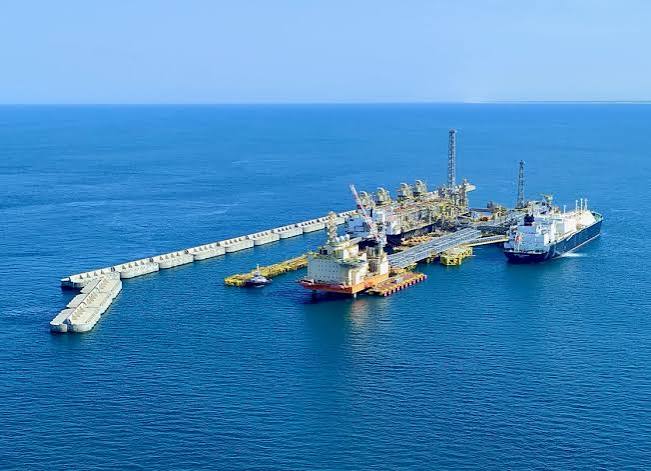
The Greater Tortue Ahmeyim gas project, located offshore on the maritime border between the two countries, has created a new LNG-producing region in West Africa.
Its development is significant because it demonstrates that Africa’s future LNG story is not limited to traditional producers such as Nigeria, Algeria, and Egypt.
New entrants can expand the continent’s overall export capacity and diversify the geographic sources of global LNG supply.
Angola and Equatorial Guinea
Angola is another established African LNG producer.
The country’s gas resources have traditionally been closely associated with its oil industry. LNG development has provided a mechanism for monetizing natural gas that might otherwise have faced limited commercial opportunities.
Angola’s position in the Atlantic makes it relevant to LNG markets in Europe and other regions.
Equatorial Guinea, meanwhile, has developed LNG capacity despite being a relatively small country. Its experience demonstrates how smaller African states can participate in international gas markets when they possess commercially viable reserves and the infrastructure needed to process and export LNG.
Why African Gas Matters to the Global LNG Market
The global LNG market is increasingly interconnected.
LNG can be transported by sea from exporting countries to importing countries, allowing buyers to source gas from a wide range of suppliers.
African producers therefore contribute to global supply diversification.
When African LNG enters international markets, it can compete with supplies from regions such as the United States, Qatar, Australia, Russia, and the Middle East.
This competition can influence global trade patterns.
For example, European buyers may purchase LNG from Africa when pipeline supplies are constrained or when they want to diversify their energy sources. Asian buyers may also seek African LNG when market conditions, shipping economics, or contract structures make those supplies commercially attractive.
Europe’s Energy Security and African LNG
Europe is particularly important to the future of African LNG.
European energy markets have undergone major changes in recent years as governments have sought to reduce dependence on Russian pipeline gas and diversify their energy supply.
This has increased interest in LNG imports.
African producers are geographically well placed to participate in this market. North African countries have the additional advantage of existing pipeline infrastructure connecting them with Europe.
West African LNG can also reach European markets relatively efficiently by sea compared with supplies originating farther away.
As a result, Africa could become an increasingly important component of Europe’s diversified gas supply portfolio.
However, African producers must compete with LNG exporters from other regions. European demand is also affected by policies promoting renewable energy, energy efficiency, electrification, and lower-carbon energy systems.
Africa’s Gas and the Energy Transition
The global energy transition has created a complicated debate around natural gas.
Natural gas generally produces fewer carbon dioxide emissions at the point of combustion than coal. Because of this, some policymakers and energy companies have described gas as a transition fuel that can support electricity systems while renewable energy capacity expands.
Gas-fired power plants can also provide dispatchable electricity, complementing variable sources such as solar and wind.
For Africa, this argument has particular significance.
Large parts of the continent continue to face electricity shortages and limited access to reliable energy. Gas could potentially support power generation, manufacturing, fertilizer production, petrochemicals, transportation, and other industrial activities.
Foreign Investment and the Economics of LNG
Large LNG projects are capital intensive and typically require long-term investment horizons.
International oil and gas companies have historically played a major role in financing and developing African LNG projects.
Governments must therefore create regulatory and commercial frameworks that attract investment while ensuring that host countries receive an appropriate share of the economic benefits.
This can involve production-sharing agreements, taxes, royalties, local-content requirements, domestic supply obligations, and government participation.
The balance is complicated.
If fiscal terms are too demanding or regulatory conditions are uncertain, companies may delay investment or redirect capital to other regions.
The Challenge of Project Delays
LNG projects can take many years from discovery to commercial production.
During that period, market conditions can change significantly.
Gas prices may rise or fall. Construction costs may increase. Governments may change policies. Environmental regulations may become stricter. New LNG projects may enter the market.
African projects therefore face the same investment risks as LNG projects elsewhere, but these risks can be amplified by infrastructure and financing challenges.
Delays can be particularly costly because they may cause projects to miss favourable market conditions.
Security Risks
Security is another major factor in the development of African gas resources.
Some of the continent’s most promising gas regions are located in areas affected by political instability, insurgency, maritime insecurity, or social conflict.
The experience of Mozambique demonstrates how security concerns can directly affect large-scale energy investment.
In West Africa, maritime security and pipeline protection can also influence the cost and reliability of gas production.
What Africa Needs to Maximize Its Gas Potential
Several priorities could help African countries capture greater value from their gas resources.
- Invest in infrastructure
Pipelines, processing facilities, LNG terminals, electricity networks, and storage infrastructure are essential.
- Improve regulatory stability
Investors need clear and predictable rules over the lifetime of major projects.
- Develop domestic gas markets
African countries can use gas to support electricity generation and industrial development while maintaining commercially viable exports.
- Reduce gas flaring
Capturing associated gas can turn a waste product into an economic resource while reducing emissions.
- Improve methane management
Reducing methane leakage can strengthen the environmental performance of African gas production.
- Develop local skills
LNG projects require engineers, technicians, project managers, maritime professionals, environmental specialists, and other skilled workers.
Investment in education and technical training can help more economic value remain within producing countries.
- Strengthen regional cooperation
Cross-border pipelines, shared infrastructure, joint development projects, and regional electricity markets can help African countries make better use of their gas resources.
Africa’s Place in the Global LNG Future
Africa is unlikely to have a single role in the future LNG market.
Different countries will occupy different positions.
Nigeria and Algeria have established industries and significant reserves. Egypt has important Mediterranean infrastructure and regional ambitions. Mozambique represents the potential of East African offshore gas. Senegal and Mauritania demonstrate the emergence of new West African producers. Angola and Equatorial Guinea add further diversity to the continent’s LNG supply base.
Together, these countries demonstrate that Africa’s contribution to global LNG is becoming increasingly geographically diverse.
Conclusion
African gas has an important role to play in the global LNG market, offering opportunities for energy security, economic growth, investment, and industrial development. With its abundant gas resources and growing LNG projects, Africa can become a more significant global energy supplier. However, achieving this potential will require investment in infrastructure, effective policies, environmental responsibility, and a balance between exports and domestic energy needs.
READ: How African Entrepreneurs Can Use AI to Scale Their Businesses