

Introduction
Artificial intelligence is quickly becoming part of everyday life, and the next big step is the rise of AI agents. Unlike traditional AI tools that simply answer questions, AI agents can perform tasks, make decisions, and help users accomplish goals. For the average person, this could mean less time spent on repetitive work and more convenience in daily life. But it also raises important questions about jobs, privacy, trust, and human control. So, what exactly do AI agents mean for ordinary people?
What Are AI Agents?
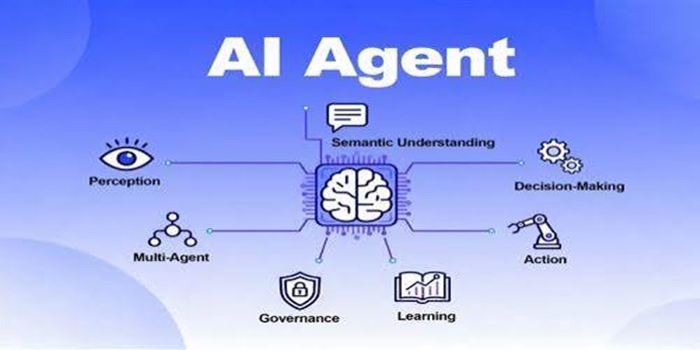
An AI agent is a software system designed to achieve a goal by taking a series of actions with limited human supervision.
A normal chatbot might answer a question such as, “What are the best hotels in Abuja?” An AI agent could potentially take the next steps by comparing hotels, checking prices, considering your preferences, and presenting suitable options.
The key difference is action.
Traditional AI often helps you find an answer. AI agents are designed to help you accomplish a task.
This could eventually make AI feel less like a search tool and more like a personal digital assistant.
How Could AI Agents Help in Everyday Life?
One of the biggest advantages of AI agents could be saving time.
People spend a surprising amount of time on small administrative tasks such as scheduling appointments, responding to emails, comparing prices, organizing documents, making travel arrangements, and keeping track of deadlines.
An AI agent could potentially handle many of these routine activities.
For example, instead of spending an hour researching a trip, you could tell an AI:
Help me plan a three-day trip within my budget.
The agent could organize the information, compare options, and create a plan for you.
Similarly, an AI agent could help organize your calendar, remind you about important events, or assist with routine communications.
The goal isn’t necessarily to eliminate human involvement. Instead, it could reduce the amount of repetitive work people have to do themselves.
AI Agents and Jobs
Perhaps the biggest concern surrounding AI agents is employment.
Some jobs involve repetitive digital tasks that AI systems may eventually be able to perform more quickly and cheaply. Administrative work, basic customer service, data processing, scheduling, and some forms of research could be affected.
However, this does not necessarily mean that AI will eliminate all human jobs.
In many cases, AI may change jobs rather than completely replace them. Employees could use AI to handle repetitive tasks while they focus on responsibilities requiring creativity, communication, judgment, and problem-solving.
This means that knowing how to work effectively with AI could become an increasingly valuable skill.
The workplace of the future may not be humans versus AI. It may be humans working alongside AI agents.
AI Agents Could Make Technology More Personal
Another important change could be personalization.
An AI agent could learn a user’s preferences and routines and use that information to provide more relevant assistance.
For example, it could remember your preferred travel times, your usual shopping choices, your work schedule, or the types of information you find useful.
Instead of constantly telling technology what to do, you could gradually build a relationship with a digital assistant that understands how you prefer things to be done.
This could make technology easier to use, particularly for people who find complicated applications and websites difficult to navigate.
The Privacy Question
Greater personalization comes with a major concern: privacy.
For an AI agent to be genuinely useful, it may need access to information about your schedule, emails, documents, purchases, contacts, or preferences.
That creates important questions about how personal information is stored and protected.
People will need to understand what their AI agents can access, what they are allowed to do, and who can see the information they use.
The convenience of an AI assistant should never come at the cost of losing control over sensitive personal information.
Can We Trust AI Agents?
AI agents can be useful, but they are not perfect.
They can misunderstand instructions, make incorrect assumptions, provide inaccurate information, or take an action that the user did not intend.
This becomes especially important when an AI agent can take action rather than simply provide an answer.
For example, an incorrect recommendation is one thing. An AI system accidentally booking the wrong flight or sending an important document to the wrong person is another.
That is why human oversight will remain important.
People should be able to review important actions, set limits, and stop an AI agent when necessary.
AI Agents in Education
AI agents could also have a major impact on education.
Students could use them as personal learning assistants that explain difficult subjects, create practice questions, organize study schedules, and provide feedback.
Instead of giving every student exactly the same learning experience, AI could potentially adapt explanations to individual needs.
However, students must be careful not to use AI simply to complete their assignments for them. If AI does all the thinking, students may finish their work without actually learning.
The best use of AI in education will likely be as a tool that supports learning rather than replaces it.
What Should the Average Person Do?
People do not need to become AI experts to benefit from this technology.
A good starting point is to learn how AI can help with simple tasks such as writing, research, planning, organizing information, learning new subjects, and handling repetitive work.
At the same time, people should develop the habit of checking important AI-generated information and being careful about sharing sensitive personal data.
The goal should not be to allow AI to make every decision.
Instead, the goal should be to use AI where it provides genuine value while keeping humans in control of important choices.
The Future of AI Agents
AI agents could eventually become as ordinary as smartphones and internet services. People may not even think about them as advanced technology. They may simply become part of everyday life.
Instead of opening different applications and completing every step manually, people could increasingly tell an AI what they want to accomplish and let it handle the routine work.
This could save time, improve productivity, and make technology easier to use. At the same time, society will need to address concerns about privacy, employment, security, accuracy, and human dependence on AI.
Ultimately, AI agents are not just about making computers smarter. They are about changing what we expect computers to do for us.
For the average person, the biggest benefit may be simple: less time spent on repetitive tasks and more time available for work, family, creativity, learning, and the things that truly matter.
Conclusion
AI agents could make everyday life easier by saving time, automating routine tasks, and helping people work more efficiently. However, issues like privacy, job security, and trust must be carefully considered. The future of AI should focus on helping people, not replacing human judgment. With responsible use, AI agents can become valuable tools in our daily lives.