

Introduction
Software development is one of the fastest-growing and most rewarding career paths in today’s digital world. It offers creativity, problem-solving opportunities, high earning potential, and flexibility across industries. Whether you’re a student, a career switcher, or a self-taught devotee, starting a career in software development requires a blend of technical skills, practical experience, and strategic planning. This guide will take you step by step from beginner to professional.
Understand What Software Development Is:
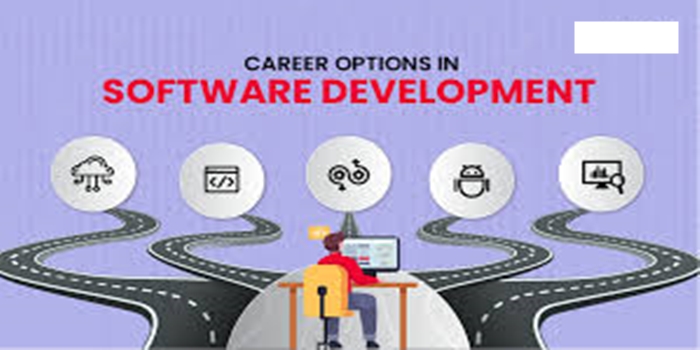
Software development involves designing, building, testing, and maintaining applications, websites, and systems. It encompasses:
Frontend Development: Focuses on the parts of software users interact with (UI/UX, websites, mobile apps). Technologies include HTML, CSS, JavaScript, React, and Flutter.
Backend Development: Handles the behind-the-scenes logic, databases, and server interactions. Technologies include Python, Java, Node.js, Ruby on Rails, and databases like MySQL or MongoDB.
Full-Stack Development: Combines frontend and backend skills.
Mobile Development: Creating apps for iOS (Swift) or Android (Kotlin).
DevOps & Cloud Development: Managing deployment, infrastructure, and scaling software.
Develop Essential Technical Skills:
Software development requires both programming knowledge and problem-solving skills. Here’s a roadmap:
Programming Languages
Start with a beginner-friendly language: Python is highly recommended.
Later, learn JavaScript for web development or Java/Kotlin/Swift for mobile apps.
Data structures and algorithms: Essential for efficient problem-solving.
Version control: Git and GitHub for collaboration and code management.
Databases: SQL (relational) and NoSQL (non-relational) databases.
APIs and Web Services: Understand how software communicates across platforms.
Basic DevOps: Understanding deployment and cloud platforms like AWS or Azure is a plus.
Choose a Learning Path:
You can become a software developer through formal education, self-learning, or bootcamps.
Option 1: Formal Education
Bachelor’s degree in Computer Science, Software Engineering, or related fields.
Provides a strong foundation in algorithms, computer architecture, and theory.
Opens doors to traditional tech roles in big companies.
Option 2: Self-Learning
Use online courses, tutorials, and documentation.
Platforms like Freedcamp, Coursera, Udemy, edX, and Codecademy offer structured paths.
Build projects and contribute to open-source software to gain practical experience.
Option 3: Coding Bootcamps
Intensive, short-term programs (3–6 months) focused on practical skills.
Pros: Fast learning, mentorship, and career support.
Cons: Can be costly; may not cover deep theory.
Build a Strong Portfolio:
A portfolio demonstrates your skills to potential employers. Focus on:
Projects: Build small applications, websites, or games. For example, a personal website, a to-do app, or an e-commerce platform.
Open-source contributions: Contribute to GitHub projects to show collaboration and problem-solving.
Code quality: Write clean, well-documented, and maintainable code.
Gain Practical Experience:
Hands-on experience is crucial:
Internships: Apply for internships or apprenticeships to gain real-world exposure.
Freelancing: Platforms like Upwork or Fiverr let you work on small projects and build experience.
Hackathons & coding challenges: Competitions like LeetCode, Hacker Rank, or Code forces improve your skills and visibility.
Develop Soft Skills:
Technical skills alone aren’t enough. Employers value:
Problem-solving and analytical thinking
Communication skills to explain technical ideas to non-technical stakeholders
Teamwork and collaboration
Adaptability to learn new technologies quickly.
Prepare for Job Applications:
Resume & LinkedIn
Highlight projects, technical skills, internships, and contributions.
Include links to GitHub repositories and live projects.
Interview Preparation
Practice coding challenges (algorithms, data structures).
Learn system design basics for mid-level roles.
Prepare behavioral questions to demonstrate teamwork and problem-solving.
Consider Specializations
As you gain experience, consider specializing in areas with high demand:
AI & Machine Learning: Build intelligent applications.
Cybersecurity: Protect systems and networks.
Mobile App Development: iOS or Android apps.
Game Development: Unity or Unreal Engine.
Cloud & DevOps: AWS, Azure, CI/CD, containerization.
Specialization often increases earning potential and career growth opportunities.
Career Growth Opportunities:
Software development offers multiple career paths:
Junior Developer → Mid-Level Developer → Senior Developer
Tech Lead / Engineering Manager
Specialist roles: AI Engineer, Cloud Engineer, Security Engineer, Mobile Developer
Entrepreneurship: Build your own software products or startups.
Conclusion
Starting a career in software development demands dedication, curiosity, and consistent practice. Although the path initially seems challenging, success can be achieved by focusing on Learning the right skills, building a portfolio, Gaining practical experience, Networking strategically.
READ: The Role of Internships in Career Exploration