

Introduction
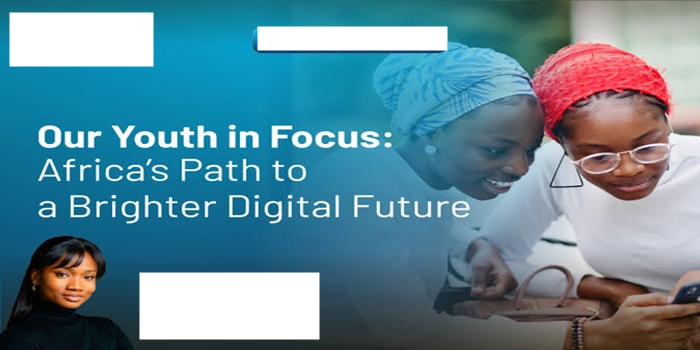
Africa stands on the edge of an unprecedented economic shift powered by two converging forces: a rapidly expanding youth population and an accelerating digital transformation. With over 60% of the continent’s population under the age of 25, the youngest demographic profile in the world, Africa is set to supply the majority of the global labor force addition over the coming decades. As traditional sectors like agriculture shift toward tech-enabled service industries, the digital economy offers a transformative pathway for economic empowerment, job creation, and sustainable development across the continent. Driven by high mobile internet penetration, booming fintech innovation, and a vibrant startup landscape, young Africans are positioned to transition from passive consumers of technology to active creators, entrepreneurs, and global digital workers. Exploring the opportunities within Africa’s digital economy reveals key sectors driving growth, the structural hurdles youth face, and the strategic investments required to turn this demographic potential into a lasting economic engine.
Understanding Africa’s Digital Economy
The digital economy refers broadly to economic activities that depend on digital technologies. It includes businesses and jobs built around the internet, software, data, digital platforms, telecommunications, e-commerce, financial technology, digital media, artificial intelligence, and other technology-enabled services.
The digital economy is not limited to software engineers.
A graphic designer working with clients in different countries, a social media manager helping businesses build online communities, a farmer using digital platforms to reach customers, a creator earning revenue from online content, and a developer building a financial application are all participating in the digital economy.
This broad definition is important because it shows that young Africans do not necessarily have to become programmers to benefit from technological transformation.
What problem can you solve using digital tools, and who is willing to pay for that solution?
That question opens the door to a wide range of opportunities.
- Freelancing and Remote Work
One of the most accessible opportunities created by the digital economy is freelancing.
The internet has made it possible for professionals to work with clients and companies outside their immediate geographical locations. A young person living in Lagos, Nairobi, Accra, Kigali, Kampala, Johannesburg, Cairo, or another African city can potentially provide services to clients anywhere in the world.
Popular freelance services include:
– Graphic design
– Website development
– Mobile app development
– Video editing
– Copywriting
– Translation
– Virtual assistance
– Social media management
– Search engine optimization
– Digital marketing
– Customer support
– Data entry and administration
– Accounting and bookkeeping
– UI/UX design
– Animation
– Software testing
– Data analysis.
The challenge is that global freelancing is competitive. Therefore, simply describing oneself as a freelancer” is not enough.
A stronger strategy is to develop a specific specialization.
For example, instead of saying:
I am a graphic designer.
A professional might position themselves as:
I design visual identities and social media campaigns for African technology startups.
Specialization can make it easier to differentiate oneself from thousands of competitors.
- Software Development and Programming
Software development remains one of the most important areas of the digital economy.
Africa has a growing technology ecosystem, and businesses increasingly require software developers to build websites, mobile applications, payment platforms, enterprise systems, artificial intelligence tools, and other digital products.
Young people can specialize in areas such as:
– Front-end development
– Back-end development
– Full-stack development
– Mobile development
– Cloud engineering
– DevOps
– Cybersecurity
– Blockchain development
– Artificial intelligence
– Machine learning
– Data engineering
– Software testing.
Programming can be particularly powerful because digital products can serve large numbers of customers without requiring the same physical expansion associated with traditional businesses.
A young developer could create an application that starts in one city and eventually serves users across multiple African countries.
The journey requires patience. Learning to code is not simply about watching tutorials. It requires consistent practice, building projects, debugging problems, studying documentation, and learning how to work with other developers.
3.Artificial Intelligence and Machine Learning
Artificial intelligence is rapidly changing the global economy, and Africa’s young population has an opportunity to participate in this transformation.
AI is being applied to areas such as:
– Healthcare
– Agriculture
– Education
– Banking
– Customer service
– Logistics
– Manufacturing
– Marketing
– Cybersecurity
– Financial analysis
– Language technology
– Content creation.
For young Africans, AI creates opportunities at several levels.
Some can become AI researchers and engineers. Others can build AI-powered businesses. Others can use existing AI tools to improve productivity in traditional professions.
There is also a major opportunity to develop AI solutions suited to African contexts.
Many African languages, markets, cultural contexts, and local problems have historically received less technological attention than major global markets. Young African technologists can help address this gap.
4.Digital Entrepreneurship and Startups
The digital economy provides young people with opportunities to become entrepreneurs rather than only employees.
A digital startup can be built around a website, mobile application, online marketplace, software platform, financial technology service, educational platform, media company, or other digital product.
Africa already has a growing startup ecosystem, particularly in sectors such as:
– Fintech
– E-commerce
– Health technology
– Education technology
– Agricultural technology
– Logistics
– Mobility
– Clean technology
– Enterprise software
– Digital media
Young entrepreneurs have an important advantage: they often understand problems affecting their own communities.
A student may recognize challenges in accessing educational materials. A young farmer may identify inefficiencies in agricultural supply chains. A young professional may notice problems with small-business payments or customer management.
- Fintech and Digital Financial Services
Financial technology has become one of the most important areas of Africa’s digital economy.
Digital payments, mobile money, online banking, digital lending, payment processing, savings platforms, insurance technology, and financial management tools are transforming how individuals and businesses interact with money.
Young people can participate in this sector as:
– Software developers
– Product managers
– Financial analysts
– UX designers
– Cybersecurity professionals
– Data scientists
– Compliance specialists
– Sales professionals
– Entrepreneurs
– Digital marketers
Fintech is particularly significant in Africa because many communities have historically faced barriers to traditional financial services.
Technology can reduce some of these barriers by making financial products more accessible through mobile devices and digital platforms.
- Digital Marketing
Businesses increasingly need to reach customers online.
This has created substantial demand for digital marketing professionals.
Young people can develop careers in:
– Social media marketing
– Search engine optimization
– Email marketing
– Content marketing
– Influencer marketing
– Paid advertising.
– Brand strategy
– Marketing analytics
– Community management.
- Content Creation and the Creator Economy
Social media has transformed content creation from a hobby into a potential profession.
Young Africans can create content around:
– Education
– Entertainment
– Technology
– Fashion
– Beauty
– Sports
– Food
– Travel
– Finance
– Career development
– Comedy
– Music
– Culture
– Gaming
Creators can potentially earn through advertising, sponsorships, memberships, affiliate marketing, merchandise, digital products, events, and services.
However, content creation should be treated as a business rather than simply chasing viral posts.
Successful creators generally understand their audience, develop a recognizable identity, publish consistently, and diversify their revenue sources.
- Online Education and E-Learning
Education is another area where technology is creating opportunities.
Young Africans can become:
– Online tutors
– Course creators
– Instructional designers
– Educational content creators
– Learning-platform developers
– Academic coaches
– Language teachers
– Corporate trainers
Online education makes it possible for teachers and experts to reach students outside their immediate communities.
A professional with expertise in accounting, programming, mathematics, design, language, business, or another subject can package that knowledge into digital lessons.
The opportunity is especially significant because education is not a one-time market.
- Cybersecurity
As more African businesses move online, cybersecurity becomes increasingly important.
Companies need professionals who can protect:
– Customer information
– Financial transactions
– Business systems
– Websites
– Cloud infrastructure
– Networks
– Digital identities.
- Digital Jobs in Agriculture
Agriculture remains important to many African economies, and digital technology can transform the sector.
Young people can develop businesses and careers around:
– Digital agricultural marketplaces
– Farm-management software
– Weather information
– Agricultural data
– Supply-chain technology
– Digital payments
– Farm-to-consumer platforms
– Precision agriculture
– Agricultural logistics
– Drone technology
This creates an important opportunity to combine traditional industries with modern technology.
A young person does not have to choose between agriculture and technology.
They can combine both.
For example, a technology entrepreneur might build a platform that connects small-scale farmers with buyers, helping farmers obtain better market information while reducing inefficiencies in the supply chain.
- Digital Health
Healthcare technology is another emerging field.
Digital health opportunities include:
– Telemedicine
– Health-information systems
– Appointment platforms
– Digital medical records
– Health education
– Medical data analysis
– Health logistics
– Remote monitoring
– Health insurance technology
Young professionals can contribute as developers, designers, analysts, healthcare professionals, entrepreneurs, researchers, or digital marketers.
The sector also demonstrates an important principle of Africa’s digital economy.
- Digital Jobs in Media and Entertainment
Africa has vibrant entertainment industries, and digital platforms are expanding their reach.
Young people can build careers in:
– Music production
– Video production
– Podcasting
– Film
– Animation
– Gaming
– Digital journalism
– Sports media
– Photography
– Talent management
The internet allows creators to reach audiences beyond national borders.
This is particularly important for African culture because digital distribution can help African stories, music, languages, fashion, and entertainment reach global audiences.
The biggest opportunities may come from solving real problems rather than simply copying global technology trends.
Conclusion
Africa’s digital economy is the ultimate catalyst for unlocking its youth dividend. By investing in accessible infrastructure, practical digital skills, and flexible financing, the continent can empower its young population to transition from tech consumers to global creators, driving sustainable, tech-led growth across Africa.