

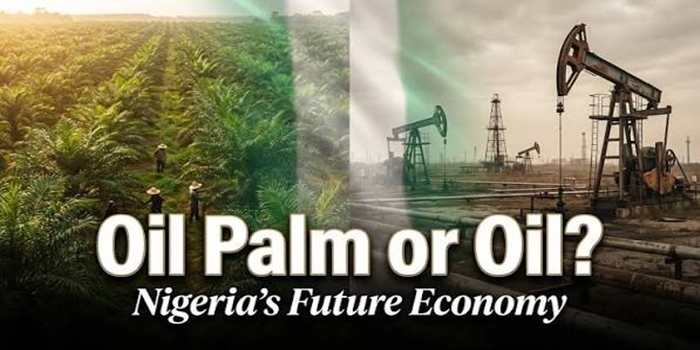
Introduction
For many years, oil has been at the heart of Nigeria’s economy. It has financed government budgets, supplied the country with foreign exchange, attracted billions of dollars in investment and made Nigeria one of Africa’s most important energy producers.
Yet Nigeria’s oil industry has spent much of the past decade struggling to live up to its potential.
Production fell dramatically from the levels the country achieved during its oil boom years. Pipeline destruction, crude theft, insecurity in the Niger Delta, ageing infrastructure, underinvestment, regulatory uncertainty, project delays and disputes between international oil companies and the government all combined to reduce output. At some points, production fell below one million barrels per day.
Today, however, there are signs that the decline may not be permanent.
Nigeria’s oil production has already begun recovering. The Nigerian Upstream Petroleum Regulatory Commission (NUPRC) says the country was producing about 1.7 million barrels per day of crude oil and condensate in August 2026, while the government is pursuing policies designed to attract new investment and bring additional barrels online. NUPRC also says 22 major offshore projects are expected between 2026 and 2030, with potential investment of between $30 billion and $50 billion.
The central question, therefore, is no longer simply whether Nigeria can produce oil.
It is whether Nigeria can turn the current recovery into a durable increase in production before declining global oil demand, changing investor preferences and the energy transition make that much more difficult.
The answer is cautiously optimistic: Nigeria can increase oil output again, potentially significantly. But achieving a sustained return to two million barrels per day or more will require the country to solve problems that have undermined production for years.
Nigeria’s oil industry is showing signs of recovery
Nigeria has already demonstrated that production can recover when the right combination of security, investment and operational improvements comes together.
According to reporting by Reuters, Nigeria’s average oil production increased to approximately 1.5 million barrels per day in 2025, an increase of about 8% from the previous year. The improvement followed years in which production had been severely constrained by theft, pipeline vandalism and insufficient investment.
Other industry figures indicate that production moved higher during 2025, reaching roughly 1.7 million to 1.83 million barrels per day at points in the year. Active drilling rigs also increased substantially, from 31 in January to 50 by July, suggesting that the recovery was not simply the result of temporary improvements to existing wells but was also connected to renewed upstream activity.
Oil production does not rise sustainably merely because an oil-producing country wants it to. New wells must be drilled. Existing wells must be maintained. Floating production facilities must operate reliably. Pipelines and alternative evacuation systems must move crude to terminals. Companies must approve billions of dollars in capital expenditure. Investors must believe that the regulatory and fiscal environment will remain stable long enough to recover their money.
The recent increase in drilling and investment therefore provides a more meaningful signal than political promises alone.
How much oil does Nigeria have left?
One of Nigeria’s biggest advantages is that the country is not running out of oil in the immediate future.
NUPRC’s official reserves position as of January 1, 2026 puts Nigeria’s total oil and condensate reserves at 37.01 billion barrels. The regulator estimates the oil reserves life at approximately 59 years based on current production assumptions. Nigeria also has enormous gas resources, with total gas reserves estimated at 215.19 trillion cubic feet.
This is important because the debate over Nigerian oil production is sometimes presented as though the country’s production decline is primarily a geological problem.
It is not.
Nigeria’s central problem has been its ability to efficiently and economically develop the resources it already possesses.
Nigeria’s enormous reserves do not automatically translate into high production.
A country can have billions of barrels underground and still produce relatively little if companies cannot obtain investment approvals, secure fields, transport crude safely or operate projects profitably.
This is one reason Nigeria’s historical production performance has been so frustrating.
During its strongest production periods, Nigeria regularly approached or exceeded two million barrels per day. But the country subsequently struggled with production losses associated with theft, insecurity, ageing infrastructure and declining investment.
The recovery therefore does not require Nigeria to discover an entirely new petroleum province.
It requires Nigeria to unlock barrels that are already known or reasonably expected to exist.
That is potentially good news.
The hidden opportunity: restoring shut-in production
One of the most interesting opportunities lies in existing fields.
NUPRC has previously identified significant latent production potential from wells and assets that have been shut in or underperforming. Its industry review identified potential of roughly 700,000 barrels per day associated with shut-in wells and interventions, although recovering such volumes would require investment and operational work and should not be interpreted as an immediately available 700,000 barrels per day.
The challenge is cost.
Deepwater projects require massive upfront capital and long development periods. International oil companies will not commit billions of dollars unless they are confident that fiscal terms, regulations, security, project approvals and government participation will remain predictable.
There are signs that the investment environment is improving.
NUPRC announced in August 2026 that 22 major offshore projects are expected between 2026 and 2030, with estimated investment potential of $30 billion to $50 billion. The regulator also said it had approved more than $57 billion in field development plans since 2024, some of which have progressed to final investment decisions.
If even a significant portion of those projects reaches production on schedule, Nigeria could add substantial new barrels during the second half of this decade.
A new deepwater incentive could be a major turning point
Nigeria’s government is also trying to address one of the industry’s biggest obstacles: project economics.
In August 2026, NUPRC said a new Deep Offshore Oil and Gas Project Incentives (Tax Remission) Executive Order 2026 could unlock up to $50 billion in investment and potentially create an additional one million barrels per day of crude oil and condensate production from deepwater fields.
That one-million-barrel figure should be viewed as an upside potential rather than a guaranteed future production increase.
Still, the policy is significant because it addresses a fundamental reality of modern oil investment.
The future requires NNPC to operate with greater commercial discipline, stronger transparency and clearer accountability.
In March 2026, NNPC’s Group Chief Executive said the company believed Nigeria could increase production by around 100,000 barrels per day over the following months and was targeting approximately 1.8 million barrels per day for the year. He also said NNPC had reviewed its portfolio and was focusing on improving project execution so developments would be delivered on time and within budget.
This may sound like a technical management issue, but it is actually fundamental to Nigeria’s oil future.
A project that is delayed by two years is not merely a delayed project. It means two years of lost production, lost tax revenue, lost foreign exchange and lost investment returns.
Nigeria cannot afford that kind of delay if it wants to compete in a rapidly changing global energy market.
For decades, the region has been both the source of Nigeria’s petroleum wealth and the location of some of the industry’s most persistent problems.
Oil theft, illegal refining, pipeline vandalism, environmental damage and community grievances have repeatedly disrupted production.
The refinery is changing that equation.
The 700,000-barrel-per-day facility has become a major component of Nigeria’s downstream petroleum industry. Reuters reported in September 2026 that the refinery was operating at full capacity and was preparing an expansion that could eventually take capacity to 1.4 million barrels per day.
More importantly for upstream production, the refinery creates a large domestic customer for Nigerian crude.
In September 2026, the refinery secured at least 16 million barrels of Nigerian crude for October deliveries, equivalent to roughly 520,000 barrels per day for that month.
This creates an important strategic connection:
more domestic refining capacity can increase the value of having reliable domestic crude production.
Instead of viewing crude solely as an export commodity, Nigeria can increasingly see it as the feedstock for a wider domestic energy and petrochemical industry.
But the refinery boom does not automatically mean more crude production
There is an important caveat.
A refinery does not create crude oil.
If domestic refining consumes more Nigerian crude while upstream production remains stagnant, Nigeria may simply have less crude available for export.
This is why the growth of refining must be accompanied by growth in upstream production.
The ideal scenario would be:
Nigeria increases crude production.
A greater share is supplied to domestic refineries.
Refineries produce fuel and petrochemical products for Nigeria and other African markets.
Excess crude remains available for export.
The country earns both upstream and downstream revenues.
That would represent a much stronger petroleum economy than Nigeria’s traditional model of exporting crude and importing refined products.
Can Nigeria reach two million barrels per day again?
This is perhaps the most important question.
The answer is yes; it is technically and commercially possible.
But it should not be treated as automatic.
NUPRC’s current estimates, new offshore developments, renewed drilling, improved security measures, field interventions and new fiscal incentives all create pathways toward higher output.
Nigeria’s 2025 licensing round also offered 50 blocks and was projected by NUPRC to attract about $10 billion in investment, with potential production of roughly 400,000 barrels per day once the new assets are fully developed. However, the regulator rightly noted that licensing a block does not immediately create new barrels; exploration, appraisal, development and infrastructure can take years.
This is why Nigeria’s production recovery should be viewed in stages.
Stage one: 1.7–1.8 million barrels per day
This is the most realistic near-term objective.
Nigeria has already been operating around this range, and NNPC has publicly targeted approximately 1.8 million barrels per day.
Achieving and sustaining this level would demonstrate that the recent recovery is durable.
Stage two: around 2 million barrels per day
Reaching two million barrels per day would require the successful execution of multiple projects simultaneously.
That would likely include:
restoration of existing shut-in wells;
increased drilling;
improved crude evacuation;
new offshore projects;
greater investment by international oil companies;
successful development of assets transferred to indigenous producers;
reduced crude theft;
improved project execution; and
stable fiscal and regulatory policies.
This is achievable, but it will require several years of consistent performance.
Stage three: exceeding 2 million barrels per day
This becomes more difficult.
Nigeria would need several large projects to come online while existing fields continue producing efficiently.
The country also needs to consider OPEC+ production constraints and the possibility that global oil demand may not grow indefinitely.
In other words, the physical ability to produce two million barrels per day is not the same thing as having the economic or political freedom to sell two million barrels per day.
OPEC quotas matter
Nigeria does not operate in isolation.
Its production is influenced by decisions made within OPEC and OPEC+.
Even if Nigerian companies can technically produce more crude, production increases can be constrained by national production targets or broader efforts by oil-producing countries to manage global supply.
This creates a complicated policy challenge.
Nigeria wants higher production because it needs foreign.
If Nigeria maintains regulatory predictability and asset security, a steady, incremental output recovery remains achievable, cementing the sector’s role as a primary driver of national economic expansion.
Conclusion
Nigeria’s oil sector stands at a critical juncture. Output can indeed continue to rise, but reaching long-term targets of 2 to 3 million barrels per day requires moving past quick-fix capacity recoveries and focusing on structural stability. The nation has demonstrated that regulatory reforms, targeted security operations, and offshore Deepwater focus can reverse sharp declines. However, sustaining long-term growth will depend on how effectively the government and industry operators manage key operational transitions. If Nigeria maintains regulatory predictability and asset security, a steady, incremental output recovery remains achievable, cementing the sector’s role as a primary driver of national economic expansion.