

Introduction
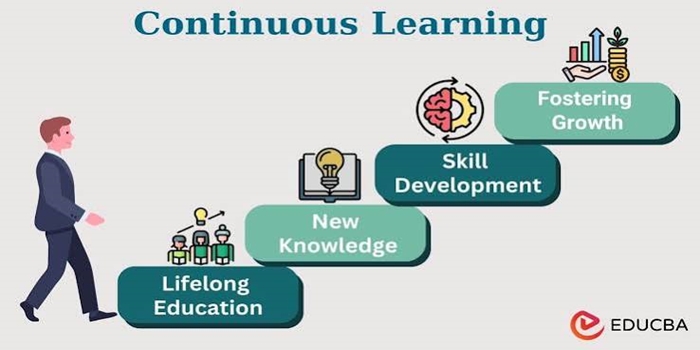
Continuous learning is the ongoing process of developing new skills, gaining knowledge, and improving oneself throughout life. In a world that is constantly changing, staying updated and open to learning is essential for personal and professional growth. Those who embrace continuous learning are better equipped to adapt, solve problems, and take advantage of new opportunities as they arise.
Understanding Continuous Learning
Continuous learning is more than attending courses or earning certifications. It is a commitment to ongoing personal and professional development.
A continuous learner actively seeks opportunities to:
Expand knowledge
Improve existing skills
Acquire new competencies
Adapt to changing environments
Explore new ideas and perspectives
Stay informed about industry trends
Learning can occur through various channels, including:
Online courses
Books and articles
Workshops and seminars
Mentorship programs
Professional networking
Podcasts and webinars
Practical experiences
Workplace projects
The key characteristic of continuous learning is the desire to grow consistently rather than remaining stagnant.
Why Continuous Learning Matters
The world is changing faster than ever before. New technologies emerge regularly, industries evolve, and job roles transform to meet changing market demands.
Professionals who fail to update their knowledge risk becoming outdated, while those who embrace continuous learning remain adaptable and valuable.
Continuous learning matters because it enables individuals to:
Keep pace with change
Improve career prospects
Increase confidence
Enhance problem-solving abilities
Foster innovation
Achieve personal growth
Remain competitive in the workforce
Learning is no longer an activity confined to classrooms; it has become a lifelong necessity.
The Link Between Learning and Career Success
One of the most significant benefits of continuous learning is its impact on career development.
Employers increasingly seek individuals who demonstrate a willingness to learn and adapt. In many industries, technical skills that are relevant today may become obsolete within a few years. Professionals who continuously develop new skills are better equipped to handle workplace changes and seize emerging opportunities.
Increased Employability
Employers value candidates who possess current knowledge and demonstrate a commitment to professional development.
Continuous learners often stand out because they:
Adapt quickly to new technologies
Require less retraining
Demonstrate initiative
Show intellectual curiosity
Bring fresh ideas to organizations
Greater Career Advancement Opportunities
Employees who invest in learning often position themselves for promotions, leadership roles, and higher levels of responsibility.
Learning enables professionals to:
Expand their expertise
Take on new challenges
Lead projects effectively
Contribute strategically to organizational goals
Organizations frequently reward individuals who actively seek growth and improvement.
Improved Job Security
As automation and artificial intelligence continue to reshape industries, workers who continuously develop relevant skills are better prepared for workforce changes.
Rather than fearing technological disruption, continuous learners adapt and evolve alongside it.
Continuous Learning and Personal Growth
The benefits of learning extend far beyond professional success.
Continuous learning contributes significantly to personal development by enhancing self-awareness, confidence, and intellectual growth.
Building Confidence
Acquiring new knowledge and skills creates a sense of accomplishment.
As individuals master new concepts, they become more confident in their abilities and more willing to tackle unfamiliar challenges.
Confidence gained through learning often translates into improved performance in various aspects of life.
Expanding Perspectives
Learning exposes individuals to different viewpoints, cultures, ideas, and experiences.
This broader understanding can:
Improve communication skills
Increase empathy
Reduce biases
Enhance decision-making
A well-rounded perspective enables individuals to navigate complex situations more effectively.
Encouraging Curiosity
Continuous learning nurtures curiosity and encourages people to ask questions, explore possibilities, and seek deeper understanding.
Curiosity often leads to innovation, creativity, and personal fulfillment.
The Role of Continuous Learning in Leadership
Effective leaders understand that learning never stops.
The most successful leaders are often lifelong learners who continuously seek knowledge and improvement.
Learning helps leaders:
Stay informed about industry trends
Make better decisions
Manage change effectively
Inspire innovation
Guide teams through uncertainty
Leaders who model continuous learning also encourage a culture of growth within their organizations.
Such cultures often experience higher employee engagement, productivity, and retention.
Overcoming Common Barriers to Learning
Despite its benefits, many individuals struggle to prioritize learning due to various obstacles.
Lack of Time
Busy schedules often make learning seem difficult.
However, learning does not require hours of daily study. Even dedicating 15 to 30 minutes per day can lead to significant progress over time.
Fear of Failure
Some people avoid learning new skills because they fear making mistakes.
In reality, mistakes are an essential part of the learning process. Growth occurs when individuals embrace challenges and learn from setbacks.
Comfort Zones
Remaining within familiar routines can limit growth.
Continuous learning often requires stepping outside comfort zones and embracing unfamiliar experiences.
The willingness to be a beginner is frequently the first step toward mastery.
Practical Strategies for Continuous Learning
Developing a learning habit requires intentional effort.
Set Learning Goals
Define specific objectives based on personal interests or professional needs.
A learning plan transforms good intentions into measurable action.
The Future Belongs to Learners
In a knowledge-driven economy, learning is one of the most powerful investments a person can make.
The future workforce will increasingly reward individuals who can:
Learn quickly
Adapt effectively
Think critically
Innovate continuously
Embrace change confidently
As industries evolve, the ability to learn may become more important than any single technical skill.
Those who prioritize learning today are positioning themselves for success tomorrow.
Conclusion
Continuous learning is a powerful habit that supports long-term success in both personal and professional life. By staying curious, seeking new knowledge, and consistently improving your skills, you can remain adaptable in a changing world and open the door to greater opportunities and growth.