

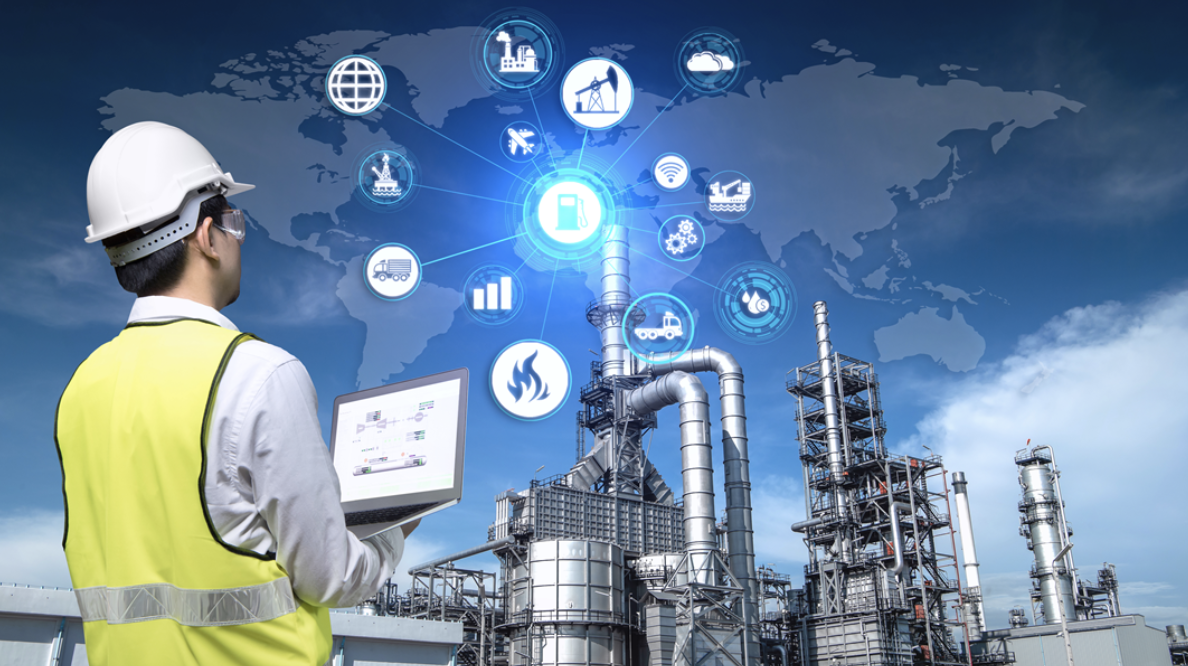
Introduction
The oil and gas industry has undergone significant technological transformation over the years. Modern exploration is no longer based solely on traditional geological surveys and drilling. Today, oil and gas companies use advanced technologies to identify potential reserves, analyze underground formations, reduce exploration risks, improve drilling accuracy, and increase operational efficiency.
As easily accessible reserves become more difficult to find, the adoption of innovative exploration technologies has become increasingly important. These technologies enable companies to make better decisions while reducing costs, improving safety, and minimizing environmental impacts.
Discover the advanced technologies transforming oil and gas exploration, including AI, 3D seismic imaging, drones, robotics, digital twins, and advanced drilling systems.
1. 3D and 4D Seismic Imaging
Seismic technology is one of the most important tools used in modern oil and gas exploration.
3D seismic imaging produces detailed three-dimensional representations of underground geological formations. It helps exploration teams identify potential hydrocarbon reservoirs, faults, rock structures, and other geological features.
4D seismic technology adds the element of time to seismic surveys. By comparing seismic data collected at different periods, companies can monitor changes within
These technologies help reduce uncertainty and improve the selection of drilling locations.
2. Artificial Intelligence and Machine Learning
Artificial intelligence (AI) and machine learning are increasingly being used to analyze large volumes of geological, seismic, and drilling data.
AI systems can identify patterns that may be difficult to detect through conventional analysis. They can assist geoscientists in:
- Identifying potential hydrocarbon reservoirs.
- Interpreting seismic data.
- Predicting geological formations.
- Evaluating drilling risks.
- Optimizing exploration decisions.
- Improving reservoir characterization.
Machine learning can also become more effective as it processes larger datasets, making it a valuable tool for modern exploration.
3. Advanced Geophysical Surveys
Modern exploration uses sophisticated geophysical techniques to understand subsurface formations without immediately resorting to drilling.
These techniques can include:
- Seismic surveys.
- Gravity surveys.
- Magnetic surveys.
- Electromagnetic surveys.
- Well logging.
- Remote sensing.
By combining information from multiple geophysical methods, exploration teams can develop a more comprehensive understanding of underground structures.
4. Remote Sensing and Satellite Technology
Satellite imagery and remote sensing technologies can provide valuable information about large geographical areas before detailed exploration begins.
Satellite data can help identify geological features, surface changes, environmental conditions, infrastructure, and potential exploration areas.
Remote sensing is particularly useful for preliminary assessments because it allows companies to gather information over large and sometimes difficult-to-access areas.
5. Autonomous and Unmanned Aerial Vehicles
Drones and unmanned aerial vehicles (UAVs) are becoming increasingly useful in oil and gas operations.
During exploration and early-stage field development, drones can be used for:
- Aerial surveys.
- Mapping.
- Infrastructure inspection.
- Environmental monitoring.
- Land and terrain assessment.
- Data collection.
Drones can access areas that may be difficult or unsafe for personnel, reducing exposure to operational hazards.
6. Robotics and Autonomous Systems
Robotics is becoming increasingly important in areas where human access may be difficult or hazardous.
Robotic systems can support subsea inspection, pipeline assessment, equipment inspection, and other activities.
Remotely Operated Vehicles (ROVs), for example, can operate underwater and collect information from subsea environments without requiring divers to work in potentially hazardous conditions.
Autonomous systems may increasingly support exploration and inspection activities as the technology develops.
7. Advanced Well Testing and Formation Evaluation
After drilling an exploration well, companies need to determine whether the encountered formation contains commercially viable hydrocarbons.
Advanced formation evaluation technologies can provide information about:
- Reservoir pressure.
- Fluid properties.
- Formation permeability.
- Porosity.
- Hydrocarbon saturation.
- Rock characteristics.
This information supports decisions regarding whether a discovery should proceed to further appraisal and development.
Benefits of Advanced Exploration Technologies
The adoption of advanced technology provides several benefits to the oil and gas industry.
Improved Exploration Accuracy
Advanced seismic imaging, AI, and geological modelling can help companies identify promising prospects with greater confidence.
Reduced Exploration Risk
Better subsurface information can reduce uncertainty before major drilling investments are made.
Lower Operational Costs
Automation, digital systems, and advanced data analysis can improve efficiency and reduce unnecessary activities.
Improved Safety
Remote monitoring, robotics, drones, and automated systems can reduce the need to expose personnel to hazardous environments.
Faster Decision-Making
Real-time data and advanced analytics allow exploration teams to respond more quickly to changing conditions.
Better Environmental Management
Technology can help reduce the environmental footprint of exploration by improving planning, monitoring, and operational efficiency.
Challenges to Technology Adoption
Despite its benefits, advanced exploration technology can be expensive to acquire and maintain. Companies may also face challenges related to technical expertise, data management, cybersecurity, infrastructure, training, and integration with existing systems.
For developing oil and gas markets such as Nigeria, investment in technical education, digital infrastructure, research and development, and technology transfer is particularly important.