

Introduction
In Nigeria, fiscal federalism determines: how revenue generated from national resources is distributed, the financial responsibilities of each level of government, the mechanisms for revenue sharing among governments, the Nigerian fiscal system aims to ensure that all regions of the country benefit from national resources while maintaining the autonomy of state governments.
Meaning of Fiscal Federalism
Fiscal federalism refers to the financial relationship between different levels of government in a federal system. It involves the division of revenue sources and expenditure responsibilities among federal, state, and local governments.
Structure of Government in Nigeria:
Nigeria operates a three-tier system of government consisting of:
Federal Government
State Governments
Local Governments
Each level of government has constitutionally assigned functions and requires financial resources to carry out these responsibilities.
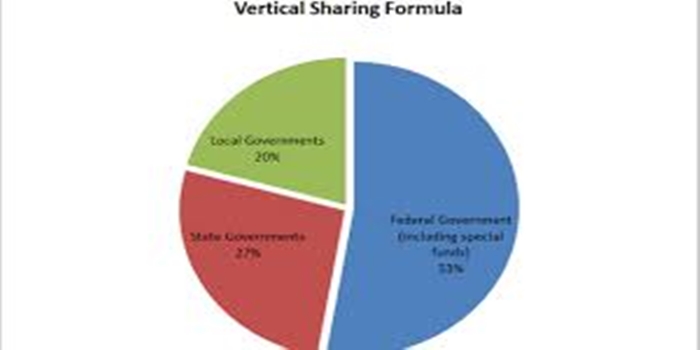
The distribution of revenue among these levels of government is managed through the Federation Account, which is the central pool where most national revenues are deposited before allocation.
The distribution process is overseen by the Revenue Mobilization Allocation and Fiscal Commission.
Sources of Government Revenue in Nigeria
Government revenue in Nigeria comes from several sources, including:
- Oil Revenue
Petroleum exports represent the largest source of government revenue. Oil proceeds are paid into the Federation Account before being distributed among the three tiers of government.
- Taxes
Taxes such as company income tax, value added tax (VAT), and customs duties contribute to government revenue.
- Non-Oil Revenue
This includes income from government-owned enterprises, licensing fees, and other administrative charges.
- Grants and Loans
Government may also obtain financial resources through international loans and grants.
The heavy dependence on oil revenue has made fiscal federalism in Nigeria highly sensitive to fluctuations in global oil prices.
State Allocation in Nigeria
State allocation refers to the portion of national revenue distributed to state governments from the Federation Account.
Principles of Revenue Allocation
Several principles guide the sharing of revenue among states in Nigeria.
- Derivation Principle
The derivation principle states that regions should receive a percentage of the revenue generated from natural resources located within their territories.
Oil-producing states in the Niger Delta receive additional funds based on this principle. The Nigerian constitution currently provides 13 percent derivation for oil-producing states.
This policy aims to compensate these states for environmental damage and resource exploitation.
- Population
Population size is another factor used in revenue allocation. States with larger populations are considered to require more resources to provide public services.
- Land Mass and Terrain
States with larger geographical areas may require more funding for infrastructure and administration. This factor is therefore considered in the allocation formula.
- Equality of States
The principle of equality ensures that each state receives a basic allocation regardless of population or economic contribution. This helps promote balanced development across the country.
- Social Development Factors
Some revenue allocation considerations include levels of education, healthcare needs, and infrastructure requirements.
Role of State Governments in Fiscal Federalism
State governments play an important role in Nigeria’s fiscal system. They are responsible for implementing policies and providing services at the regional level.
Key responsibilities of state governments include:
Education administration
Healthcare services
Infrastructure development
Agriculture and rural development
Local economic development
However, many state governments depend heavily on federal allocations because internally generated revenue in most states remains limited.
Challenges of Fiscal Federalism in Nigeria
- Overdependence on Oil Revenue
Nigeria’s fiscal structure relies heavily on petroleum income. When global oil prices fall, government revenues decline significantly, affecting allocations to states.
- Weak Internally Generated Revenue
Many states generate very little revenue internally and rely heavily on federal allocations. This reduces financial independence and limits innovation in economic policy at the state level.
- Political Disputes Over Revenue Sharing
Revenue allocation has often been a source of political conflict among regions. Oil-producing states argue that they deserve a larger share of revenue, while other states emphasize national unity and equitable distribution.
- Corruption and Mismanagement
Mismanagement of allocated funds has limited the effectiveness of fiscal federalism. In some cases, funds intended for development projects are diverted through corruption or inefficient administration.
- Inequality in Development
Despite revenue sharing arrangements, significant economic disparities remain between different states. Some states are far more developed than others in terms of infrastructure, education, and industrial activity.
Reforms and Policy Debates
Several reforms have been proposed to improve fiscal federalism in Nigeria.
- Resource Control
Some groups advocate greater control of natural resources by states, allowing them to retain a larger share of revenue generated within their territories.
- Diversification of Revenue Sources
Reducing dependence on oil revenue by developing agriculture, manufacturing, and technology sectors.
- Strengthening Internally Generated Revenue
Encouraging states to improve tax collection and develop local economic activities.
- Transparency and Accountability
Improving financial management and public oversight to ensure proper use of allocated funds.
Importance of Fiscal Federalism
Fiscal federalism plays a vital role in Nigeria’s political and economic stability.
Conclusion
State allocation and fiscal federalism are fundamental elements of Nigeria’s federal system. They determine how national resources are distributed among federal, state, and local governments. While the system aims to promote fairness and balanced development, it faces challenges such as overdependence on oil revenue, political disputes, weak internal revenue generation, and corruption. Addressing these challenges requires institutional reforms, improved financial management, and greater economic diversification.
READ: Understanding Risk Allocation Through Contracts